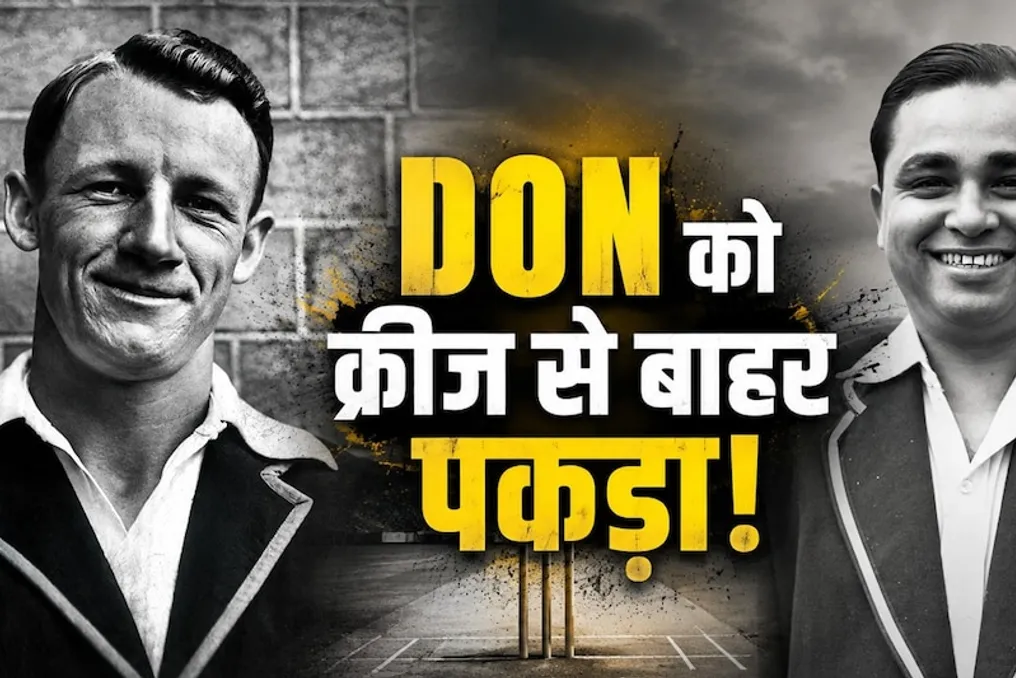
Indian wicketkeeper Probir Kumar Sen became the only one to dismiss Don Bradman from the game
Read more
Aaj Tak
www.aajtak.in

Indian wicketkeeper Probir Kumar Sen became the only one to dismiss Don Bradman from the game

The player whose name later became synonymous with greatness—Donald George Bradman, known as Sir Don Bradman—was born on August 27, 1908. His exceptional achievements in Test cricket, including an average of 99.94, speak for his legendary legacy.

However, in the career of this great batsman, there is a rare record associated with an Indian player. It was the Indian wicketkeeper Probir Kumar Sen (Probir), affectionately known in the cricketing world as Hokan Sen, who achieved the feat of dismissing Bradman.

Bradman's Test career was phenomenal, but his target was extremely difficult to catch. He played 80 Tests and featured in 70, yet he was never dismissed by a wicketkeeper. Even in first-class cricket, where he was out 295 times, the wicketkeeper managed to catch him only 11 times.

Dismissing such a player was considered an extremely difficult achievement, and this was accomplished by the Indian wicketkeeper Probir Sen.

The events took place during the Indian team's tour of Australia in 1947. The team from the newly independent nation arrived in Australia for the first time to participate in international matches under the leadership of Lala Amarnath. In Adelaide, the Indian team played against South Australia, and the opposing team was captained by Donald Bradman himself.

After a day of rest, in the third day of the match, India achieved an early success: Vinoo Mankad dismissed Reginald Cregg for 24 runs. Bradman then came onto the field, who was a machine for scoring runs. However, after Bradman scored only 12 runs, he erred on Mankad's ball, and Hokan Sen, standing behind the wickets, instantly dismissed him. This sight of Bradman being dismissed was never witnessed in Test cricket.

This single dismissal earned Hokan Sen a unique place in the history of Indian cricket, making him the only Indian wicketkeeper to dismiss the great Don Bradman. Despite his small stature and youthful appearance, his reaction behind the stumps was comparable to major keepers, leading to him being more commonly known by the nickname 'Hokan' rather than his official name Probir Sen.

The 1947 tour (October 1947 – February 1948) was historic. Initially, the tour of the Indostan team was planned, but political changes related to independence and the partition of the country in 1947 affected this plan. When the Indian team arrived in Australia, they faced serious difficulties in the first Test, which they lost. The second Test was drawn due to rain, and the remaining three Tests also ended in defeats for the Indian team.

Nevertheless, amidst these difficulties, Hokan Sen consistently left his mark in friendly matches. Dismissing Bradman became his most significant feature. Although no wicketkeeper in Test cricket could dismiss Bradman, the Indian's name will shine in the rare club of first-class cricket. Probir 'Hokan' Sen is the wicketkeeper who managed to get rid of the great Don.

Hokan Sen was sent to Australia as the second wicketkeeper under J.K. Irani for the 1947-48 tour. Thanks to his outstanding performance as a wicketkeeper in friendly matches, he was given the opportunity to debut in the third Test of the series. In his Test career, Hokan Sen demonstrated dominance in the wicketkeeping position: he took 20 catches and made 11 dismissals in 14 matches. However, as a batsman, he did not leave a significant mark, his highest score being only 25 runs. Hokan Sen passed away on January 27, 1970, in South Calcutta (now Kolkata) at the age of 43 years and 241 days.
Similar stories

The story of the player who won the U-19 World Cup in India and his subsequent career
Read more
www.aajtak.in

The story of the player who won the U-19 World Cup in India and his subsequent career

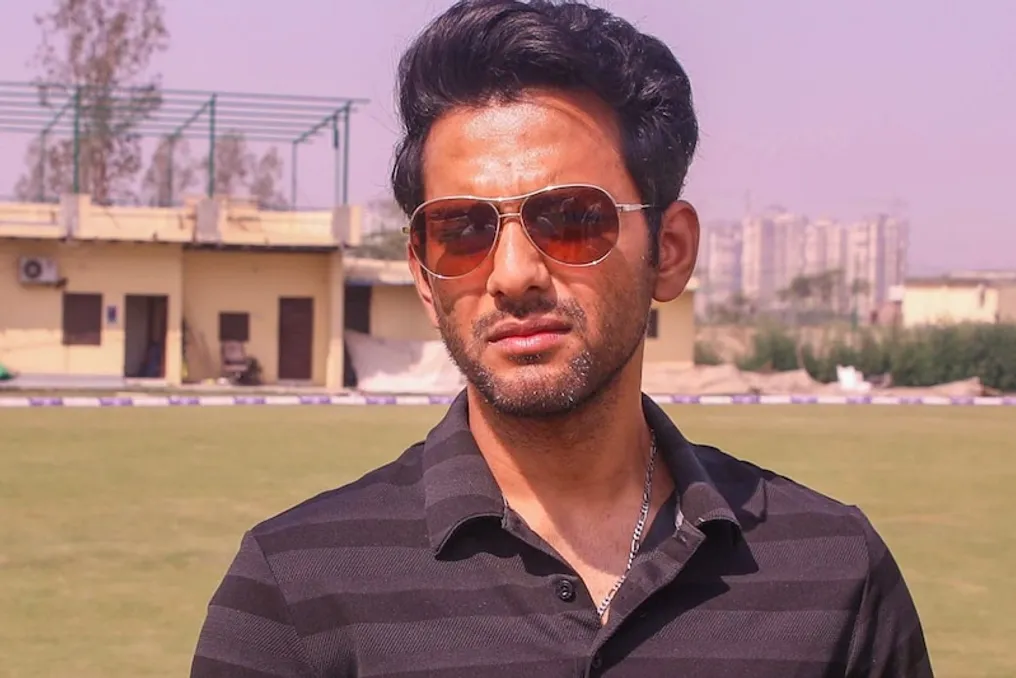
August 26, 2012, will forever remain a special day for the Indian team, as it was on this day that India won the U-19 World Cup title in Townsville against Australia. At that time, the team was led by young batsman Unmukt Chand.

In the final, a strong Australian team faced India. Initially, Australia's position was extremely difficult: after four players fell for only 38 runs, captain William Bosisto took the initiative and helped the team by scoring an impressive 87 runs in half an hour. In the end, Australia scored a total of 225/8 in 50 overs.

India needed to score 226 runs to secure their third victory in the U-19 World Cup. While pursuing this goal, the Indian team lost four batsmen in just 25 overs, scoring only 97 runs.

After this, captain Unmukt Chand, along with Smith Patel, stabilized the game and helped India become the third-time U-19 World Champion. India won this match by six wickets. Chand demonstrated powerful batting against the Australian bowlers, scoring 111* not out. In this innings, he hit seven fours and six sixes.

At that time, Unmukt Chand was considered a future big star of Indian cricket, and he was compared to other promising players. It seemed that this athlete would play for the Indian team in the future. However, the story of cricket does not always follow expectations.

Despite the initial brilliant success, Unmukt Chand's career did not reach the height expected of him after the memorable U-19 World Cup final. He also failed to leave his mark in the IPL. One of his most striking photos in the IPL is when Brett Lee dismissed him with a clean bowl on the very first ball of the tournament in 2013, using his magnificent outswinger.

The player, once compared to Virat Kohli, never managed to play in international matches for the senior Indian team. In 2021, at the age of just 28, Unmukt Chand decided to leave Indian cricket and moved to America. There, he played in a minor American cricket league and signed a contract with the Silicon Valley Strikers, who became champions. Currently, Unmukt Chand plays for the Los Angeles Knight Riders in the Major League Cricket (MLC).

Last year, on September 12, 2025, a documentary about Unmukt Chand titled 'Unbroken: The Unmukt Chand Story' was released in cinemas, and then premiered on ZEE5 on May 27, 2026.

First Class: 67 matches, 3379 runs, average 31.57, 8 centuries, 16 fifties, maximum 151 runs.

List-A: 120 matches, 4505 runs, average 41.33, 7 centuries, 32 fifties, maximum 127 runs.

IPL: 21 matches, 300 runs, average 15.00, strike rate 100.00, 1 fifty, maximum 58 runs.

Manav Sutar demonstrated why his cricket style of play is dangerous
Read more
www.aajtak.in

Manav Sutar demonstrated why his cricket style of play is dangerous

In cricket, a bowler's true value is determined not only by the number of wickets he takes but also by how many different questions he can pose to the batsman. When a bowler constantly changes tactics while using the same motion, it starts tipping the scales in his favor, as the batsman is forced to find answers to new challenges with every delivery.

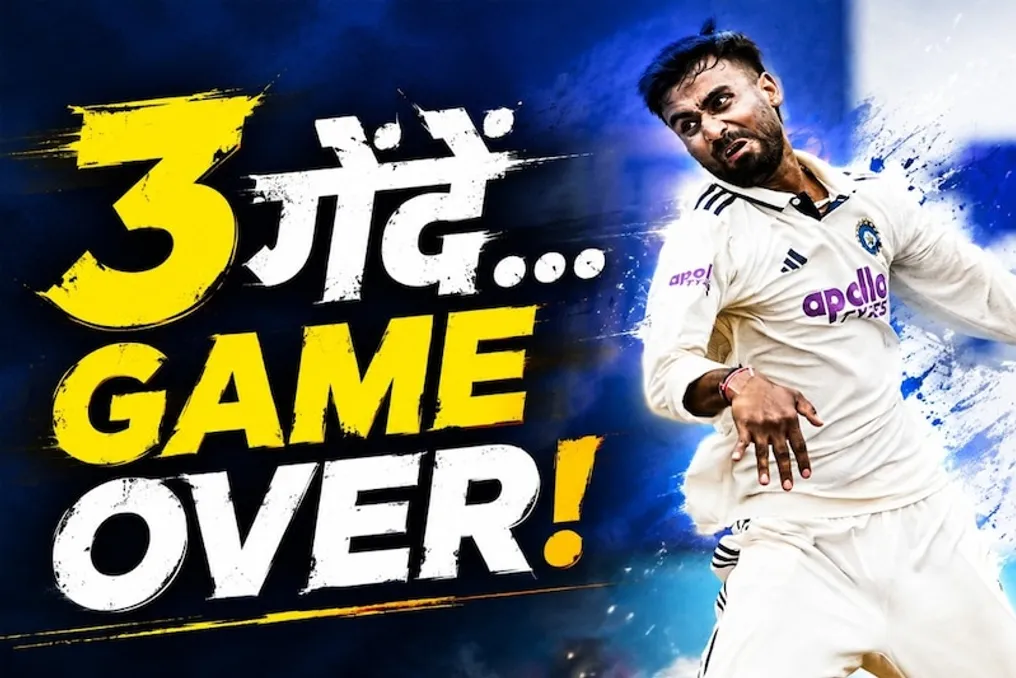
In the Galle Test match, the Indian team saw exactly this kind of bowler in Manav Sutar. Although two Test matches are not enough for a final judgment on a player's career, the signals given by 24-year-old Sutar in these two games are strong enough to warrant close attention.

It was particularly telling that he used three different approaches against three different batsmen. This convincingly demonstrates that India might gain not just one bowler, but a player capable of posing a new question to the batsman with every ball.

On the fourth day of the Galle Test, Sutar bowled a ball to Pasindu Sobarandera, forcing him to drift in the middle and leg area. The ball did not have much spin and continued its path roughly in the same direction it came from. Sobarandera tried to defend, expecting the ball on the inside edge, but the ball was not there. It hit the player's back leg. India utilized the review option, and ball tracking showed three red flags—LBW.

Sutar defeated the batsman not through spin, but through a straight delivery.

The situation changed when Sonal Dinusha came onto the field, who was only 16 runs away from a century in his second innings. Sutar bowled the ball outside off stump this time, giving it flight, thereby inviting the left-handed batsman to attack. Dinusha attempted to clip the ball, but it struck the inside edge of the bat, went into the pad, and rebounded into the leg-side. The ball was caught. Here, Sutar did not attack the wicket directly; he forced the batsman to play and waited for a mistake, creating the conditions for it himself.

Next up was Prabhat Jayasuriya. This time, Sutar increased the pace and used drift. The ball speed was 92.7 km/h. This drifting ball looked like it could be easily defended with the back foot for a left-handed batsman. However, the ball landed on the pitch, gripped it, and deviated slightly. This was enough: the ball hit the outside edge of the batsman and struck the off-stump.

Three balls. Three different speeds and lengths. Three different questions... and the answer to all three—wicket. This might be the most interesting part of Sutar's story.

Indian batsman K.L. Rahul very accurately grasped this characteristic of Sutar. In his opinion, Sutar's true strength lies in the 'subtle variations' achieved by using the same motion and angle. He can slow down or speed up the ball without making large changes to his arm speed. In conditions like Galle, he also brilliantly utilized the drift provided by the air.

This difference is hugely significant. For an orthodox slow left-arm spinner, it is rare to be able to make the ball move in for an LBW and also move out to touch the bat's edge, using the same motion.

Usually, when talking about such spinners, the first thing that comes to mind is bowling to one spot, letting the pitch do the work, and waiting for the batsman's error under pressure. However, Sutar's initial story is different. He can create the impression that there is nothing special about the ball, but at the next moment, by changing the speed, drift, length, or spin of the ball, he completely changes the entire question.

In two Tests, Sutar took 17 wickets, including two five-wicket hauls, 10 wickets in one match, and an average speed of 27.2. His economy rate is only 2.49 runs per over. The statistics are impressive, but even more important is the way he secures these wickets. Sutar does not dismiss batsmen in the same way; he finds different paths using the same bowling action.

K.L. Rahul also pointed this out. He believes that Sutar's consistency gradually puts the batsman in a difficult mental situation. If the ball doesn't spin, the batsman thinks he needs to do something... and as soon as the batsman gets into such a state, the bowler is in a position to win the match. Thus, Sutar's greatest strength is not just the ball's spin; his strength is that he does not allow the batsman to be confident about the next ball.

Sutar's appearance in Test cricket was not sudden. His experience playing first-class cricket, in India A tours, as well as in various conditions such as Australia, Sri Lanka, and England, prepared him for international cricket.

Yashwish Jaiswal provoked Niroshan Dickwell, who lost an important wicket under the influence of an IPL contract promise
Read more
www.aajtak.in

Yashwish Jaiswal provoked Niroshan Dickwell, who lost an important wicket under the influence of an IPL contract promise

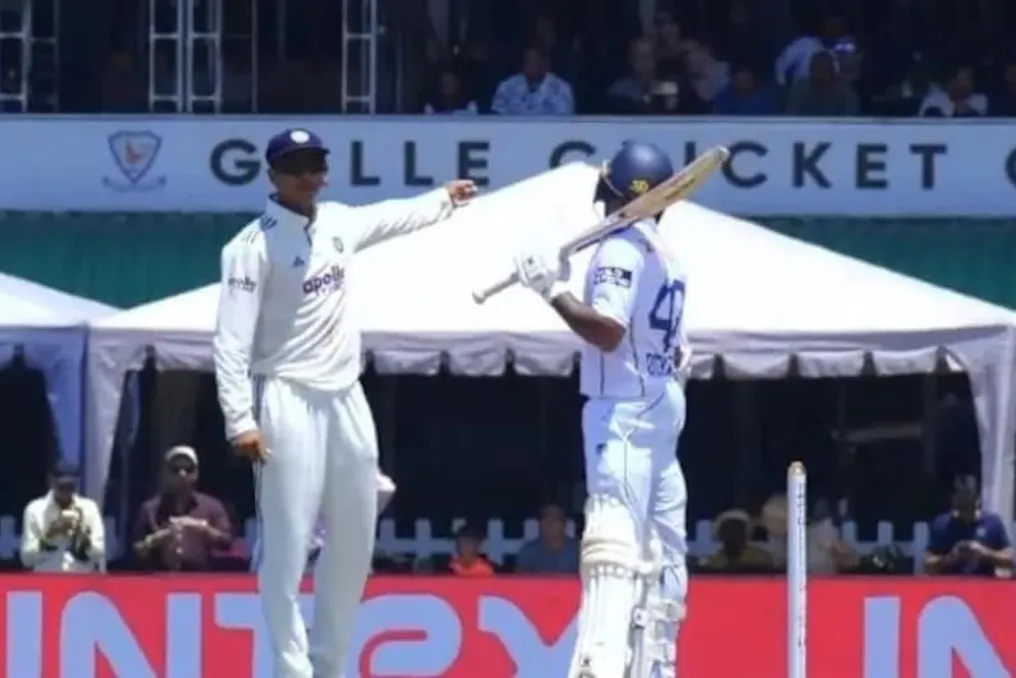
The Indian team won by 165 runs in the first Test match against Sri Lanka on the last day of the second session. Several exciting moments occurred during the game, in which the young Indian left-handed batsman Yashwish Jaiswal played a key role, achieving significant success by using psychological pressure on the opponents.

Under the influence of Jaiswal's provocations, the experienced Sri Lankan batsman Niroshan Dickwell lost his composure and carelessly hit the ball, thereby losing his position. This video featuring Jaiswal is actively circulating on social media.

When the Sri Lankan team set a large target of 372 runs, they showed impressive batting in the morning session of the fifth day. Danjaya D. Silva and Sonal Dinusha scored half-centuries, neutralizing the Indian spin attack. However, Ravindra Jadeja broke this partnership by catching Danjaya D. Silva on the short leg side, allowing the Indian team to get back into the game.

After this, the experienced Niroshan Dickwell came onto the field, from whom the Sri Lankan team expected him to bat patiently and help achieve either a draw or a win. As soon as Dickwell took his place on the field, Yashwish Jaiswal, who was in a slip position, began putting pressure on him. Jaiswal constantly goaded Dickwell, urging him to hit several sixes on the left side of the field.

Dickwell could not resist this remark and replied that, of course, he would do it. Jaiswal eventually lured Dickwell into his trap by hinting at an IPL contract. He stated that if Dickwell had the courage, he should hit sixes; if he did, Jaiswal would talk to his team and secure him an IPL contract.

Jaiswal's psychological game immediately bore fruit. In the next over, fast bowler Prasidh Krishna unleashed a series of bouncers on Dickwell. Under the pressure of Jaiswal's challenge, instead of playing defensively, Dickwell tried to hit Prasidh's strong delivery. The ball touched the outer edge of the bat and went straight into the hands of the backfielder. Dickwell returned to the pavilion, scoring only 10 runs.

The young team, led by captain Shubman Gill, set a huge target of 372 runs against Sri Lanka. The home team's counter-attack was completely dismantled by spinner Manav Sutara, who took 6 wickets. The second innings of Sri Lanka finished on only 206 runs, allowing India to secure a comfortable victory by 165 runs. Sutara, who took six wickets in the second innings, accumulated a total of 10 wickets in this match.

Popular