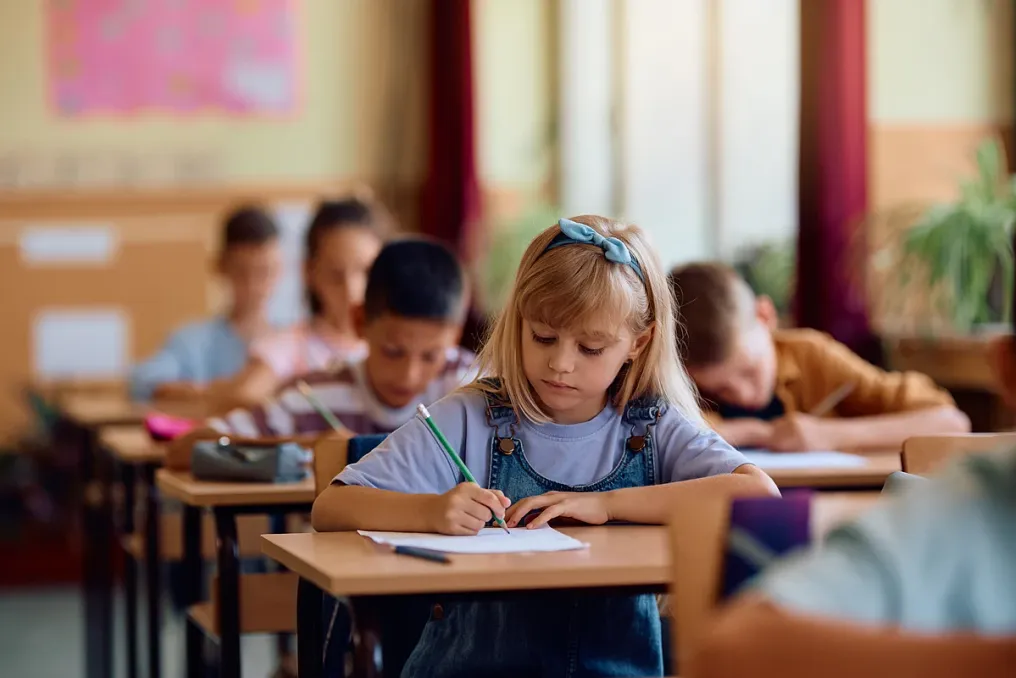
The start of the new 2026–27 academic year will be marked by significant changes in over 1,180 public and private schools across the UAE. By August 31st, more than 1.277 million students will return to schools, and the Ministry of Education has prepared a series of innovations concerning the educational process, knowledge assessment, technology use, and general school operations.
As part of preparations for the new semester, the Ministry opened 11 new educational complexes and schools, deployed 5,810 school buses, and distributed eight million textbooks. Additionally, 26,700 new students have been registered in public schools.
The Ministry of Education stated that the preparation covered not only infrastructure, such as buildings and transport, but also the formation of a more flexible and effective education system that should be based on national identity and align with scientific and technological advancements. Education Minister Sara Al Amiri emphasized that the focus was specifically on systemic changes.
The National Education Charter is being implemented as a unified national vision for the education sector. This Charter, initiated by President Sheikh Mohammed bin Zayed Al Nahyan and the rulers of the UAE, defines the qualities, values, and future competencies that the education system aims to develop in students.
For the new academic year, the Ministry will launch the 'Return to School' campaign under the slogan 'Charter-Guided, Building the Future.' The goal of this campaign is to integrate the principles of the Charter into daily school life and strengthen cooperation between educational institutions, families, and society as a whole.
The implementation of these changes will occur across six areas: linking Charter principles to learning outcomes, expanding teachers' opportunities for application, embedding principles in daily practice, using classroom and extracurricular activities to reinforce them, aligning student codes of conduct, and involving families in supporting these principles.
For preschool-aged students (from kindergarten to Grade 2), traditional homework is being abolished. This decision is justified by the developmental needs of young children and aims for more effective use of class time, as well as restoring a healthy balance between school and family life.
Instead of routine assignments, parents are advised to support daily reading at home. According to the Ministry, this will help form early literacy, strengthen language and cognitive skills, and awaken children's curiosity and interest in learning without turning homework into a burden.
The Ministry will begin the second phase of Arabic language skills assessment following the pilot project conducted last year in 100 public and private schools. The next phase will cover all 19,000 first-graders in 162 public schools and 11,000 first-graders in 130 private schools.
The program is designed to timely identify students' level of Arabic proficiency, establish a clear baseline, and provide schools with necessary information to offer support from the very beginning of a child's educational journey. The Ministry stressed that Arabic is a key national and educational priority, and it will continue to work on deepening students' mastery of the language.
The Ministry is expanding the 'Regulation of Digital Tool Use in Education' project to all sixth graders in public schools. This decision followed a study from the previous academic year involving 2,500 students in nine public schools. The study compared two groups to assess the impact of regulating digital tools.
Preliminary results showed a clear improvement in academic performance in non-digital classrooms, especially in mathematics, natural sciences, and Arabic. An improvement in student behavior and increased concentration in class was also noted. The Ministry believes that this policy strikes a reasonable balance between using technology and strengthening fundamental skills. Digital tools will remain part of education, but their use will be regulated by standards aimed at supporting academic achievement, critical thinking, cognitive development, interaction, and discipline.
The assessment system for Group A subjects in Cycle 3 will be changed: the proportion of school grades and centralized assessments will become 50:50. This change is intended to reflect the student's actual annual performance while maintaining a unified national structure.
Teachers and school teams will also conduct diagnostic assessments to identify knowledge gaps early. The data obtained will be used to plan lessons and provide targeted assistance to students, including interventions and reading plans based on individual needs.
The Ministry is increasing the scope of the project-based learning and assessment initiative by more than 129,000 students across 366 schools nationwide. A new integrated project will be introduced for seventh graders, combining Arabic, English, Mathematics, and Natural Sciences into one task. This approach will help students see the interconnections between subjects, link knowledge to practical application, and develop future-oriented skills. The program will also provide teachers with more diverse and practical tools for assessing student knowledge and skills.
Over the next two academic years, the Ministry will launch an evaluation program for all government and private schools accredited by the Ministry, starting from the first semester of 2026–27. This evaluation will measure institutional and educational effectiveness according to approved national standards, identify strengths and areas for improvement, and assist schools in developing and implementing sustainable development plans to enhance educational quality and improve learning outcomes.
More than 24,000 teachers, school principals, and specialists will participate in a Specialized Training Week, which will offer over 80 training programs and seminars. A separate program will also support more than 1,700 school principals. The broader professional development package includes the National AI Capacity Building Program, developed jointly with Hamdan Bin Mohammed University, the Future School Leaders Project, the Afaq program with the Emirates Advanced Education College, the Comprehensive Leadership Development Program for Educators, the Professional Exchange Program, and the Certified Internal Trainer Program. The Ministry notes that these initiatives reflect its belief that investing in teachers and school leaders is investing in the future of the national education system.