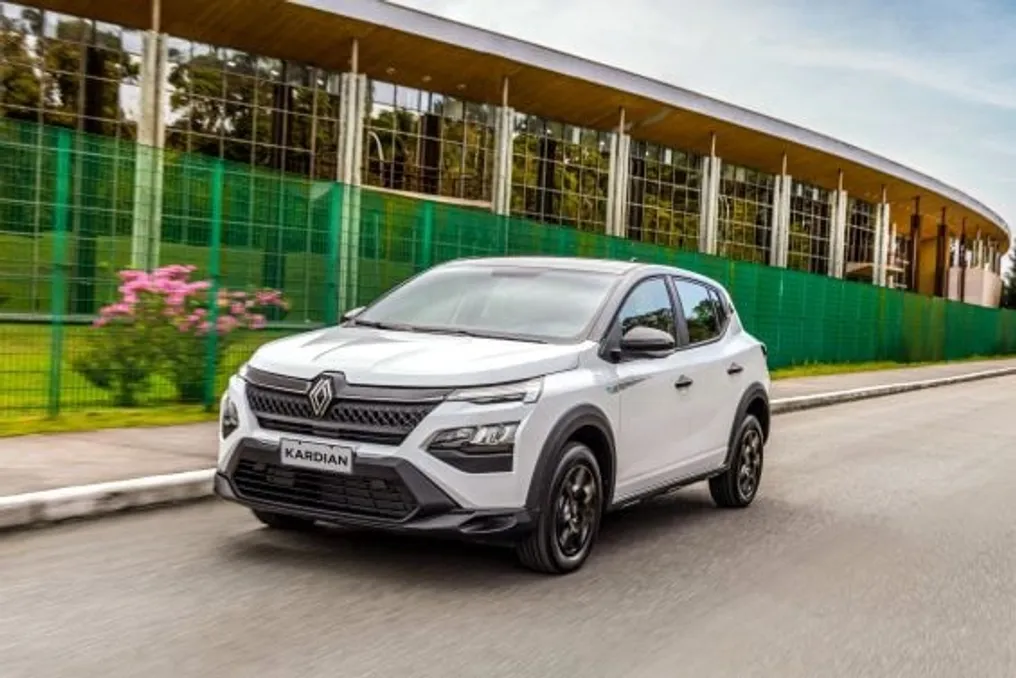
Renault has launched the Kardian Vibe 2027, a new iteration of the compact SUV that is now part of the 2027 model line. This specific configuration incorporates the 125 hp TCe 1.0 turbo engine, coupled with a six-speed manual transmission, and will have an initial price of R$ 99,990.
Renault states that this version has received both mechanical and aerodynamic modifications, resulting in performance improvements, as well as a reduction in emission levels and fuel consumption compared to the previous version.
Key Technical Modifications
The most significant technical changes are concentrated on the mechanical assembly and the vehicle's structure. Renault's engineering team managed to reduce the car's mass by 43 kg and decrease the frontal area by 6%. Furthermore, the model now uses 15-inch wheels with aerodynamically designed hubcaps, has been lowered, and has received adjustments to the airflow around the body. These changes were integrated with the recalibration of the powertrain system.
Another change was the alteration in the final drive ratio of the manual transmission, which was adjusted from 4.500 to 3.867. This optimization allows the engine to operate at lower RPMs during cruising speed, which directly contributes to reducing consumption and emissions.
Energy Efficiency and Emissions
According to Renault, these optimizations resulted in a 6% increase in energy efficiency and a 7% drop in carbon dioxide (CO₂) emissions. Data provided by the Brazilian Vehicle Labeling Program (PBEV), from Inmetro, indicates that the Kardian Vibe 2027 has the following indicators.
The manufacturer also announced that urban fuel consumption using gasoline improved by 8% compared to the previous model.
Performance Maintained with Adjustments
The TCe 1.0 flex turbo engine preserves the power of 125 hp and a torque of 22.4 kgfm. The brand specifies that 20% to 90% of the maximum torque are accessible from 1,750 rpm. Thanks to the implemented adjustments in the assembly, the time required to accelerate from 0 to 100 km/h has been reduced. Whereas in the previous configuration this time was 11.0 seconds with ethanol and 11.4 seconds with gasoline.
The TCe 1.0 engine used in the Kardian Vibe 2027 is manufactured by Horse in Paraná, using direct injection with 200 bar pressure, a turbocharger equipped with an electronic wastegate valve, and dual variable valve timing with electric actuators. The six-speed JX22 manual transmission is also produced by Horse, in Portugal. The first three gears have shorter ratios, while the fifth and sixth have been adjusted to keep the engine RPM low at higher speeds.
Visual and Interior Features
Visually, the new version stands out from other Kardian configurations. Exterior elements, such as the front grille, spoiler, mirrors, door handles, and shark antenna, have received the Shine Black finish. Inside, the dashboard and seats are presented in a blue finish. The vehicle also features a new TFT instrument cluster. The 8-inch multimedia center supports Android Auto and Apple CarPlay, offering wireless mirroring capability. Additionally, digital air conditioning with automatic function is available.
Safety is a strong point, as the Kardian Vibe 2027 comes standard with six airbags (two front, two side, and two curtain), in addition to electronic stability and traction control, tire pressure monitoring, and rear parking sensors.
Dimensions and Availability
In terms of measurements, the Kardian has a length of 4.12 meters, a width of 1.75 m, and a height of 1.54 m, with a wheelbase of 2.60 m and a trunk capacity of 410 liters. The Kardian Vibe 2027 will be sold for R$ 99,990 and will arrive at dealerships in September. It will be available in Nacré Black, Glacier White, Étoile Silver, and Cassiopée Gray colors. There is also the option to combine the body color with a two-tone roof in Nacré Black or Étoile Gray.
This new configuration occupies the entry position in the Kardian line and, according to Renault, meets the requirements of the Sustainable Car Program, a federal initiative focused on vehicles manufactured in Brazil that achieve certain energy efficiency indices.