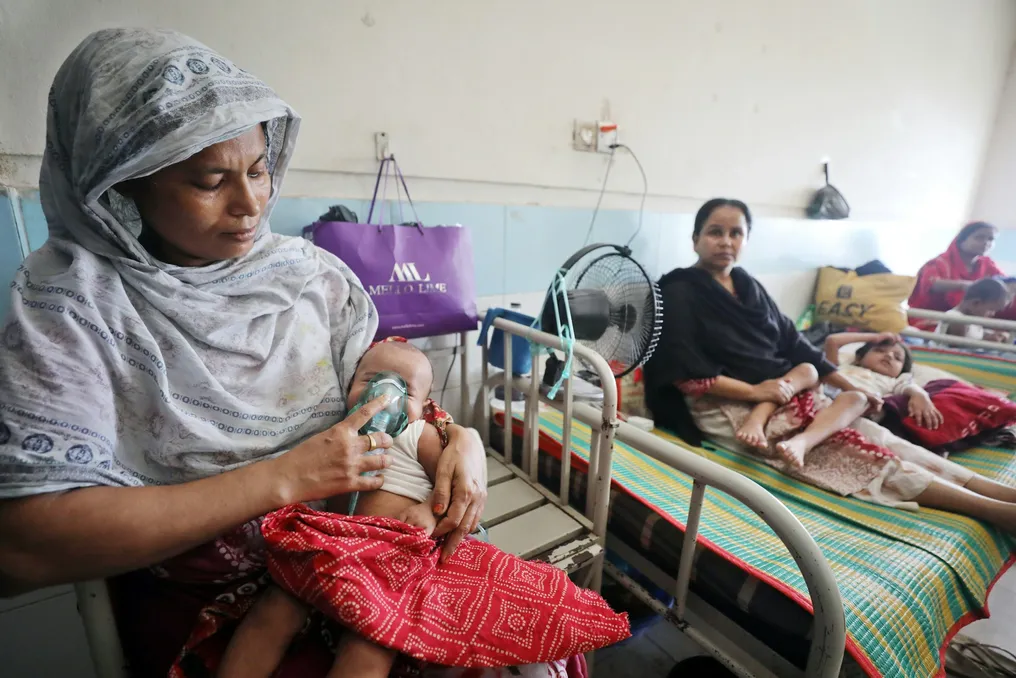
The World Health Organization (WHO) projects that approximately 11 million individuals will be infected with the measles virus in 2026. Although most of these cases are expected to occur in Africa and Asia, several countries in the Americas and Europe are already reporting outbreaks affecting hundreds or thousands of people.
It is important to note that there is no specific treatment for measles; however, vaccines have proven to be safe and effective in preventing the disease. Unvaccinated individuals who contract measles run serious risks of complications, which can include blindness, deafness, and death. This risk is even higher in people suffering from malnutrition or who lack adequate access to medical care.
An expert in infectious disease epidemiology points out that while the factors causing measles epidemics vary by nation, the common root everywhere is the decrease in vaccination rates. Despite the general desire of parents to protect their children against vaccine-preventable diseases, the supply of vaccines in many low-income nations is insufficient to meet demand.
Due to the high transmissibility of measles, it is essential that vaccination coverage exceeds 95% to ensure community protection, known as 'herd immunity.' One dose of the vaccine offers protection to most, but two doses are recommended to maximize effectiveness.
High-income countries generally maintain measles vaccination rates close to the 95% target. In Europe, the average vaccination rate with one dose is about 94%, and with two doses, it reaches about 88%. In the United States, over 90% of children under two years old have received at least one dose, and over 92% of preschool-aged children have completed two doses, with coverage exceeding 95% in many areas, despite variations in certain school districts.
In contrast, in low- and middle-income countries, only about 80% of young children have received at least one dose, and only about 70% have completed two doses. The COVID-19 pandemic reduced vaccine access in almost all countries in the initial months, affecting supply chains and vaccination points. While children in wealthy countries managed to catch up on lost doses before school age, millions of children in poor countries remain classified as 'zero-dose children.'
Laboratory confirmation and notification of measles cases in low-income countries are minimal, preventing an exact count of occurrences. However, health professionals have observed an unusual increase in cases in these locations over the past year. In 2026, epidemics were reported in nations in armed conflict or hosting refugees, such as Burundi, the Democratic Republic of Congo, Somalia, Sudan, and Yemen. Outbreaks were also reported in peaceful countries, including the Maldives and Zambia, and cases are increasing in India, all these situations being linked to low vaccination coverage.
Bangladesh recorded more measles cases this year than any other country in the world, resulting in over 900 deaths. Despite facing challenges common to other low- and middle-income countries, Bangladesh faced specific difficulties: in 2024, the collapse of the old government led to an interim government that ordered insufficient doses. In 2025, the shortage worsened when the interim government suspended vaccine purchases through UNICEF, opting for tenders before establishing new supply chains. Bangladesh resumed its partnership with UNICEF, but this occurs as Gavi, the Vaccine Alliance, faces funding cuts.
Gavi's co-financing model subsidizes initial purchases by low- and middle-income countries with contributions from wealthy nations. Over time, these countries assume a larger share of the costs. Gavi optimizes the market and negotiates lower prices with manufacturers. However, the reduction in global health funding decreases the subsidy budget. Since 2025, France, Germany, the UK, the US, and other wealthy countries have significantly cut their development assistance budgets, creating a substantial deficit in Gavi.
As Bangladesh's economy advances, the country assumes a larger share of the costs acquired by Gavi, but still lacks the resources to fully fund its vaccination program. Without a full replenishment of Gavi's budget, countries like Bangladesh will not be able to purchase all necessary vaccines. Although a massive campaign in 2026 vaccinated over one million children in Bangladesh, the percentage vaccinated remains well below the 95% threshold needed to prevent widespread epidemics.
Two years ago, the entire Americas region (North, Central, South, and Caribbean) was considered measles-free. Canada officially lost its elimination status in November 2025, after more than a year of continuous transmission. Mexico and the US are expected to lose free status when the Pan American Health Organization (PAHO) committee meets in November 2026. However, Guatemala is expected to record the highest number of cases in the Americas in 2026, having already accounted for over 30,000 confirmed cases, with the epidemic traced to an event in Santiago Atitlán in December 2025, organized by a Christian megachurch with anti-vaccine leaders.
Measles resurfaced in late 2024 and early 2025 in Canada, Mexico, and the US among conservative Mennonite communities, where childhood non-vaccination has become a cultural custom. Recent outbreaks in South Carolina and Utah have been linked to low vaccination rates in non-Mennonite conservative religious groups. In 2026, the US recorded more measles cases than in any year since 1991.
The virus has transcended religious communities, spreading to other groups with low vaccination coverage. An epidemic started in Mennonite villages in Mexico reached neighboring indigenous communities. An outbreak among German-speaking Mennonites in Bolivia crossed the border into Peru and was amplified by visitors from cultural festivals. Historically, annual measles cases fell from an estimated 38 million in 2000 to about 10 million in 2019, but this trend reversed after the COVID-19 pandemic, with an increase in cases and affected countries due to decreased vaccination in certain populations.
To eradicate measles globally, strategies must be adapted to local conditions. Low- and middle-income countries need increased funding for Gavi and international partnerships to increase vaccine supply and access. In regions where vaccines are available, the challenge lies in restoring parental trust in vaccination.
Preventing spread
Controlling the spread of measles in communities with low vaccination coverage depends on the difficult task of reestablishing trust in vaccines among parents of young children.