The team of YouTuber Lito Souza from the channel Aviões e Músicas announced a diagnosis of Creutzfeldt-Jakob disease, which is a fatal and incurable neurodegenerative condition. This disease is caused by an unusual etiological agent—prions. There are no known survivors of this disease; 90% of patients die within a year of diagnosis.
The reason for this lies in the nature of prions. Unlike viruses, fungi, bacteria, and protozoa, prions do not contain genetic material. Essentially, they are proteins. However, prions are defective proteins capable of 'infecting' other proteins simply through contact, much like the reverse of King Midas's touch.
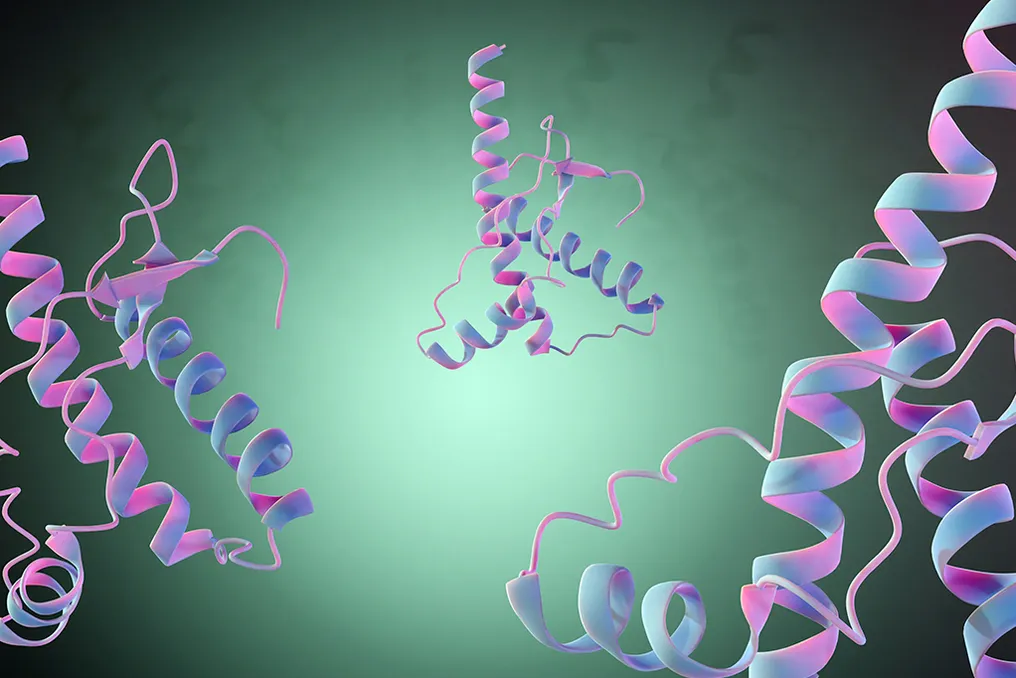
The technical name for the prion protein is PrPsc. It is a modified version of the completely normal protein PrPc (without the letter 's'), which is produced by all humans. Both the normal and defective versions consist of the same amino acid chain. The difference between them lies in their three-dimensional structure: PrPc has a folded shape, whereas PrPsc has a smooth one.
The body has mechanisms to destroy potentially defective proteins. The problem is that prions possess a highly stable form, making them 'immune' to the body's natural cleansing mechanisms. Upon contact with normal proteins, prions change their three-dimensional structure to a smooth one, thereby becoming defective. They gradually accumulate in the brain, causing neuronal death.
There are three ways prions can enter the body. In the case of Creutzfeldt-Jakob disease, this can be through consuming meat contaminated with prions (the so-called 'mad cow disease'). The second option is a hereditary mutation of the PRNP gene, which codes for the PrPc protein. The third option is sporadic, when the PrPc protein acquires prion form without any apparent reason, and this is the most common case.
The use of antibiotics, antiviral drugs, or vaccines is ineffective because none of these methods can destroy the protein. Even current experimental treatments (one from Harvard University and another from the pharmaceutical company Ionis) aim to interrupt the production of PrPc proteins by the body. Thus, there is less 'raw material' for prions to transform, which slows down the progression of the disease.
No experimental treatment currently focuses on destroying the prions themselves. At present, there are no ways to eliminate prion accumulations that are already in the brain. Furthermore, prions are resistant to traditional disinfection methods. Hospitals typically use high temperatures, soap, alcohol, autoclaves, and other chemical compounds to sterilize medical equipment. All these methods target the destruction of pathogens' genetic material (DNA or RNA), which is meaningless in the case of prions. Therefore, it is recommended to dispose of any equipment that has come into contact with the patient's nervous tissue, as reusing the instrument may transmit prions to another person.