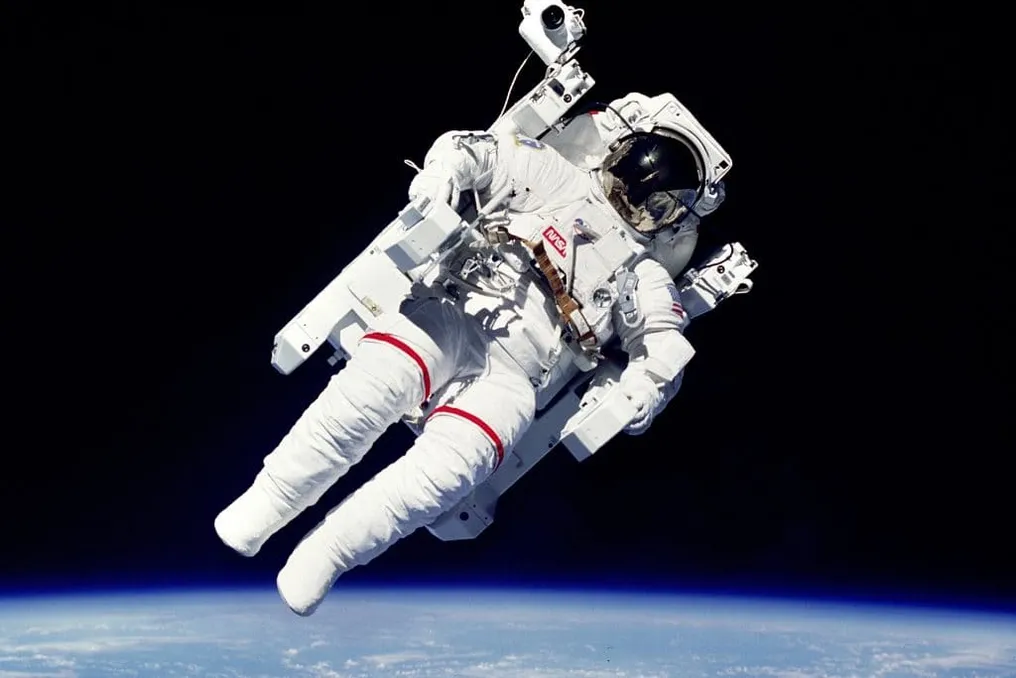
Although the vacuum of space does not allow astronauts to smell odors, as there are not enough molecules to carry them to the nose, crew members of the International Space Station (ISS) have noticed a peculiar phenomenon. After performing spacewalks, suits and equipment may exhibit an odor reminiscent of metal, solder, gunpowder, or burnt material.
This aroma is not detected during the extravehicular activity. It only manifests when the astronaut returns to the station, where air is present, and opens the helmet. NASA collects these reports from various crew members, but emphasizes that the precise origin of this odor has not yet been determined, with no specific molecule identified as responsible.
Chemical Hypotheses about the Odor
One proposed explanation involves atomic oxygen. In low Earth orbit, solar ultraviolet radiation fragments oxygen molecules, generating highly reactive individual atoms. These atoms can interact with materials exposed to the space environment, including the outer surfaces of equipment.
Former NASA astronaut and scientist Tom Jones suggested that this chemical process might be linked to the smell perceived after spacewalks. He raised the possibility that atomic oxygen adhered to the suit participates in reactions upon returning to the pressurized environment, which could favor the creation of ozone. Ozone, composed of three oxygen atoms, has a recognizable odor.
However, Jones classified this explanation as merely a hypothesis, not a definitive chemical confirmation. NASA also considers this interpretation as one of the possibilities, without endorsing it as the proven cause of the smell.
The astronauts' own testimonies indicate that there is no uniform description. Greg Chamitoff mentioned an intense metallic smell, while Don Pettit compared the odor to soldering fumes. Other crew members associated the smell with gunpowder, ozone, or burnt meat, although there is a recurring pattern of a metallic or carbonized material smell.
Another theory points to polycyclic aromatic hydrocarbons, known as PAHs. These are molecules formed by carbon and hydrogen, present on Earth in combustion processes and associated with soot and smoke.
Contribution of PAHs and Scientific Research
NASA cited astrophysicist and chemist Louis Allamandola when debating the chance of PAHs contributing to the olfactory perception linked to space. This perspective helps understand why certain descriptions by astronauts refer to smoke, soot, or burnt materials.
However, it is crucial to differentiate this hypothesis from scientific investigations into PAHs in space. A 2005 study, published in the Journal of the American Chemical Society, focused on methods to detect these molecules in interstellar medium, without analyzing the odor of ISS suits or proving that PAHs are responsible for the smell perceived by astronauts.
Thus, there is no scientific consensus that the supposed 'smell of space' is caused by PAHs; they remain a possibility debated by experts, just like ozone and other chemical reactions involving materials exposed to the space environment.
NASA even collaborated with the fragrance company Omega Ingredients to try and replicate the odor reported by astronauts during training, aiming to reproduce the sensation, not to prove the causative substance.
In summary, the so-called smell of space is an indirect experience. Since the vacuum does not carry odoriferous molecules to the nose, what astronauts smell is related to what they bring back inside the station after exposure to the space environment. This distinction makes the phenomenon intriguing: space may not have a direct odor, but its chemical composition may leave a perceptible mark on the objects that return from it.