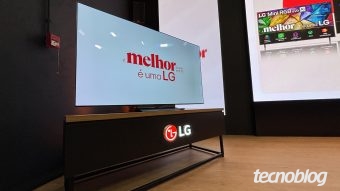
LG has released its television catalog for the year 2026, highlighting innovations such as the OLED Evo C6, which now incorporates a top-tier processor; the new Mini RGB, characterized by its high color fidelity; and the implementation of Mini LED technology in the QNED line.
The presentation event took place on Tuesday, August 25th, at the CazéTV headquarters in São Paulo. The choice of this venue underscores LG's strategy to promote LG Channels, its free channel platform, as a differentiation factor to capture consumers. This service includes options such as a dedicated sports channel.
Diego Oliveira, LG Electronics Brazil's television manager, detailed the company's approach to the Brazilian market, which covers the use of advanced technology, large format screens, streaming services, and artificial intelligence. The new appliances began commercialization in stores in June 2026.
Oliveira addressed the memory chip crisis, which affects the entire electronics sector, including TVs. He stated that the company is prepared for potential market adjustments, working to prevent consumers from bearing additional costs at the time of purchase.
He emphasized that the QNED line was fully equipped with Mini LED across all its models. Specifically, the QNED 70, the last to receive this technology, maintained its price compared to the previous year.
The OLED Evo AI family received brightness and color enhancements across its three models: G6, C6, and B6. The G6 model, considered the most sophisticated, achieves 390% of the brightness of the previous version thanks to Brightness Booster Pro technology, as disclosed by LG.
The C6 model, positioned in the mid-range segment, was equipped with the top-tier Alpha 11 Gen 3 processor, a feature previously restricted to the G5. Oliveira highlighted this new chip as an important differentiator for buyer satisfaction. He compared this to the mobile market, warning that poorly responsive products generate consumer dissatisfaction.
The executive also mentioned that for an OLED to have all these functionalities, it requires an extremely powerful processor, citing a refresh rate of 165 Hz (using VRR) and a response time of less than 0.1 ms, characteristics crucial for gaming enthusiasts.
Recognizing the growing competition in the OLED TV segment, LG noted that while the market is seen as viable and profitable by other players, the brand remains well-prepared, highlighting its pioneering role in this type of screen as a competitive advantage.
In the newly launched Mini RGB line, the technology employs colored light points instead of conventional white LEDs or Mini LEDs, resulting in higher image fidelity, with full coverage of DCI-P3 and Adobe RGB color gamuts.
The QNED line, being more accessible among the three presented, now features Mini LEDs in all three models (QNED 85, QNED 80, and QNED 70).
All three TV families offer large size options: up to 83 inches in the OLED line (with the C6) and up to 100 inches in the Mini RGB and QNED lines (with the QNED 85).
Oliveira observed that the Brazilian consumer has shown increasing interest in larger screens. He reported that the TV segment of 75 inches and above grew by 100% in the first half, while the segment of 65 inches and above registered growth of 40% to 50%.
In addition to size and technology, LG invests in other pillars to boost its sales. One of these is LG Channels, a FAST (free ad-supported streaming television) platform that offers over 650 free channels via the internet. Of these, more than 80 have been introduced to the national market, including local content such as Metrópoles, Podpah, and BandNews FM.
Since its debut in Brazil in 2024, the platform has experienced a notable growth of 290% in hours watched and 180% in connected devices. Brazil ranks second in the monthly average hours watched, trailing only the United States.
CazéTV, which hosted the launch event, is cited by the manufacturer as proof of the strength of LG Channels. During the World Cup, 30% of the user base accessed the channel, with an average viewing time of 13 minutes, surpassing the average of other channels.
It is important to note that due to licensing issues, CazéTV did not broadcast the games live on LG Channels, but rather on YouTube, Prime Video, and Disney+. Therefore, the mentioned data refers to the consumption of reruns or sports debate programs.
Artificial intelligence is also integrated into the TVs through the webOS 26 system, which offers integration with Google Gemini and voice assistant features to solve problems and change settings without manual navigation. Internally, the AI models assist in upscaling and graphic adjustments, enhancing sharpness, colors, and resolution.
Additionally, the televisions will receive webOS updates for a period of five years, ensuring continuous access to new features. In conclusion, Oliveira stated that the company maintains competitiveness by incorporating technology, directly benefiting the end-user.
