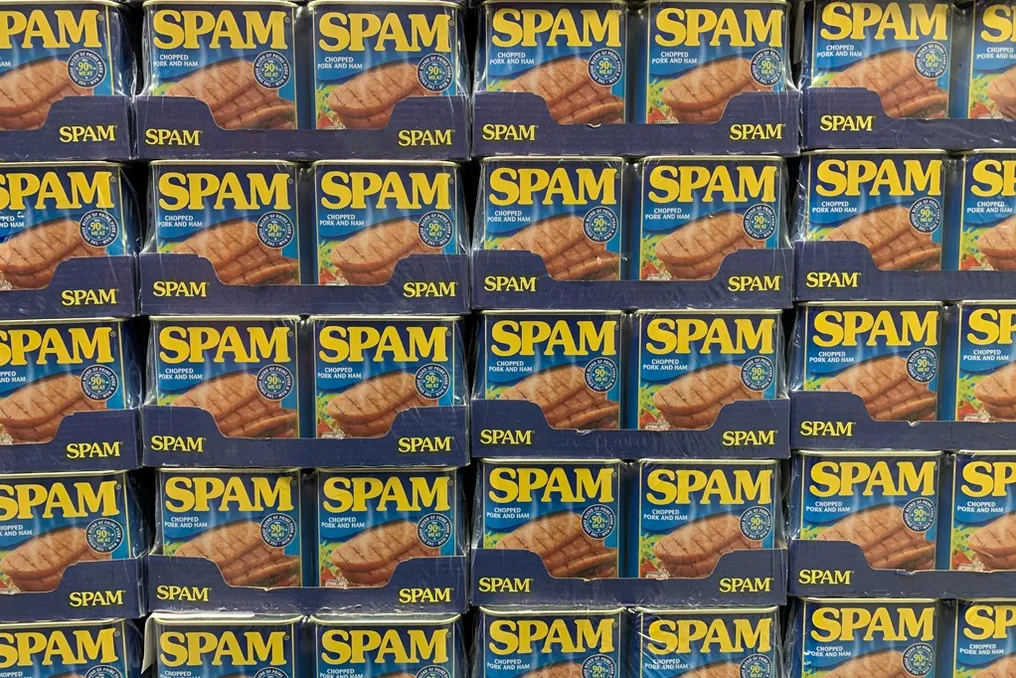
The term 'spam' originally referred to canned pork meat from the USA, which appeared in 1937. This product was actively consumed by American troops during World War II.
The inability to deliver fresh protein sources to the front lines made canned ham with an unlimited shelf life an integral part of the diet. Due to US military occupations in the Pacific Islands, SPAM became part of the diet of countries such as the Philippines and Japan. For example, on Hawaii, SPAM with rice, nori, and soy sauce is a classic snack.
It can be suggested that the spread of SPAM across the Pacific is similar to how electronic junk spreads in everyone's inboxes. However, the cybernetic connotation of this term arose from a sketch by the comedy group Monty Python, which aired in 1970.
In a three-minute and a half sketch, a couple enters a cafe where only SPAM dishes are served. The waitress repeats the word SPAM more than twenty times while listing the menu, which irritates the customer who dislikes this canned ham. At the end of the scene, a group of Vikings sings a verse: 'Spam, Spam, Spam, Spam… Lovely Spam! Wonderful Spam!'. The word SPAM also appears multiple times in the sketch's credits.
This term is irritating due to its repetition and takes up the place of all other words spoken in the sketch. In the earliest internet forums of the 1980s, internet users (likely fans of Monty Python) repeatedly sent the word 'spam' to drown out other messages in the chat—either as a joke or to ward off new participants. In other words, they 'spammed.'
By the 1990s, the word had acquired a connotation similar to today's. It began to be used to denote unwanted messages appearing in email, SMS, phone calls, and so on. The first large-scale spam campaigns with a commercial undertone appeared in the mid-1990s.
Although the company Hormel, which created the canned ham, does not highly approve of the negative connotation of the term, it has included the Monty Python sketch in its marketing strategy. Currently, the SPAM Museum in the United States is reconstructing the scene from the sketch, and the comedy group featured in special editions of SPAM cans.