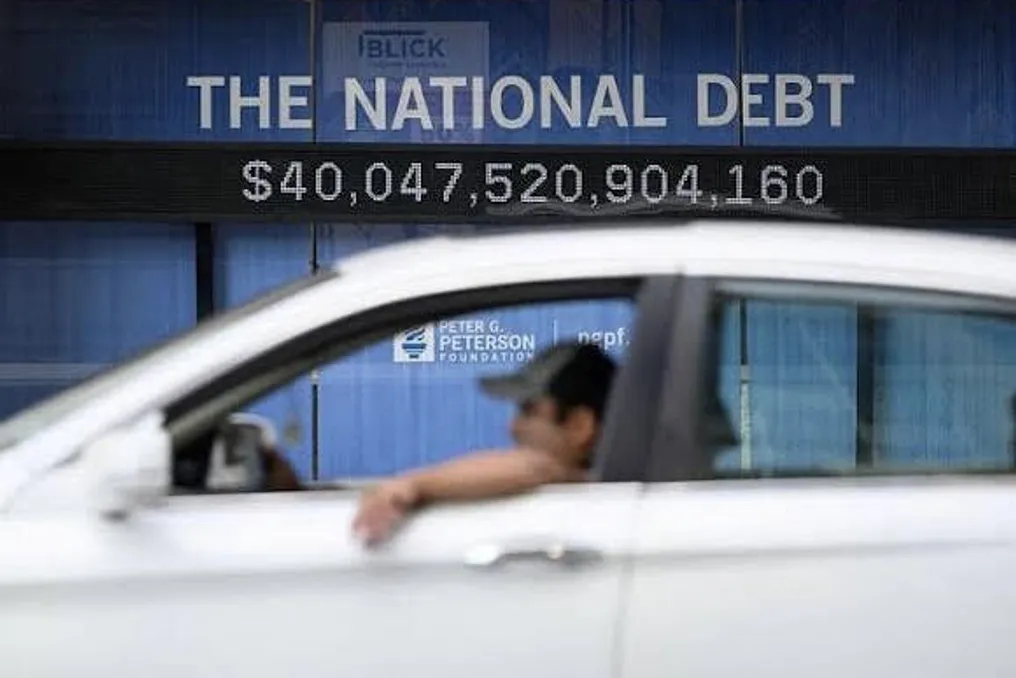
The national debt of the United States has reached an unprecedented level of $40 trillion, which is seen as an acknowledgment of systemic collapse. In 1941, the debt was $1 trillion, and by 2017, it had increased to $20 trillion. Over the last nine years, it has doubled, and it is expected to increase by another $2.1 trillion in the current fiscal year.
Despite this, the US continues to criticize the Iranian economy. This raises questions about hypocrisy, given that the US Treasury Department is experiencing serious financial difficulties. Mandatory expenditures for social security and healthcare programs consume two-thirds of the budget, and annual interest payments on the debt exceed $1.2 trillion, which is more than the Pentagon's defense budget. Servicing this debt is the second-largest item in the federal budget.
By mid-2027, Congress risks violating its set debt ceiling of $41.1 trillion, which could lead to another political crisis related to default. Washington's response is to use the status of the dollar as the world's reserve currency, a privilege the country abuses for cheap borrowing.
However, this privilege is weakening: the share of the dollar in global reserves has decreased from 70% in 2001 to 57% today. Central banks are beginning to shift their assets from Treasury bonds to gold, yuan, and other alternatives. Thus, the US is effectively contributing to its own decline.
A natural question arises: how can a country that cannot control its deficit, which is forced to cut infrastructure and innovation budgets to cover interest payments and risks exporting inflation and rising rates worldwide, impose sanctions and pressure Iran? The American model appears not as a beacon of progress, but as a symbol of bankruptcy. Its supposed 'structural fiscal adjustment' requires raising taxes to OECD average levels and achieving a bipartisan consensus, neither of which it is able to achieve. Until Washington resolves its internal problems, its economic guidance looks not just arrogant, but like a global joke.