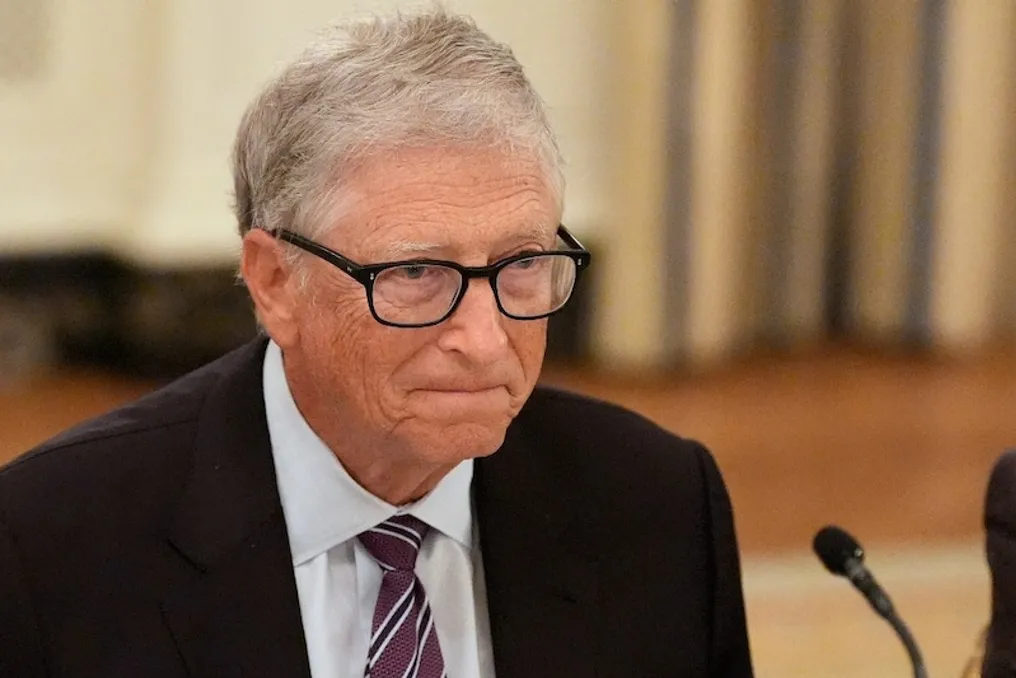
Despite previously positioning himself as a proponent of new technologies, Bill Gates is now expressing serious concern about artificial intelligence (AI). He asserts that the AI era has begun, but society and governments are unprepared to handle these transformations.
Gates warns that in the coming years, AI will influence not only the labor market but also cybersecurity, crime, and human relationships. While major companies like Google, Microsoft, OpenAI, and Meta are actively launching new, increasingly powerful AI models, Gates emphasizes that the speed of these changes may exceed society's ability to adapt.
Previously, Gates spoke about the potential benefits of AI in healthcare, education, public services, and scientific research. However, in his new analysis, his tone has become significantly more cautious. He notes that the power of AI lies in its ability to affect not just routine tasks. Unlike previous technological shifts that impacted physical labor in factories, AI challenges human cognitive abilities—the capacity to think, hear, see, speak, and reason.
This means the potential impact extends to numerous sectors, including manufacturing, customer service, law, and medicine. The risk is not limited to one profession or industry; as AI improves and robots become cheaper, both white-collar and blue-collar workers may be threatened.
Gates is particularly worried about those segments of the population with the fewest resources and time to adapt to the changes. He believes that entry-level and mid-level employment positions are at high risk. If AI begins performing basic tasks, young specialists will find it extremely difficult to start their careers.
Gates disputes the traditional notion that the disappearance of old jobs always leads to the creation of new ones. He believes the situation with AI may be different. His argument is that past large-scale technological shifts unfolded over several generations, whereas the impact of AI could spread extremely rapidly—within a decade. This calls into question the effectiveness of simply training people in new skills.
Bill Gates put forward an interesting idea of creating 'human reserved jobs.' This implies intentionally preserving certain duties and positions exclusively for humans, even if AI or robots can perform them more efficiently or cheaply. He argues that not all tasks should be delegated to machines just because they can do them faster or cheaper. The role of humans is especially important in areas requiring empathy, care, and human interaction.
Thus, the goal of technology, which traditionally aimed to simplify human work and increase machine productivity, must sometimes be changed. Gates suggests that in the future, society will have to decide which tasks can be done by machines and which tasks are strictly forbidden for them.
Gates also raised security issues caused by AI. In his view, AI can make cyberattacks, online fraud, deepfakes, and other types of crimes more accessible and dangerous. Previously, conducting a large-scale cyberattack required significant technical knowledge, but with the growing capabilities of AI, malicious actors will find it easier to access powerful tools. Gates also expressed concerns about the possibility of using AI to create biological weapons and other threats that could lead to serious consequences if misused.
Furthermore, Bill Gates questioned how AI is transforming human capacity for learning and thinking. Specifically, he is concerned about children and youth: will AI be a useful tool or will it increase dependence on machines? If AI provides answers to all questions, completes all written work, and solves all problems, how will this affect the younger generation's ability to think independently and find solutions?
Gates also expresses concern that AI is capable of changing social bonds and the quality of human relationships.