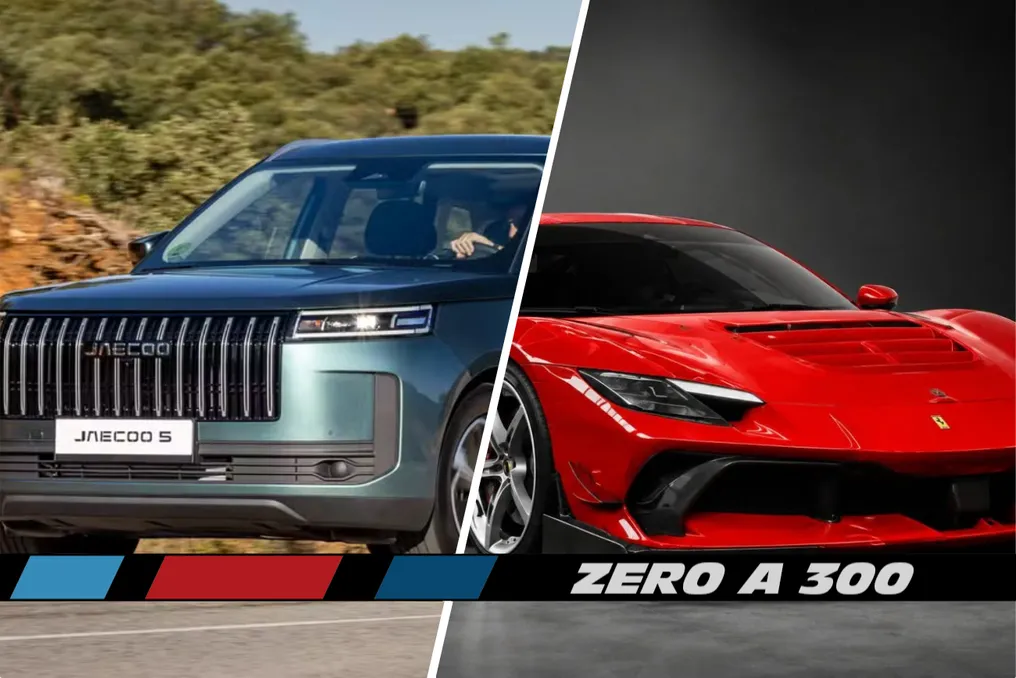
Jaecoo launches new hybrid SUVs in Brazil; Ferrari 296 may get non-hybrid version
Read more
FlatOut
flatout.com.br

Jaecoo launches new hybrid SUVs in Brazil; Ferrari 296 may get non-hybrid version

During the Interlagos Festival, Omoda Jaecoo presented two new options for the Brazilian market: the Jaecoo 5 and Jaecoo 8 SUVs, both equipped with hybrid technology.

The Jaecoo 5 is a compact SUV with dimensions of 4.38 meters in length, 1.86 m in width, 1.65 m in height, and 2.62 m wheelbase. Its specifications include a 1.5-liter turbocharged gasoline engine with direct injection and a front electric motor (powered by a 1.8 kWh battery), generating a total of 224 hp and 30.1 kgfm of torque. This setup positions it as the most powerful compact SUV available in Brazil, although sales will only begin in September, and prices have not been announced. The manufacturer also confirmed the development of a future all-electric version of this model.

The Jaecoo 8 is the brand's first seven-seater vehicle in Brazil. This robust SUV measures 4.82 meters in length, 1.93 m in width, 1.70 m in height, and has a 2.82 m wheelbase, surpassing even the Jeep Commander in size. It also uses a plug-in hybrid system, composed of a 1.5-liter turbocharged gasoline engine and two electric motors (one for each axle). This configuration delivers an impressive 537 hp and 66.2 kgfm of torque, allowing for 0 to 100 km/h acceleration in 5.8 seconds and offering an autonomy of 180 km in pure electric mode. The launch of the Jaecoo 8 is scheduled for the first half of 2027.

Possible abandonment of the hybrid system in the Ferrari 296 Challenge Stradale

There is good news for internal combustion engine enthusiasts, as the Ferrari 296 may soon receive a version without hybrid assistance. A camouflaged example was seen circulating near the factory in Modena, and information about its mechanism was obtained.

Ferrari already sells the 296 Challenge version, aimed at tracks and friendly meets. However, the photographed vehicle appears to be the street version, which could be named the 296 Challenge Stradale. Although the camouflage hides body details, it does not conceal the large rear wing with 'gooseneck' style supports, similar to the Challenge version.

The most relevant point is the speculation about a mechanical setup without electrification. Sources linked to the brand indicate that, similar to the track version, the hybrid system would be removed, leaving only the biturbo V6, calibrated to produce around 720 hp. The goal would be to reduce the car's weight, aiming for under 1,300 kg without fluids, compared to the current street version's dry weight of 1,470 kg.

The informants also reported that the 296 Challenge Stradale should be launched this year, specifically in November, and will be part of the standard Ferrari catalog, not as a limited edition.

Dodge Viper GTS-R receives Lego Technic kit

Although the Dodge Viper has been discontinued for several years, it has gained a new miniature representation: a recently released Lego Technic kit.

This Viper GTS-R kit features functional doors and operational steering, in addition to a rear wing reproduced with remarkable fidelity for an entry-level Technic model. Additionally, the scaled V10 engine has movable pistons, an interesting detail that elevates the assembly challenge. The kit consists of 805 pieces and comes with a 170-page manual, suggesting a project that could take several weekends.

The recommended age is from 10 years old, but the product may appeal to adults. Those who purchase the kit will receive a code to redeem an exclusive paint job in the game Forza Horizon 6. The launch includes Brazil, and the kit can be reserved on the official Lego website for R$ 649.90, making it one of the more affordable kits in the Technic line, which has more complex models with about 4,000 pieces and values exceeding R$ 4,000.

New generation of Mitsubishi Pajero to be presented soon

The next generation of the Pajero is about to be revealed. Mitsubishi announced that the event will take place on September 2nd, marking the end of a five-year hiatus since the discontinuation of the previous generation in 2021, when the Triton pickup became the brand's only legitimate off-road model.

Like the Triton, the new Pajero will use a ladder frame, although Mitsubishi assures that it will have specific adjustments to provide greater passenger comfort and more refined dynamics while maintaining its capability in difficult terrain. The company also confirmed that the Pajero will have diesel turbo and hybrid versions, despite not yet releasing technical specifications or launch availability.

It is likely that the new Pajero will use the same powertrain as the Mitsubishi Triton, which currently has a 2.4-liter turbodiesel engine producing 205 hp, and which will soon receive a complete hybrid system (HEV, not plug-in) based on this engine. Following tradition, the production of the new Pajero will be carried out in Thailand, sharing the production line with the Mitsubishi Triton.
Similar stories

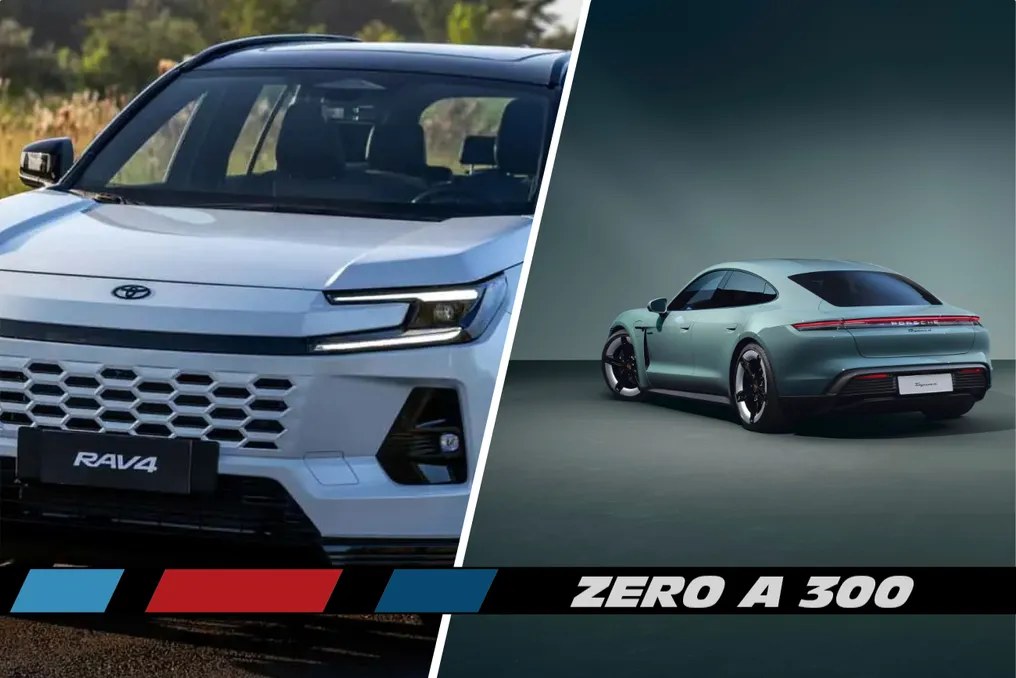
Porsche denies rumors about the end of the Taycan; new plug-in hybrid Toyota RAV4 launched
Read more
flatout.com.br

Porsche denies rumors about the end of the Taycan; new plug-in hybrid Toyota RAV4 launched

Porsche has refuted speculation that it plans to discontinue the Taycan model, while the automotive market presents other news, such as the launch of a plug-in hybrid version of the Toyota RAV4 and studies on Chevrolet's return to the truck segment in Brazil.

Historically, Porsche diversified its line by introducing the Cayenne SUV and the Boxster in the 1990s to support the 911. However, in 2026, a curious reversal is observed: the 911 maintains consistent sales figures, while the rest of the line faces commercialization difficulties.

Recently, there was extensive media coverage regarding Volkswagen Group's intention to optimize its lineup to contain costs and losses, aiming to halve the number of models across all its brands. Within this scope, the Porsche Taycan was pointed out as one of the potential candidates for discontinuation. A note published in the German economic magazine WirtschaftsWoche suggested that the electric sedan could be discontinued by 2030, with Porsche having considered an even earlier shutdown.

In direct response to these rumors, Porsche made a public statement. A brand spokesperson informed the publication Robb Report that there are no short-term plans to remove the Taycan from the market. On the contrary, the manufacturer has made significant investments in the vehicle and is monitoring demand for it.

Despite this, demand for the Taycan has shown a noticeable reduction in recent years, registering just over 16,000 units sold in 2025, which represents a sharp drop compared to the more than 41,000 units sold in 2021. This suggests that Porsche may have overestimated public interest in electric vehicles in its niche.

The statement made to Robb Report echoes Porsche's previous stance on future electric Boxster and Cayman models, reinforcing that the plans remain valid due to the large investments already made in these cars, making it impossible to abandon them at this time. The future of these models remains under observation.

Automotive Industry Trends

In the sector, a growing trend is the reduction of buttons on dashboards, replacing them with touch screens and voice commands. BMW follows this trend, claiming that the absence of physical controls in its newest models is due to young people's preference for interacting with their cars by voice. Vikram Pawah, CEO of BMW's Australian division, commented to CarExpert that voice and touch controls are becoming popular, attributing this partly to a generational issue. He observed that the younger generation, aged 45 or under, adopts these technologies more quickly, prioritizing speed and being multitaskers.

Although this justification seems plausible, it neglects crucial aspects of ergonomics and safety. Physical and tactile buttons offer the unparalleled advantage of not forcing the driver to look away from the road. Muscle memory allows for quick adjustments, such as temperature control or radio switching. In contrast, a touch screen requires visual focus and menu navigation, diverting attention necessary for driving.

It is argued that justifying the end of buttons as an adaptation to the 'multitasking youth demand' is, in fact, a convenient narrative. The real reason for this forced change is financial: software and screens are cheaper to produce than physical controls. Benedetto Vigna, current CEO of Ferrari, confirmed that touch control units can cost up to 50% less than a complete panel of mechanical switches, dedicated wiring, and plastic molds.

Launch of the New Plug-in Hybrid Toyota RAV4

Toyota introduced the new RAV4 equipped with a plug-in hybrid system to the Brazilian market. This version, named XSE, completes the SUV line, whose new generation was presented in Brazil in April 2026. At a price of R$ 399,990, the RAV4 XSE PHEV is positioned above the S and SX versions, which use a traditional hybrid system.

The powertrain combines a 2.5-liter naturally aspirated four-cylinder engine, generating 189 hp and 24.2 kgfm, along with three electric motors. The total power achieved is 329 hp, allowing the SUV to accelerate from 0 to 100 km/h in 5.7 seconds and reach a top speed of 180 km/h, making it the most powerful version of the RAV4 sold in Brazil. Toyota reports that the new 22.7 kWh lithium-ion battery allows for up to 61 km of travel in fully electric mode, according to INMETRO standards. Additionally, the SUV now supports fast DC charging of up to 50 kW, in addition to 11 kW AC charging.

Internally, the SUV features a 12.3-inch digital dashboard and a 12.9-inch multimedia center equipped with JBL sound, as well as the 4.0 version of the Toyota Safety Sense package. However, the installation of the larger battery under the floor results in a practical limitation: the trunk offers 421 liters, a volume lower than the 749 liters available in the conventional S and SX hybrid configurations. Despite the increase in power (329 hp versus 306 hp of the previous plug-in version) and the inclusion of fast charging, Toyota kept the price at R$ 399,990, identical to the value charged at the launch of the previous generation's PHEV in 2024.

Chevrolet Studies Return to Truck Segment in Brazil

More than three decades have passed since Chevrolet suspended the sale of trucks in Brazil. The last models, which were medium and heavy duty from the Series 11000 to 22000 (such as D-12000 and D-14000), were discontinued in the mid-1990s. Subsequently, GM attempted an incursion in the second half of the 1990s, transferring the heavy commercial division to the GMC brand. During this period, the GMC Kodiak, a twin-cab truck imported from the United States, and the light models of the 6-100 and 6-150 lines, as well as medium lines based on Isuzu projects, were introduced to the country.

This operation, however, had a short duration and was formally ended in the early 2000s. Now, more than twenty years later, Chevrolet is evaluating a return to the heavy vehicle segment in Brazil. According to Autoesporte, the current focus would be to reestablish local collaboration with Isuzu, primarily targeting light trucks intended for urban use.

In the United States, Chevrolet markets the Low Cab Forward (LCF) line, which consists of flat-nosed urban trucks, essentially Isuzu models rebranded with the brand's visual identity. Although the details of this possible partnership in Brazil are still uncertain, an alternative raised is the importation of models manufactured in Uruguay, following the example of Ford and Kia with their respective commercial vehicles. The reason for this possibility lies in the Mercosur free trade agreement, which exempts vehicles assembled in the neighboring country from import taxes, significantly reducing entry costs into the national market.

If this project advances, the goal is to compete with established brands in urban transport, such as the Volkswagen Delivery family and South Korean and Chinese models in the sector. For Chevrolet, this would represent an opportunity to regain a historically lucrative and important segment, with a relatively low development cost, leveraging the vast infrastructure of its dealership network covering the entire national territory.

Updates to the Dry Law enforcement and launch of the limited edition GWM Tank 300 TerraForce series
Read more
flatout.com.br

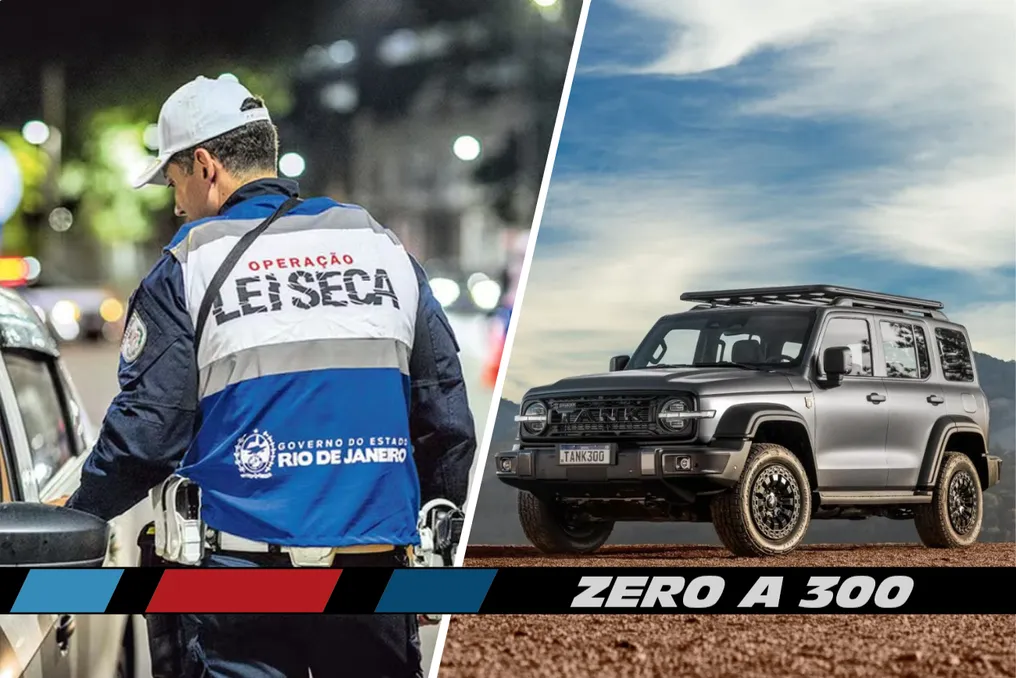
Updates to the Dry Law enforcement and launch of the limited edition GWM Tank 300 TerraForce series

The enforcement rules for the Dry Law have been updated by Contran in Brazil. Although fines, alcohol limits, and other sanctions remain unchanged, the method of enforcement undergoes significant modifications.

Changes to Dry Law Enforcement

The main new feature introduced is the pre-alcoholism test. Instead of requiring drivers to blow into an breathalyzer, officers can now use passive breathalyzers, or screening breathalyzers. These devices, which do not have a mouthpiece, analyze the air around the driver or the short-distance exhaled air, usually when they speak or approach the device. They act as an indicator of alcohol presence without measuring the exact concentration.

If this pre-test indicates the presence of alcohol, the driver must be taken to the conventional breathalyzer with a mouthpiece for the infraction to be confirmed. It is important to note that this pre-test alone cannot result in a fine.

A second change addresses situations where the breathalyzer may register residual alcohol in the mouth, caused by products such as mouthwash, expectorant syrups, liquor-containing sweets, or certain foods. In these cases, if there is a plausible justification, the test must be repeated before the inspection is concluded. This rule aims to prevent a reading contaminated only by the mouth from being mistaken for alcohol ingestion.

The third change allows checks to also test for the consumption of other psychoactive substances. Contran has regulated the use of specific devices to detect drugs that may affect driving ability; these devices signal the presence of the substance but not its concentration in the body.

Clearer criteria have also been established for when the officer themselves determines the driver's impaired capacity. In the absence of corroborating tests, at least two signs of psychomotor alteration must be recorded. Refusal of the breathalyzer maintains its previous status: the driver can refuse, but remains subject to the penalties of the Brazilian Traffic Code, including a fine and a twelve-month license suspension. The new regulation is already in effect, although some administrative adaptations by traffic agencies have a deadline of up to sixty days for implementation.

Mazda registers another patent to try to save the Wankel engine

Mazda demonstrates persistence in trying to revive the Wankel engine, despite general skepticism after previous launches, such as the Gran Turismo and the Vision-X coupe, which used the rotary engine in hybrid configurations.

In 2024, the Iconic SP concept sparked interest in the possibility of a sports car with a Wankel engine, even if used as an auxiliary range extender in a hybrid system. Later, in October 2025, the Vision-X coupe presented a plug-in hybrid powertrain with a turbocharged rotary engine and electric motor, promising 510 combined hp.

The main obstacle preventing these vehicles from remaining mere concepts is the emission level, as Mazda seems unable to develop a Wankel engine that meets current environmental standards. However, a recently registered patent by the manufacturer may offer a solution.

According to the document filed with the United States patent office, Mazda intends to implement an exhaust gas recirculation (EGR) system in the rotary engine. While most modern combustion engines use some form of EGR to reduce emissions, Wankels historically did not incorporate this technology due to less stringent environmental requirements during their production period.

The system proposed by Mazda works by dividing the exhaust flow from the rotor housing. Side outlets feed the turbocharger, and peripheral outlets direct the gases to the EGR cooler. Theoretically, this solves two old problems of the rotary engine: in normal operation, the cooled gases return to the intake, reducing combustion chamber temperature and decreasing nitrogen oxide (NOx) formation. When the accelerator is pressed and the EGR is deactivated for maximum power, this cooled air is diverted directly to the secondary catalyst. In both scenarios, the system aids in burning fuel residues before they reach the environment.

In summary, Mazda seeks to make the Wankel less polluting, which would increase the chances of a new sports car with it, benefiting the enthusiast brand, as the Miata is an atypical model in its Japanese portfolio.

GWM Tank 300 gets TerraForce limited edition

The GWM Tank 300, launched last year, has been well received by the public, who admire its design inspired by icons such as the Jeep Wrangler and the Mercedes-Benz G-Class, combined with a hybrid setup that offers 394 hp and 76.4 kgfm of torque, derived from a 2.0 turbo engine and an electric motor.

Although many buyers do not use the vehicle on severe trails, the Tank 300 is classified as a genuine jeep, featuring a body-on-frame construction, robust suspension, all-terrain tires, 4x4 traction with low range and terrain selector, in addition to a nine-speed automatic transmission.

GWM has just presented the special TerraForce series, considered an exclusive 'sub-brand' for the Brazilian market, created based on customer feedback and which may appear in other models in the line in the future. Although it has not specified which models these would be, it is likely that TerraForce versions exist for the Haval models, the Poer P30 pickup, and the GWM Tank 400, which will arrive soon.

The differences in the Tank 300 TerraForce include an exclusive Zenith Gray paint and a front grille that replaces the emblem with a large 'TANK' lettering. The 18-inch wheels are also new. Furthermore, the Tank 300 TerraForce comes equipped with a roof rack, capable of supporting 75 kg of load.

The interior maintains similarities with the standard Tank 300, featuring leather seats and 12.3-inch screens on the dashboard. Improvements focus on convenience and comfort, such as ventilation in the driver's seat backrest and an eight-mode massager. With a price of R$ 350,000, only 300 units of this special edition will be sold, and buyers will receive a kit including a thermos, flashlight, and knife, in addition to access to an exclusive GWM service channel.

Brembo presents the most powerful brake calipers ever made by the brand

Although Brembo is often associated with sports cars and racing, the Italian company also develops high-performance brakes for other segments. Its latest launch highlights this: the new Boldika line calipers, intended for pickups and SUVs, are the most powerful ever manufactured by the brand.

Equipped with six pistons, these calipers were specifically designed to manage the inertia of large utility vehicles and pickups, regardless of whether they are powered by combustion or 100% electric. Due to the increased weight and power of these vehicles, the assembly can deliver an impressive 8,500 Nm of braking torque.

To support this load without deformation, the calipers use a three-part construction, combining aluminum sides with a cast iron central bridge. This is the first time this type of structure has been used in a six-piston caliper by the brand, ensuring high structural rigidity and lower weight compared to an all-iron structure.

Brembo has also integrated the Enesys system, a technology that ensures the complete return of the pads as soon as the driver releases the brake pedal. By eliminating residual friction with the disc during free driving, the system prevents unnecessary wear of components and contributes to fuel economy or battery energy savings in electric models.

Despite its strength, the Bondika calipers are compact enough to be installed on wheels starting from 20 inches. The first vehicle to receive this system will be the Chevrolet Silverado EV RST Stars and Steel Edition, an electric version of the pickup that will come with the assembly painted in Torch Red. This vehicle, weighing four tons and boasting over 700 hp, capable of reaching 100 km/h in 4.5 seconds, justifies the need for high-capacity brakes.

Toyota adopts new technique to inspect engines: a tap

Toyota is officially applying a procedure reminiscent of the iconic scene of Jeremy Clarkson using a hammer to fix a car, aiming to resolve a serious issue in a recall affecting over 250,000 pickups and SUVs equipped with the V35A biturbo V6 engine.

The cause of this recall is serious: machining residues remaining in the block during production can detach and damage the main crankshaft bearing, resulting in engine seizure. To avoid the need to dismantle thousands of entire engines just to inspect this bearing—a process that would take days in the workshop per vehicle—engineers developed a non-destructive screening test.

This test uses a small calibrated plastic hammer. Unlike a workshop sledgehammer, this tool has integrated force sensors that alert the technician if the impact is too weak or too strong, ensuring the strike occurs within a standardized margin.

The physical principle employed is based on resonance frequency, similar to that of a tuning fork. Since metal parts leave the factory with identical shape and mass, a crankshaft in perfect condition will vibrate at a precise and predictable frequency when impacted.

Popular