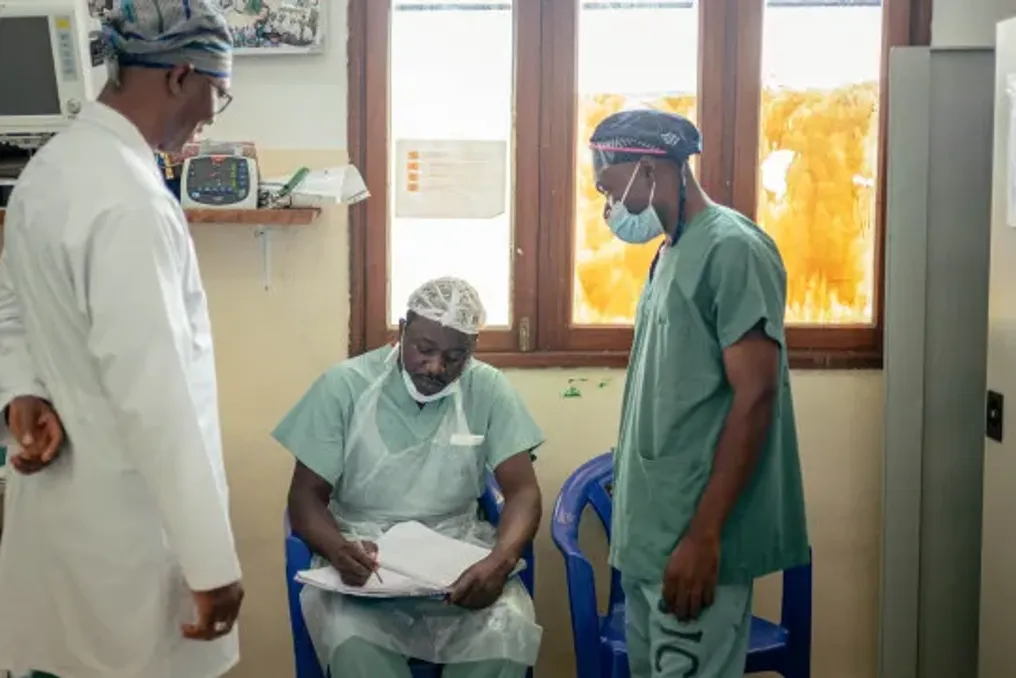
Africa has made a collective commitment to transform an essential pillar of its health systems. Mohamed Yakub Janabi, the WHO Regional Director for Africa, declared this during the 17th session of the organization's Regional Committee, held this week in the Ethiopian capital, Addis Ababa.
By approving the African Health Workforce Agenda 2026-2035, member states recognized that training health professionals is only the starting point. The official emphasized the need to create opportunities, provide support, and improve the working conditions of these professionals.
This plan also aims to strengthen the job markets of African health systems through better planning, education, employment, and retention. The UN agency stressed that the agenda requires coordinated investments to ensure that countries have a competent, motivated, and properly supported workforce to meet the continent's growing health demands.
Currently, African health centers suffer from staff shortages, with an estimated one million qualified health professionals unemployed—a problem that particularly affects recent graduates, according to WHO data. In many African countries, more than half of newly graduated nurses, doctors, and midwives cannot find employment immediately after graduation.
This situation highlights, according to the WHO, the urgency of better coordination between health professional training, job creation, sustainable financing, and long-term planning. To address this deficiency, an additional financial contribution of four to six dollars (equivalent to 3.43 to 5.14 euros) per individual annually would be necessary.
This investment would generate substantial economic and social benefits, as every dollar invested in health personnel can return up to ten dollars (approximately 8.57 euros). The WHO concluded that investing in health professionals transcends being merely a health priority; it constitutes a strategic investment for Africa's future.
The ministers reached this consensus following a progressive exodus of African health professionals towards the global north. This migration occurred in search of better opportunities due to resource scarcity, poor working conditions, and lack of vacancies in their home countries. The meeting in Addis Ababa also takes place against a backdrop of drastic cuts in international aid imposed by the United States and various European countries since last year, which puts the health and lives of millions globally at risk, with a special focus on Africa.