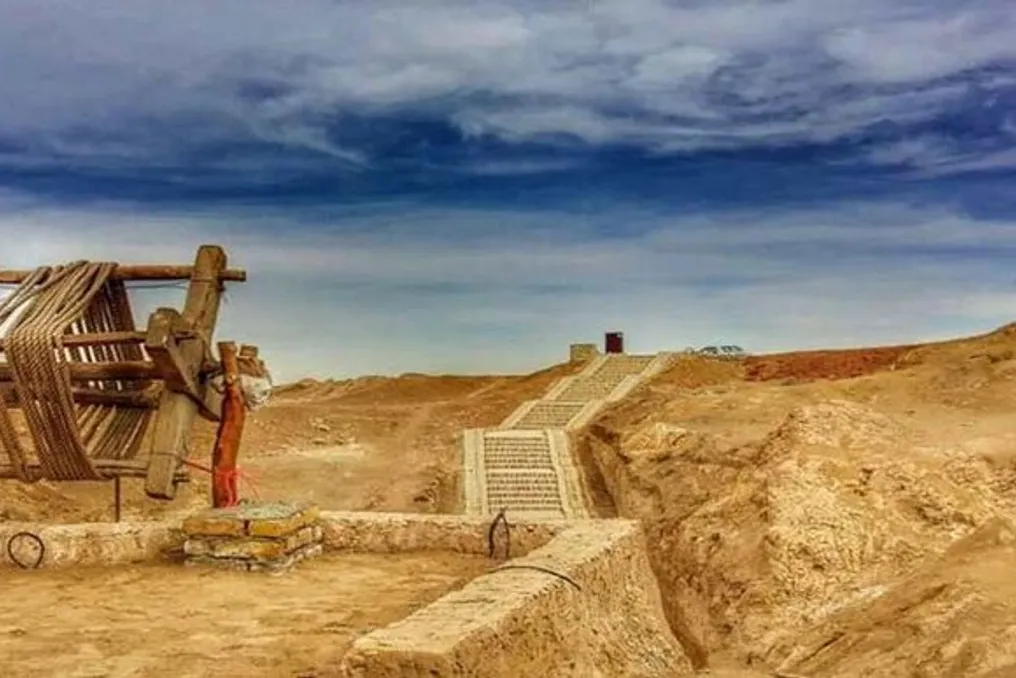
Gonabad, a historic city in the Khorasan Razavi province of eastern Iran, offers visitors much more than just the landscapes of a desert settlement. Its strategic location, ancient water management systems, and mentions in Iranian epic and geographical literature have made it an important destination for those interested in the country's history and cultural heritage.
Situated among mountains and low plains, Gonabad developed at a natural crossroads where the surrounding topography concentrated movement along specific routes. According to local heritage officials, this geographical position allowed the area to serve as an important controlled passage and logistical hub in eastern Iran throughout various historical periods.
One of Gonabad's most outstanding features is the Kasabeh Qanat, which is listed by UNESCO. This exceptional underground water supply system reflects the sophisticated engineering thought developed to sustain life in one of Iran's driest regions. Its large mother wells and complex water distribution network are evidence of extensive social organization and engineering competence. The Qanat was inscribed on the World Heritage List in 2016 as part of the series of Persian qanats.
The Qanat also serves as an important window into the region's ancient history. In the absence of extensive written records from the pre-Islamic period, the water infrastructure can act as valuable archaeological evidence. The scale of the Gonabad qanat system indicates that its construction and maintenance required significant organization and resources, rather than the efforts of small, scattered communities.
Gonabad's historical significance is also evident in Iran's epic tradition. Ferdowsi's monumental Persian epic, Shahnameh, mentions this city in the tale of the Battle of the Twelve Ruhs. Local heritage authorities view these references as part of a long geographical memory linking the region to legendary conflicts between Iran and Turan. The landscape around Gonabad, alongside sites traditionally associated with Shahnameh characters, allows visitors to explore the intersection of mythology, oral tradition, and geography.
The city's role changed significantly after the advent of Islam. Classical geographical works, including writings related to Istakhri and other medieval authors, describe Gonabad as an inhabited and productive area within the broader Khorasan region, rather than merely a military or logistical outpost. Its water infrastructure helped support agriculture, settlement, and trade, and its position on routes connecting eastern Iran with other regions stimulated commercial development.
Thus, for travelers, Gonabad represents a rare combination of desert landscapes, ancient engineering solutions, and living cultural heritage. Visitors can explore the Kasabeh Qanat, discover historical settlements and landscapes around the city, and learn how communities adapted to the arid environment through complex water resource management.
The history of Gonabad is ultimately a story of continuity. From an ancient settlement sustained by advanced water engineering to a strategic point, and then to an agricultural and commercial center, the city has repeatedly adapted to changing circumstances. Its qanats and historical monuments preserve evidence of this long transformation, making Gonabad an attractive place for travelers seeking to understand how civilization developed and survived in the arid east of Iran.