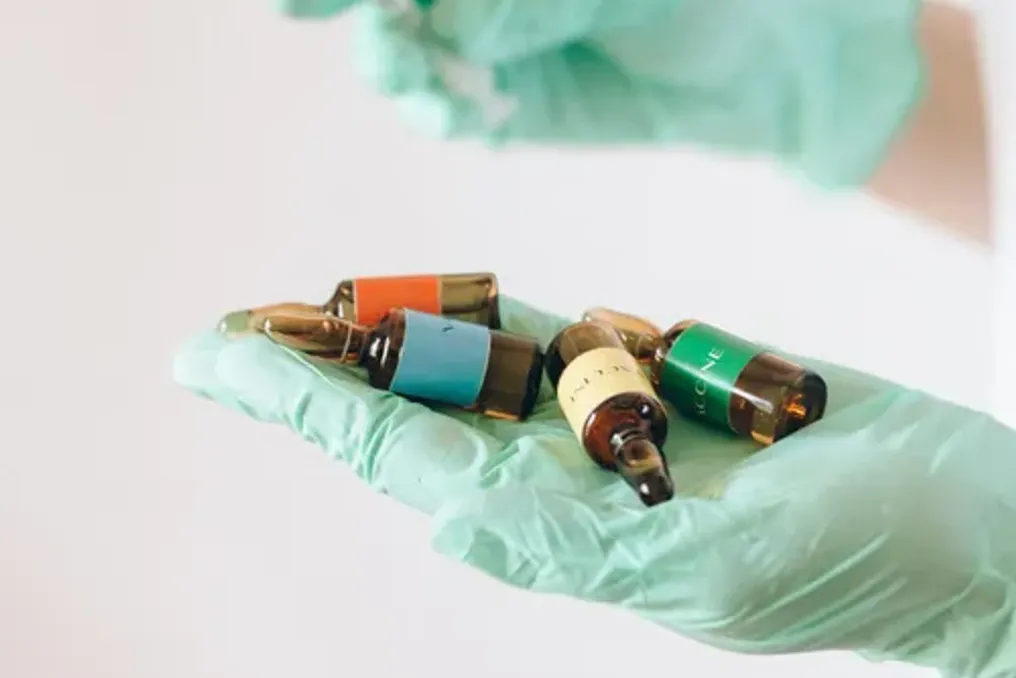
A laboratory from Senegal has developed an affordable drug for treating sickle cell disease by introducing the generic hydroxyurea—the first similar drug in Africa and a standard treatment for this illness.
Mamadu Tahiru, aged 18, suffers from sickle cell disease, which weakens his body. The laboratory aims to alleviate patients' conditions by producing an inexpensive medicine.
Tahiru told the AFP agency from his family home near Dakar about life defined by the hereditary disease that affects nearly eight million people worldwide. He described symptoms such as bone pain, severe anemia, intense fatigue, and severe headaches that often lead him to the hospital. His 40-year-old mother, Rabiatu, watched him nearby, her eyes filled with tears.
Pain attacks sometimes occur during activities, disrupting his studies and forcing him to miss school. Africa is responsible for almost 80% of all cases of sickle cell disease. Nevertheless, the continent heavily relies on expensive medications imported from Europe and America, especially hydroxyurea, which is recommended by the World Health Organization (WHO).
According to the organization, this drug helps reduce painful crises, hospitalizations, the need for blood transfusions, and mortality.
Interest in West Africa
Tahiru informed AFP that he was diagnosed with sickle cell disease at the age of three and has lived with it ever since. The Senegalese pharmaceutical company Teranga Pharma produces a local treatment positioned as more affordable and better suited to patients' realities.
In November 2025, the company released the drug Drepaf, available in 500 mg doses for adults and 100 mg for children, with the goal of 'reducing the crisis threefold.' This generic offers hope for solving the shortage of treatment and reducing dependence on more expensive imported medicines. The drug is already attracting attention from several countries on the continent.
This initiative is supported by funding of 4 billion CFA (7.1 million US dollars) and comes at a time when access to imported treatments has become difficult. A study published in 2023 in the journal Blood, a medical publication of the American Society of Hematology, showed that 78% of healthcare workers surveyed in 13 French-speaking sub-Saharan African countries mentioned frequent supply disruptions of hydroxyurea.
Two versions of Drepaf are sold to pharmacies at wholesale prices of 3000 and 1500 CFA, respectively. Existing hydroxyurea drugs, Hydrea and Siklos, cost up to three times more. Mouhamadou Sow, CEO of Teranga Pharma and a pharmacist himself, told AFP that the pediatric version of Drepaf meets a critical need for a formula suitable for use from nine months old.
He spoke to AFP at the company's 9,000 square meter (97,000 square feet) factory in Mbao, on the outskirts of Dakar. Before Drepaf, if a person could not obtain or afford the imported medicine, there was no local solution. 'Doctors were often forced to treat the consequences of the disease, not its root cause—red blood cells,' he noted.
Teranga Pharma is collaborating with an Indian technical partner to increase production and supply to other African countries. The laboratory reported that it is already working with Burkina Faso, Guinea, and Côte d'Ivoire, and has received inquiries from the Democratic Republic of Congo, Gabon, and Cameroon.
A Step Forward
The company aims to meet demand across the entire sub-region of Africa by 2030 as part of a strategy to strengthen Africa's pharmaceutical sovereignty. Magyee Ndiaye, president of the Senegalese Association for Sickle Cell Disease (ASD), called Drepaf a significant step forward in treating children.
He noted: 'Previously, patients had to buy two packs of 20 tablets. Now, one pack of Drepaf containing 60 is enough, and at the same price.'
Lala Dieng, whose 17-year-old son was diagnosed six years ago, noticed an improvement. She told AFP: 'Doctors used to prescribe Hydrea 500 to relieve his attacks. Recently, he switched to Drepaf 100, and I have noticed that he has far fewer attacks.'
Ndiaye also emphasized that raising awareness about early screening helps, as infants who receive treatment early feel better, and prenatal testing can help couples decide whether they want to have children together. As a genetic carrier of sickle cell disease, he has shared his experience for 20 years and advocates for increased awareness. During World Sickle Cell Day on June 19, he gathered specialists to promote comprehensive care combining medication and psychosocial support to improve patients' life expectancy.