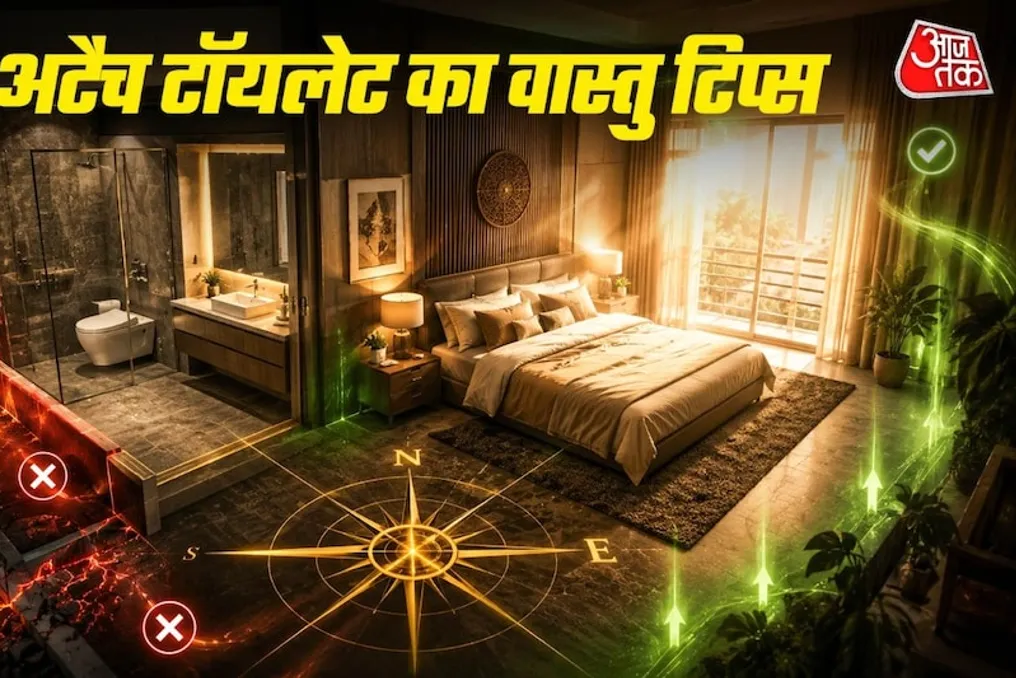
According to Vastu Shastra, placing a toilet in every room is considered inauspicious and may lead to financial difficulties.
Read more
Aaj Tak
www.aajtak.in

According to Vastu Shastra, placing a toilet in every room is considered inauspicious and may lead to financial difficulties.

Modern lifestyles have led to significant changes in the construction of residential buildings and the furnishing of rooms. Currently, it has become common practice to install adjacent toilets in almost every room, both in large and small houses. Previously, there was a tradition of separating the toilet from the main living area, but now, in the name of convenience and modernity, a single house may have three, four, or even more toilets. These changes are becoming one of the main causes of Vastu defects in several homes.

In the study of Vastu Shastra, the toilet is viewed as a place that carries negative energy, similar to the energy of Rahu. Consequently, the energy associated with the direction where the toilet is built can be affected. According to beliefs, if a toilet is built in a positive zone, it can cause obstacles and problems in matters related to that direction. Such homes often face financial difficulties. This is why the location of the toilet is more important than its quantity in the house.

There are three zones considered suitable for building a toilet. The first is South-East-East (ESE), located immediately after the eastern direction. The second zone is South-South-West (SSW), which is considered the zone after the southern direction. The third zone is West-North-West (WNW), located immediately after the western direction. Building a toilet in any of these three zones brings favorable results. Therefore, when developing a house plan, the location of the toilet should be determined in advance to avoid being forced to place it in the wrong direction later for convenience.

Some directions are considered particularly sensitive for installing a toilet. The most critical are North-East (Ishan Kona) and South-West (Nairitya Disha). It should be avoided to build a toilet in these places. Ishan Kona is associated with positive energy, knowledge, spirituality, and the home's thoughts; having a toilet in this area disrupts the energy of this sector. At the same time, the South-West is linked to stability, control, and the strength of the house. A toilet in this place can cause problems related to family stability and decision-making ability.

If a house already has a toilet located in an unsuitable direction, instead of demolishing or making changes without consulting a specialist, a full Vastu analysis of the entire house must first be conducted. For toilets located in certain directions, special Vastu remedies can be applied, but having a toilet in the Ishan and South-West is considered the most serious situation.
Similar stories

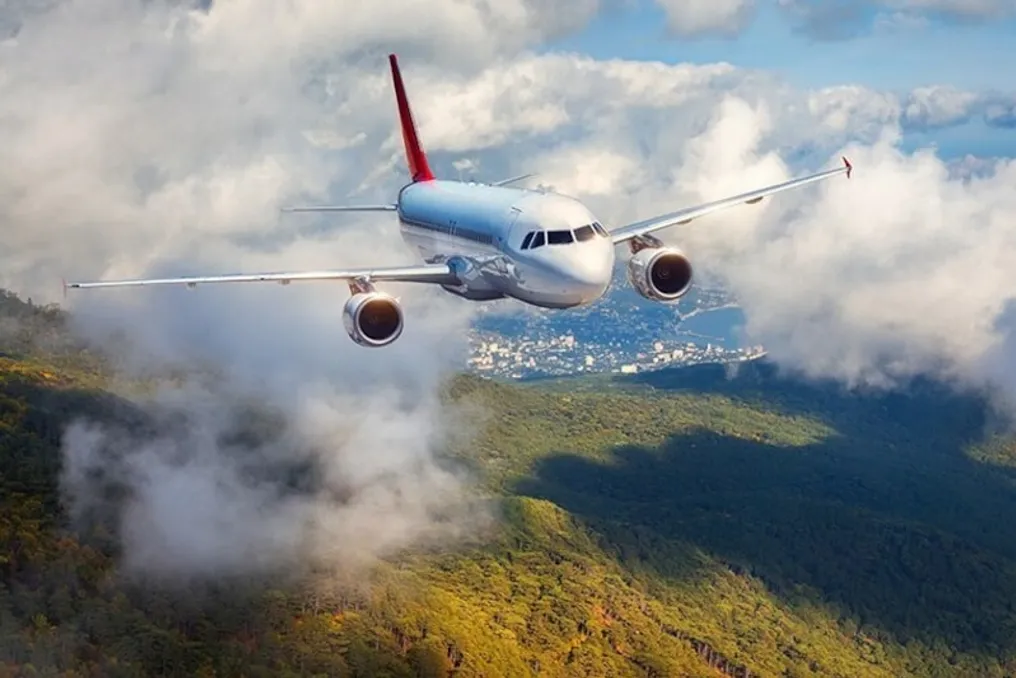
How are toilet waste from an airplane at an altitude of 30-35 thousand feet disposed of?
Read more
www.aajtak.in

How are toilet waste from an airplane at an altitude of 30-35 thousand feet disposed of?

The question arises: where does the toilet waste go after flushing on an airplane at an altitude of 30-35 thousand feet? Is it simply dropped into the sky or ejected from the aircraft? Today we will examine answers to all these questions in detail, explaining the process in a simple way.

In modern commercial airliners, toilet waste during flight is not discharged outside. Instead, the aircraft has a special storage and vacuum system that transports the waste to a sealed collection tank after flushing. During the flight, this waste remains in the tank, and it is removed after landing.

The system works as follows: after flushing, the waste is quickly sucked by the vacuum system and directed into a closed collection tank. Since this tank is sealed, the odor from the waste does not directly enter the cabin. Furthermore, the toilets themselves are equipped with ventilation and air filtration systems that help maintain atmospheric control. The vacuum system ensures the rapid transfer of waste to the tank, minimizing the risk of it being open and spreading odors.

Home toilets usually function using water and gravity. Aircraft toilets use the principle of pressure difference and vacuum. The advantage of this technology is the ability to flush waste with less water consumption. Also, the pipes do not need to lead only downwards; the vacuum system can deliver the waste to the tank through a pipeline. It is this technology that makes the toilet system practical for a moving vehicle like an airplane.

In a typical home toilet, waste goes down due to water and gravity. However, the situation is different on an airplane: a vacuum system is used. As soon as the passenger presses the flush button, a valve opens, and due to the pressure difference, the waste is quickly moved through the pipes into the collection tank. The pressure difference between the height in the sky and inside the cabin helps the vacuum system work. On the ground or at a lower altitude, vacuum generators may be used for this process.

If you have ever used a toilet on an airplane, you have surely heard the characteristic sucking sound. This noise occurs due to the intensive operation of the vacuum system. According to Flightradar24 data, some systems are also equipped with a high-speed turbine that helps process the waste before it enters the collection tank. The goal of this is to reduce the risk of pipe clogging.

After flushing, the waste flows through pipes into a special collection tank inside the aircraft. This tank is closed and safe. Throughout the entire flight, the waste accumulates here. Thus, even at an altitude of 35 thousand feet, your waste does not fall directly to the ground. After landing, a ground service team empties this tank using specialized equipment. The waste is then transferred for further disposal in accordance with local airport waste treatment and management systems.

So, the whole process looks like this: after flushing, the waste first enters the aircraft toilet's vacuum system, then accumulates in a sealed tank inside the aircraft via pipes. During the flight, the waste remains in this closed reservoir. After landing, ground transport using specialized equipment pumps out the contents of the tank, after which the waste is sent for further processing or safe disposal. The main goal of this entire system is to ensure the safe storage of waste inside the aircraft during flight.

The common myth that commercial airplanes dump waste into the sky during flight is false. In modern aircraft, waste is stored in a sealed collection tank and is emptied only on the ground. Although extremely rare leaks from toilet systems have occurred in history, if such waste leaks at high altitude and freezes, it is called 'blue ice'; however, such incidents are not common, and modern airliner systems are designed to prevent such occurrences.

The journey of waste after flushing on an airplane differs from a simple toilet on the ground, representing a complex engineering process that takes place at an altitude of 35 thousand feet.

Popular