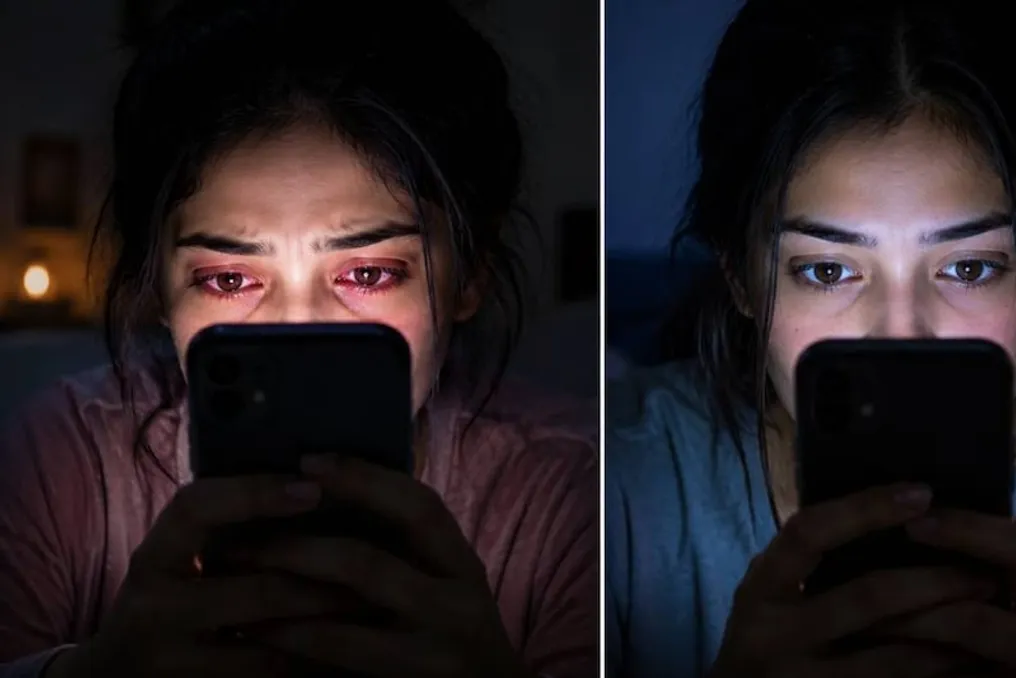
Modern smartphones offer two screen display modes: light mode and dark mode. Users can choose either based on their preferences and needs. However, the question of whether these modes are optimal for vision was addressed in a study published in 2025. This research also clarifies how having this feature can benefit technology and social networks.
The researchers aimed to determine which of the two modes—dark (black screen with white text) or light (white screen with black text)—is more favorable for the eyes when using a smartphone. Thirty women aged 18 to 25 were involved in the test. All participants used tablets, and their vision was within normal limits. They were asked to read text in both modes, and eye examinations were conducted before and after reading to assess fatigue, dryness, and eye reaction speed.
The test results showed that eye fatigue occurred in both modes, but it was more pronounced in light mode. At the same time, eye fatigue was slightly lower in dark mode. This study emphasizes the importance of proper screen optimization, as the display mode can affect eye strain during prolonged screen use.
A question arises as to whether dark mode was intentionally introduced by tech companies to increase profits. Since almost everyone today uses smartphones not only for communication but also for content consumption and viewing social media, prolonged use of light mode, especially at night, can quickly cause eye fatigue. Nevertheless, dark mode provides more comfort for some users when viewing the screen.
If users experience less eye fatigue, they may spend more time viewing content on social media, which benefits these platforms' applications. However, based solely on this study, it cannot be asserted that tech companies created dark mode with the goal of making users spend more time in front of the screen; there are other reasons, such as eye comfort, better visibility in low-light conditions, and personal user preference.