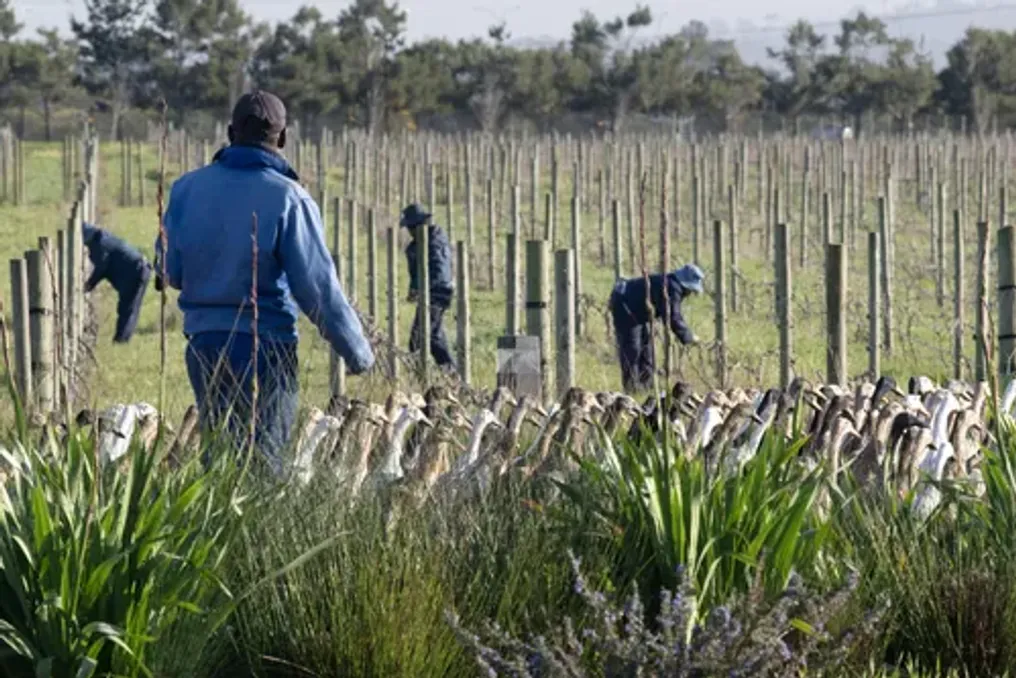
The Vergenoegd vineyard in Stellenbosch uses Indian Runner Ducks to combat pests such as snails, worms, and aphids. Approximately 1000 long-necked ducks are released onto the farm daily to destroy insects through an ecological method that is gaining popularity.
Every morning at 9:00 AM, these terrestrial and non-flying Indian Runner Ducks leave their enclosures on the farm, located near the Stellenbosch wine region outside Cape Town, to begin working. After a quick but brief search for aphids, worms, and snails near the estate and restaurant, they spend the rest of the day in the vineyards.
Christian Kloete, manager of the farm and Vergenoegd Low Wine Estate, noted that using ducks instead of pesticides is more environmentally friendly. He added that the application of chemicals sometimes leads to the death of many beneficial insects, and they aim to create a more biodiverse ecosystem in the vineyards.
This practice was introduced on the farm about 40 years ago. According to Kloete, as farmers seek more sustainable and biologically friendly methods, including 'regenerative agriculture,' the popularity of this method is growing. Currently, five to ten neighboring farms purchase ducks from this farm.
There are about 890 ducks on the premises, and it is expected that 400 ducklings will be hatched during the breeding season from mid-July to the end of October. Half of them will be sold, and the rest will replace older ducks in the farm's own flock. Milan Germishuizen, the farm's eco-ranger, reported that Indian Runner Ducks were originally bred in Indonesia to control pests in rice fields. Their long necks allow them to reach pests on elevated, trellised vines.
These birds also help process manure from 220 sheep and nearly 100 head of cattle grazing in the vineyard—another regenerative agriculture practice that enriches the soil with nutrients. He emphasized that excessive use of pesticides and artificial fertilizers in the soil will ultimately lead to its degradation, so using natural methods helps care for the soil, which ultimately yields a better product.
When grapes appear on the vines, the ducks are kept away so they are not attracted by the fruit, and they are directed towards four irrigation reservoirs. During grazing, their excrement enriches the water in a process called 'fertigation,' explained Germishuizen. Tessa Kleinhans, commercial manager of the on-site hotel, noted that many neighbors have joined regenerative agriculture. She also mentioned that the impressive daily movement of the ducks has become a highlight for visitors.
Kleinhans concluded that they are trying to set a precedent for regenerative agriculture, creating an example that proves that initial capital investments, despite being a long and laborious process, pay off in the end.