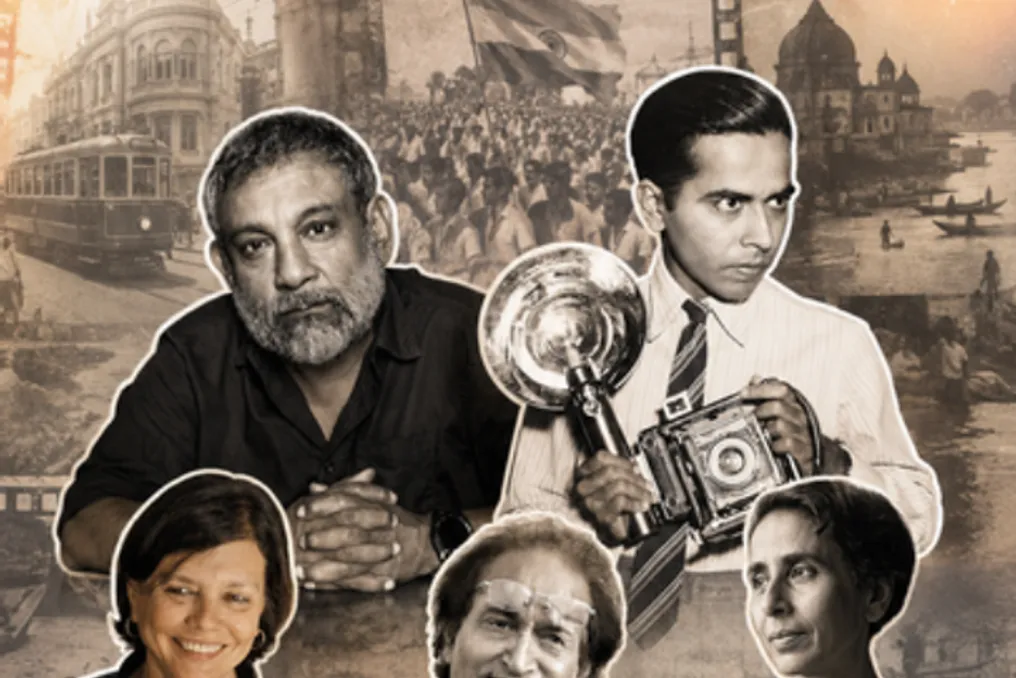
For nearly a century, camera lenses across India have documented events related to revolutions, famine, deities, and slums. Eight photographers, working in Bombay and Delhi since the 1940s, transformed photojournalism into an art form, creating images that changed the understanding of India regarding themes such as independence, poverty, faith, and identity.
The history began in the 1940s when Homai Vyarawalla entered the profession, traditionally considered male, publishing her work under a male pseudonym. She traveled through Delhi, photographing Gandhi's funerals, Nehru's parliamentary sessions, and the attainment of independence in 1947, documenting the formation of a new free nation.
While Vyarawalla captured centers of power in Delhi, Sunil Janah documented the Bengal famine in 1943 for the Communist Party. His photographs reflected the images of starving villagers, violence during Partition, and industrial workers who were often ignored by newspapers.
Several years later, in Mysore, T.S. Sathyan chose not to focus on politics or tragedies. Joining the editorial staff of Deccan Herald Bangalore in 1948, and later working as a freelancer for Life and Time publications, he insisted that his true subjects were ordinary traders, farmers, and schoolchildren.
Raghu Rai, who grew up amidst such stories, joined The Statesman in 1965, and later became a member of Magnum Photos in 1977 upon invitation from Henri Cartier-Bresson. His 1984 works, taken during the Bhopal gas tragedy and depicting a buried child, became a somber testament to industrial disaster in photojournalism.
Rai was not alone in Bhopal; Pablo Bartolomeu, who was studying photography with his father, was there that day. At the age of twenty, Bartolomeu won the World Press Photo award for photos of drug addicts in 1975, and Bhopal earned him the title of Photo of the Year.
While Rai and Bartolomeu worked in black and white, capturing tragedies, Ragubir Singh chose color in the 1960s, a time when serious photography avoided it. His books 'River of Colour' and 'A Way into India' reinterpreted the country's streets, festivals, and rivers.
A generation after Ragubir Singh's color revolution, Dayanita Singh published 'Zakir Hussain' in 1986. She later left photojournalism, disillusioned by how editors exoticized India, and in 2017 created wooden structures at the Bhawan Museum, turning her photographs into portable exhibitions.
Around the same time, Sunita Taraporevala borrowed money from her Harvard roommate to buy her first camera in 1977. She spent years photographing Bombay's dwindling Parsi community, later releasing the book 'Parsis' in 2000 while simultaneously working on the Oscar-nominated screenplay 'Salaam Bombay!'
Vyarawalla's negatives from Delhi and Taraporevala's contact sheets from Bombay are now housed in museums and archives. Over eight decades, these photographers have changed India's self-perception. Perhaps today someone else is doing the same.