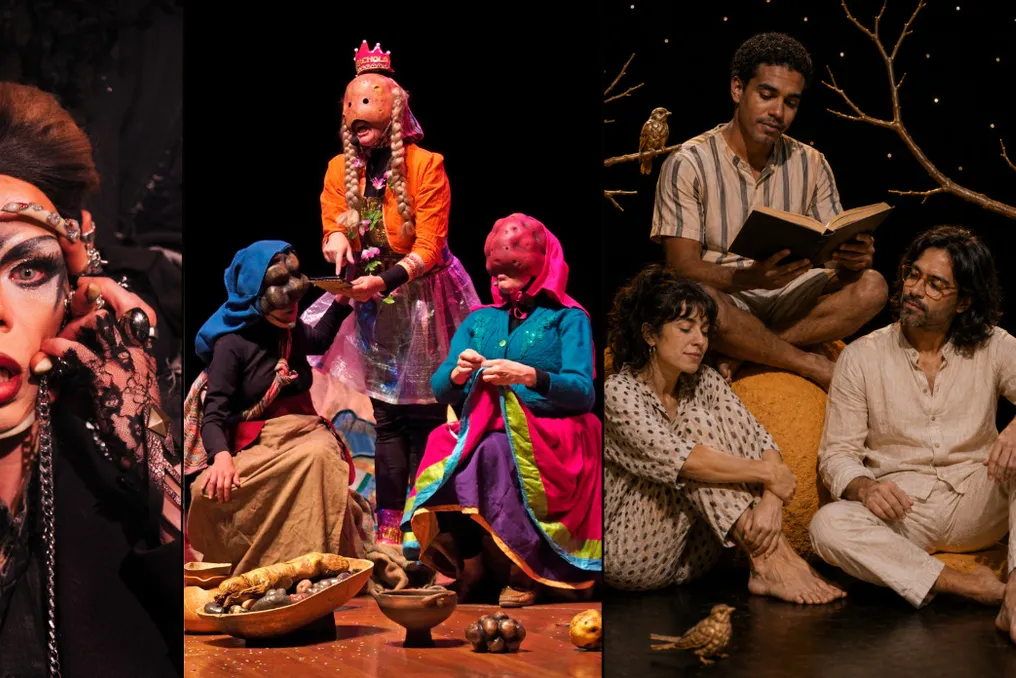
The Mirada – Ibero-American Festival of Performing Arts will reach its 8th edition from September 3 to 13, with Ecuador as the honored country. The program will be distributed across various locations in Baixada Santista, including Santos, Cubatão, Guarujá, Praia Grande, and São Vicente.
Organized by Sesc São Paulo, the event will bring together dance shows, plays, and performances over ten days. The presentations will take place in theaters, squares, public spaces, and historical sites in the region, also marking the 80th anniversary of Sesc. The program is structured around four main axes: Ecuadorian Showcase, International Showcase, National Showcase, and Training Activities.
The selection includes seven shows from Ecuador, along with 17 productions in the International Showcase and another 17 in the National Showcase. The curation involved representatives from Sesc in various regions of Brazil (AP, CE, MS, PA, PR, PE, and RJ), in addition to the National Department, and a forum composed of language technicians active in the state of São Paulo.
In this edition, Ecuador is celebrated through various manifestations of the country's performing arts. The inaugural show is Me·de·as, presented by Colectivo Mitómana, which reinterprets the myth of Medea to explore themes such as motherhood, collective mourning, and the social roles imposed on women, using song, dance, and choral work.
The Ecuadorian Showcase also features Papakuna – Agroteatro Cómico Musical, by Colectiva Yama, which celebrates Andean traditions and the cultivation of native potatoes. Additionally, there is La Trocha, by Runga Arte Experimental, in collaboration with Argentine artist Melina Seldes, which addresses the journey of migrants on the border between Colombia and Ecuador.
International Participation and Themes
The International Showcase hosts Guatemala for the first time, joining productions from countries such as Argentina, Bolivia, Chile, Colombia, Costa Rica, Cuba, Spain, Mexico, Peru, Portugal, Uruguay, and Venezuela. The themes explored in these productions cover migration, ancestry, climate justice, political repression, and gender equality.
Among the international highlights is the Spanish show Seppuku – El funeral de Mishima o El placer de morir, staged by Angélica Liddell, which mixes references to the samurai code, eroticism, ritualism, and Japanese Noh theater. The Chilean Vampyr, directed by Manuela Infante, uses the false documentary format to discuss the interconnection between nature, culture, and sustainability. Meanwhile, the Argentine Ayoub – El amor me enseña a no amar, by Marina Otero, traces a path from a relationship in Morocco to debate affective colonialism.
In the Mexican scene, Mi madre y el dinero, by Anacarsis Ramos, brings the director and his mother, Josefina Orlaineta, to the stage after a decade apart. The play narrates Josefina's trajectory, who managed more than 40 businesses seeking subsistence in one of the poorest areas of Mexico.
National Showcase and Complementary Activities
In the National Showcase, the festival displays productions from different parts of Brazil. Among the new additions are …ao mesmo tempo…, by Lume Teatro and Cia. Clowns de Shakespeare, which address concepts such as time, memory, and continuity. There will also be a contemporary reinterpretation of Macbeth by Cia. Extemporânea, performed by a group of drag queens, and Casa do Norte, by Grupo Clariô de Teatro, which celebrates the company's 20 years and its history in Taboão da Serra.
The program was designed for all audiences, including children, youth, and adults. In Vovó Surrealista, by Cia. de Feitos, an illiterate grandmother invents narratives and characters for her grandchildren while pretending to read books; this show is based on the work of Carlos Canhameiro. Another experience is the audio walk TESORO, Santos, by Chilean Paula Aros Gho, which invites the public to explore the city of Santos guided by the voices of children and young people aged 7 to 15.
In addition to the shows, the festival will promote 16 training activities, encompassing residencies, experiences, workshops, debates, and book signing sessions with artists, aiming for interaction between artists and the public. Sesc TV will also broadcast films, documentaries, and thematic series about theater during Mirada, with content accessible on Sesc Digital.
Complete information about the program can be found on the Sesc São Paulo website and in the MIRADA Festival Sesc SP application, available for Apple and Google Play. Tickets for adult shows cost R$ 40 (full price), R$ 20 (half price), and R$ 10 (Full Credential). For children's activities, the prices are R$ 30 (full price), R$ 15 (half price), and R$ 10 (Full Credential), with children under 12 receiving free entry to children's activities upon presentation of a ticket.