The state oil and gas company Uzbekneftegaz has begun a comprehensive audit and tightened supervision over the activities of joint ventures in which it is a founder. This was reported by the company's press service.
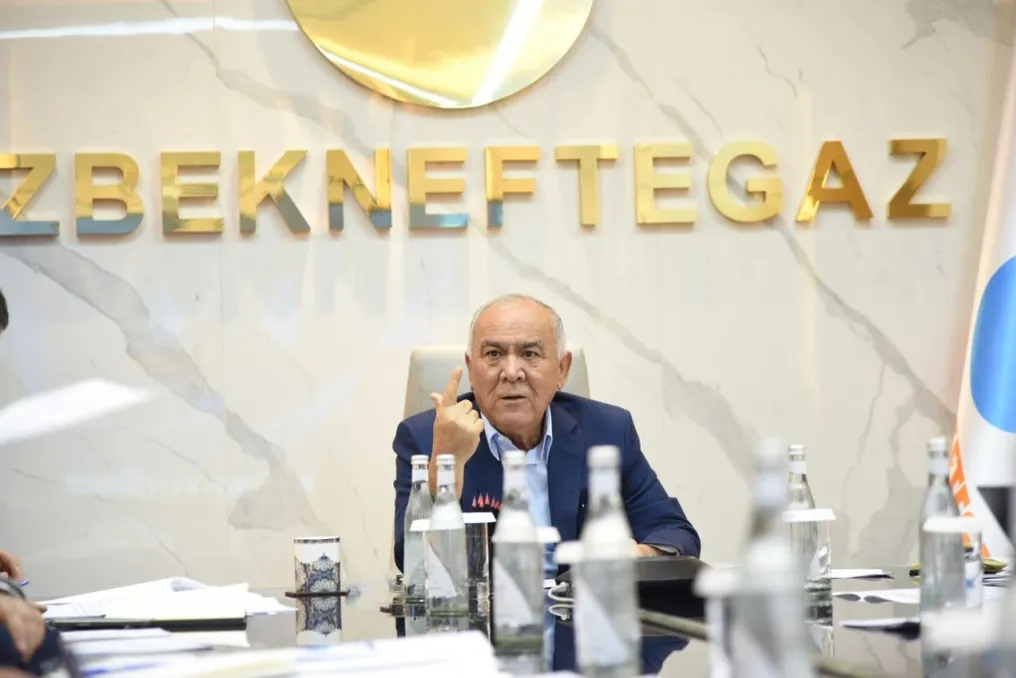
During a meeting chaired by the head of Uzbekneftegaz, Abdugani Sanginov, the work of several joint ventures was analyzed in detail. These include Natural Gas-Stream (where Uzbekneftegaz holds a 50% stake, Natural Gas Stream Holding owns 49.94%, and Gas Project Development Central Asia AG owns 0.06%), New Silk Road Oil and Gas (the company holds 50%, and the rest belongs to China's CNODC), and ANDIJANPETRO (the company holds 50%, and the remaining half belongs to Russia's Zarubezhneft Eurasia).
The analysis revealed that proper working procedures were not being followed at several sites, there was a lack of transparency in accounting and financial reporting, and accountability mechanisms to Uzbekneftegaz were not functioning to their full extent.
The company stated that these shortcomings led to questions regarding the annual decrease in production volumes, the efficiency of investment fund utilization, and the overall financial stability of the enterprises. Furthermore, incomplete fulfillment of dividend payment obligations was observed.
Uzbekneftegaz acknowledged that the founder had previously failed to ensure a sufficient level of control over the operations of the joint ventures, which contributed to the exacerbation of existing difficulties. The company's management emphasized that such an approach is unacceptable in the future.
All joint ventures were required to strictly adhere to corporate governance principles, guarantee the protection of Uzbekneftegaz's rights and interests, and ensure the openness of production and financial data. Specifically, a re-analysis of the effectiveness of geological exploration, production capacities, and geological-technical measures will be conducted.
It was also instructed to conduct an inventory of all debts owed to Uzbekneftegaz and to implement measures for digitizing processes for monitoring procurement and financial flows. Now, all plans, workflows, and investment projects planned by the joint ventures must be approved by Uzbekneftegaz, and their economic feasibility, cost, and necessity will be assessed before approval.
The company also intends to revise its dividend policy and the financial status of the participating enterprises. The goal is set to ensure full and timely payment of dividends for the 2025–2026 period, repay existing debts, and establish systematic monitoring of future obligations. These steps are intended to prevent misuse or inefficient spending of funds and strengthen control over decision-making.
The ultimate goal of these transformations is to turn the joint ventures into organizations with high financial stability and effective management, accompanied by growth in production indicators, net profit, and profitability.
It is worth noting that back in May, the head of Uzbekneftegaz, Abdugani Sanginov, criticized the decline in gas production at the Gazli region oil and gas production management and discussed measures to increase production. He also instructed that the work of the Canadian company Condor Energies be brought under control, which, according to him, is not fulfilling its commitments.