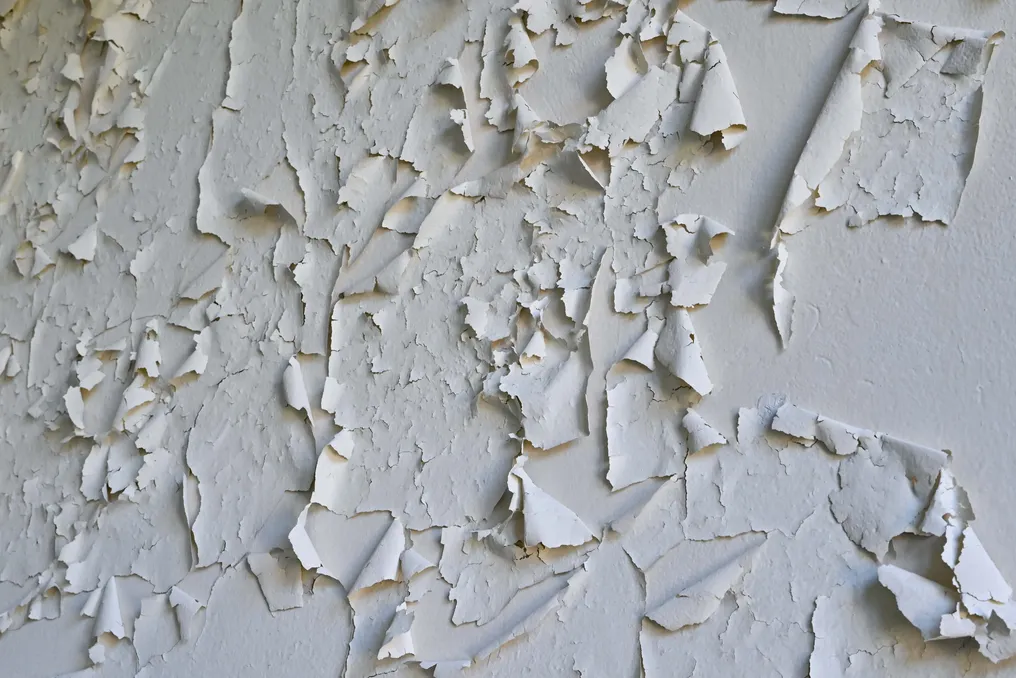
If small or large cracks appear on the walls or ceiling after applying new paint, it can be caused by numerous factors, and the paint itself is not necessarily to blame. Possible causes include an overly thick coating layer, improper surface preparation, high humidity, insufficient paint elasticity, as well as movement of the wall or surface.
Sherwin-Williams, a major manufacturer of paints and coatings in America, provided an explanation for this problem. They pointed out several key factors that lead to paint cracking.
When paint is applied in too thick a layer, the surface may dry quickly, while the inner layers require more time to dry. Subsequently, when the interior hardens and shrinks, it creates tension in the top layer, leading to the appearance of cracks. Therefore, it is crucial to apply paint according to the thickness and method recommended by the manufacturer, rather than simply using a very thick layer.
If there is dust, dirt, or other contaminants on the wall, and painting is done without thorough cleaning, the paint's adhesion may weaken. According to Sherwin-Williams recommendations, poor surface preparation and the presence of contaminants are one of the causes of paint cracking. To solve this problem, it is recommended to remove old, damaged paint, thoroughly clean the surface, sand if necessary, and apply a suitable primer.
Constant dampness in the wall or ceiling also negatively affects the coating. Leaks from the roof or water penetration into the wall can weaken the bond between the paint and the wall. Over time, this leads to problems such as cracks, peeling, or flaking of the paint. If signs of dampness or water are visible along with the cracks, the primary cause of moisture ingress must be addressed first.
Over time, the paint can age and lose its elasticity. Changes in temperature and humidity cause the surface to expand and contract, which can damage the paint layer if it has lost flexibility. In such cases, the probability of cracks appearing increases.
According to Asian Paints, paint cracking can be related to surface movement, moisture absorption, and reduced paint elasticity. A thicker coat of paint also increases the likelihood of crack formation. Thus, it is not enough just to choose expensive or cheap paint; one must select a suitable coating system considering the condition of the surface and operating conditions.
Sometimes the problem lies not with the paint. If the wall, plaster, or the building structure itself is subject to shifting or has cracks, this will inevitably affect the paint applied on top. The technical manual of Indian Railways also lists surface defects and cracks in plaster or masonry as causes of paint cracking.
First and foremost, the surface should be thoroughly cleaned and prepared. It is necessary to remove old or loose paint, sand if needed, and apply a suitable primer for that surface. Paint should be applied not in a thick layer, but according to the manufacturer's instructions, allowing sufficient drying time between coats. If there is moisture in the wall or water is leaking, this problem must be resolved before starting to paint, otherwise, cracks or peeling will return.
Damaged and loose paint layers can first be removed using a spatula or sandpaper. After that, the surface should be cleaned, the necessary primer applied, and repainted. However, if the crack is not only in the paint layer but also in the plaster or the wall itself, the underlying issue must first be checked and repaired.
Therefore, if cracks appear on the wall after repainting, you cannot blame only the paint; you must check the condition of the surface, the thickness of application, the humidity level, and the general condition of the wall.