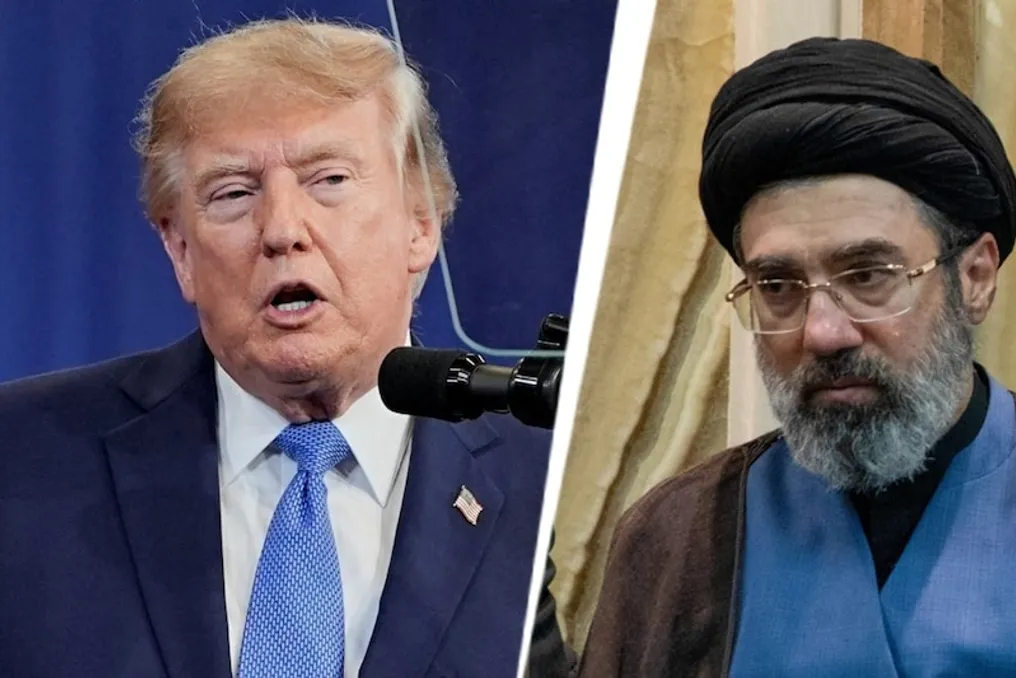
Iran's status as an economic pariah is not new; the country has been under intense scrutiny from the global community for decades. For many years, the United States has imposed numerous sanctions on Iran targeting its banking system, shipping companies, oil industry, and military sector.
Therefore, the 'Operation Economic Outcast' sanctions campaign, presented by US officials this week, does not make as much impression as the Treasury Department's rhetoric about an 'Economic Day' might suggest. Years of successive punitive measures have limited the further actions available to the United States.
Justin Wolfers, an economics professor at the University of Michigan, noted in his Substack bulletin that 'it is difficult to understand what 'Operation Economic Outcast' represents, as it is mostly just an announcement of future announcements.'
Iran has already been cut off from a significant part of the global financial system, inflation levels have reached strikingly high marks, and essential goods have been in shortage for a long time. Aya Ibrahim, a visiting fellow at the McCourt School of Public Policy at Georgetown University and a staffer at the Biden administration's State Department, stated: 'The returning yield is diminishing. This country has been an economic pariah for 50 years, and the regime still exists.'
The situation is comparable to a judge trying to punish a hockey player who has already been removed from the field. At a certain point, the punishment may prove unsatisfactory and lose its impact.
However, American officials are betting that strengthening the pressure—'Operation Economic Outcast' includes imposing sanctions on over 60 targets, threatening sanctions against countries dealing with Iran, and demanding the closure of all branches of Bank Melli Iran—will be sufficient to eventually overthrow the regime or, at least, provoke a long-awaited diplomatic breakthrough for the economy.
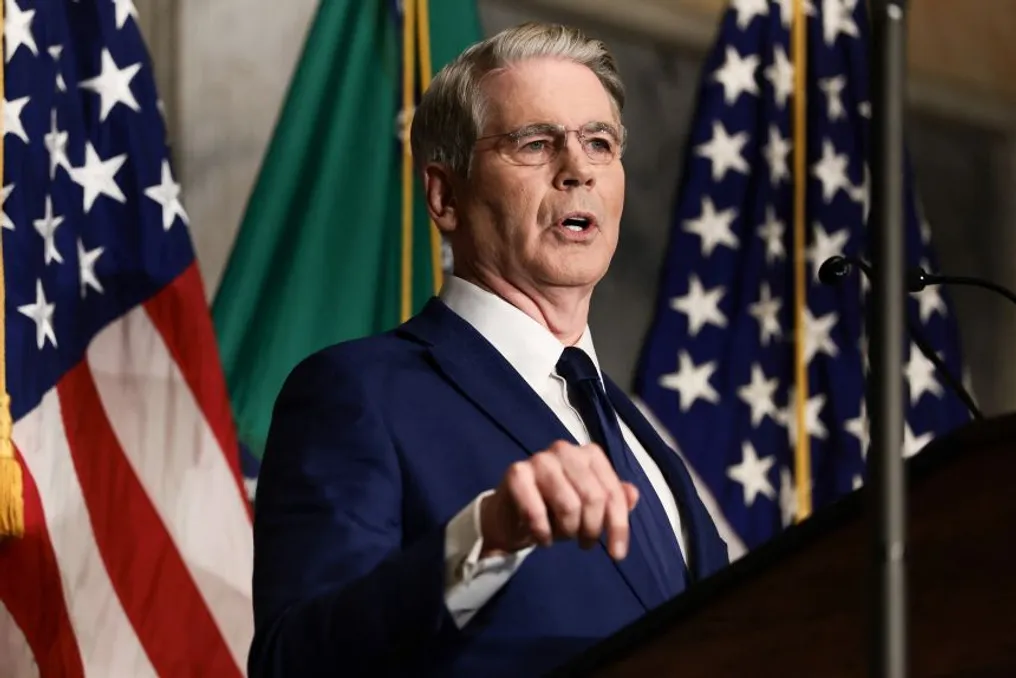
Of course, Washington still has another major lever of influence: targeting Chinese banks that allegedly assist Tehran. Treasury Secretary Scott Bessent warned on Monday about applying secondary sanctions to Chinese banks, stating that 'no one is beyond the reach of US sanctions,' and any structure facilitating Iranian transactions 'will be sanctioned.'
Nevertheless, Bessent refrained from taking such action. This may indicate a lack of political readiness within the Trump administration to move in this direction—at least for now. When Kevin Lipatka from CNN noted that 'D-Day' in 1944 was an actual invasion, not a threat, and asked why the Treasury Department had not taken immediate action, Bessent replied: 'Why should I blow up the global financial system?'
Bessent's response suggests that US officials fear that attacking Chinese banks would cross a red line. Ed Mills, a Washington policy analyst at Raymond James, noted: 'Secondary sanctions could have a big impact, but there is a real question of political will.'
Mills expects that 'Operation Economic Outcast' will increase pressure on Iran, but only slightly. This might include sanctions against entities in India, Malaysia, or other countries if it is determined that they are assisting Iran. He added: 'It cannot be said that this will happen without consequences. But the biggest lever will likely not be used.'
There is a concern that Beijing could retaliate by striking at a critical US vulnerability: rare earth elements. China holds an almost monopolistic position on these minerals, which are necessary for producing everything from cars and jet engines to smartphones and MRI dyes.
Mills emphasized: 'A large part of our economy does not function without rare earth minerals from China—including automotive, aerospace, and semiconductor industries.'
Beijing has already demonstrated a willingness to use this card against Washington. The threat of rare earth shortages last year jeopardized supply chain disruptions similar to the Covid pandemic. Ibrahim stated: 'We quickly realized that we could not afford to let this lever be pulled.'
A shortage of rare earth elements would be an economic and political nightmare for the White House, especially shortly before midterm elections. A recent study analyzing nearly two million social media posts from Iranian influencers during previous rounds of sanctions showed that these penalties do not necessarily weaken support for the Iranian government. On the contrary, researchers found that sanctions sometimes had the opposite effect, causing opposition fragmentation and strengthening regime support, even among moderate opponents of the government.
University of Michigan Professor Wolfers concluded: 'You can make a country poorer for decades, but you cannot choose what its politics will be.'
Wolfers also noted that the idea of using economic isolation to overthrow a regime is not new; it is a strategy Washington has employed for over six decades against Cuba. He observed: 'It is astonishing how much the current moment resembles a barely edited rerun.'
Some are also concerned that Washington's willingness to use its influence in the dollar financial system could turn against it. Washington's hardline sanction policy in recent years—against Russia during the Biden years and now against Iran under Trump—could push countries to seek alternatives to the dollar, undermining the US role in the global banking system managed by the SWIFT payment network. Jared Seiberg, Managing Director of Washington Research Group at TD Cowen, wrote to clients on Monday: 'We believe the risk is real. The wider the US militarizes access to the dollar, the higher the risk that countries and banks will start looking for alternatives.'