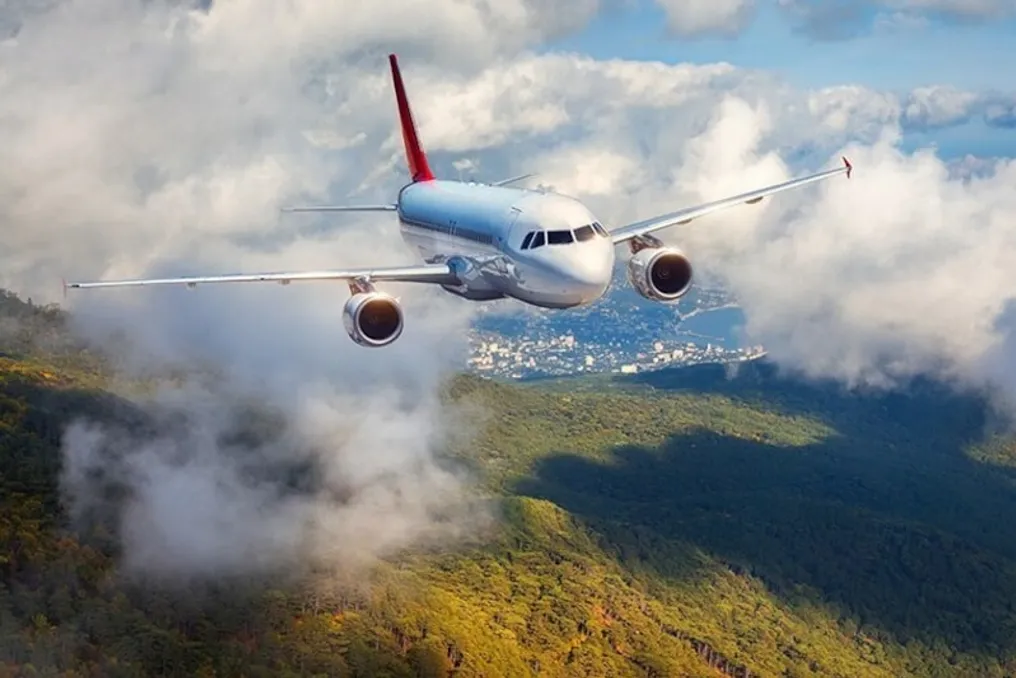
The question arises: where does the toilet waste go after flushing on an airplane at an altitude of 30-35 thousand feet? Is it simply dropped into the sky or ejected from the aircraft? Today we will examine answers to all these questions in detail, explaining the process in a simple way.
In modern commercial airliners, toilet waste during flight is not discharged outside. Instead, the aircraft has a special storage and vacuum system that transports the waste to a sealed collection tank after flushing. During the flight, this waste remains in the tank, and it is removed after landing.
The system works as follows: after flushing, the waste is quickly sucked by the vacuum system and directed into a closed collection tank. Since this tank is sealed, the odor from the waste does not directly enter the cabin. Furthermore, the toilets themselves are equipped with ventilation and air filtration systems that help maintain atmospheric control. The vacuum system ensures the rapid transfer of waste to the tank, minimizing the risk of it being open and spreading odors.
Home toilets usually function using water and gravity. Aircraft toilets use the principle of pressure difference and vacuum. The advantage of this technology is the ability to flush waste with less water consumption. Also, the pipes do not need to lead only downwards; the vacuum system can deliver the waste to the tank through a pipeline. It is this technology that makes the toilet system practical for a moving vehicle like an airplane.
In a typical home toilet, waste goes down due to water and gravity. However, the situation is different on an airplane: a vacuum system is used. As soon as the passenger presses the flush button, a valve opens, and due to the pressure difference, the waste is quickly moved through the pipes into the collection tank. The pressure difference between the height in the sky and inside the cabin helps the vacuum system work. On the ground or at a lower altitude, vacuum generators may be used for this process.
If you have ever used a toilet on an airplane, you have surely heard the characteristic sucking sound. This noise occurs due to the intensive operation of the vacuum system. According to Flightradar24 data, some systems are also equipped with a high-speed turbine that helps process the waste before it enters the collection tank. The goal of this is to reduce the risk of pipe clogging.
After flushing, the waste flows through pipes into a special collection tank inside the aircraft. This tank is closed and safe. Throughout the entire flight, the waste accumulates here. Thus, even at an altitude of 35 thousand feet, your waste does not fall directly to the ground. After landing, a ground service team empties this tank using specialized equipment. The waste is then transferred for further disposal in accordance with local airport waste treatment and management systems.
So, the whole process looks like this: after flushing, the waste first enters the aircraft toilet's vacuum system, then accumulates in a sealed tank inside the aircraft via pipes. During the flight, the waste remains in this closed reservoir. After landing, ground transport using specialized equipment pumps out the contents of the tank, after which the waste is sent for further processing or safe disposal. The main goal of this entire system is to ensure the safe storage of waste inside the aircraft during flight.
The common myth that commercial airplanes dump waste into the sky during flight is false. In modern aircraft, waste is stored in a sealed collection tank and is emptied only on the ground. Although extremely rare leaks from toilet systems have occurred in history, if such waste leaks at high altitude and freezes, it is called 'blue ice'; however, such incidents are not common, and modern airliner systems are designed to prevent such occurrences.
The journey of waste after flushing on an airplane differs from a simple toilet on the ground, representing a complex engineering process that takes place at an altitude of 35 thousand feet.