When US Treasury Secretary Scott Bessent introduced the 'Economic Pariah Operation' initiative, threatening to impose new punitive measures against countries refusing to end trade with Iran, he did not name the country that could determine the success or failure of this operation—China.
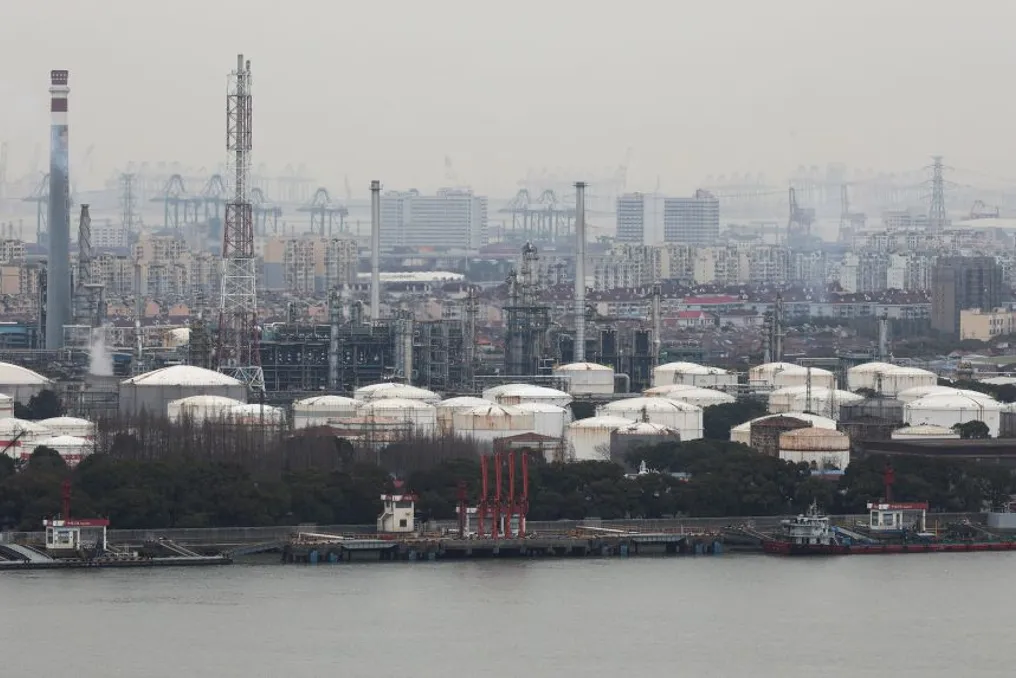
The world's second-largest economy has long served as a crucial economic pillar for Tehran, purchasing the vast majority of its oil exports—valued at tens of billions of US dollars last year—among other trade goods.
However, bringing China into the White House's latest efforts to curb Iranian leadership, which stubbornly resists after nearly six months of conflict, is an extremely complex task.
Beijing categorically rejects what it calls 'unilateral' US sanctions and has long defended its right to regular trade with partners such as Iran and Russia. Furthermore, it believes that Washington would be wary of provoking a wider economic confrontation that would harm both countries shortly before the US midterm elections.
On Tuesday, following Bessent's press conference, China's Ministry of Foreign Affairs stated its intention to 'take all necessary measures' to protect its 'own legitimate rights and interests' in the face of American sanctions threats.
A ministry representative, Lin Jian, noted: 'An economic war and maximum pressure will not help resolve the problem; they will only increase tensions and conflicts, create risks of spillover, and disrupt the global economic and financial order.'
Bessent's threats also emerged just before the highly anticipated visit of Chinese leader Xi Jinping to the US next month, during which both sides could make progress on extending a critical trade truce set to expire late in the autumn.
Earlier, US President Donald Trump stated that he had not asked Xi for 'any favors' regarding Iran during their May meeting—a statement that, if true, would likely be interpreted by Beijing as evidence of American desperation to end the conflict.
Now, both countries face careful calculation on how to navigate what Bessent termed a period of 'quiet diplomacy'—or private issuing of ultimatums to Iran's economic partners, which the Treasury Secretary did not specify at his press conference.
Chinese analysts suggest limited room for Washington's demands. Zhang Lun, director of the Institute of International Strategic and Defense Studies at Shanghai Institutes for International Studies, stated: 'It is unlikely that China will accept a situation where Washington dictates with which third countries Chinese companies can legally trade.'
He added that this would set a precedent where US secondary sanctions could effectively dictate China's commercial relations with third countries.
China imports Iranian oil through a clandestine system designed to be isolated from the US dollar system and sanctions. Private so-called refineries purchase and process sanctioned Iranian crude oil, relying on a network of ports, financial institutions, and tankers often similarly insulated from international scrutiny. China has not officially registered these purchases for many years, since the US reimposed sanctions on Iran when the first Trump administration abandoned the Obama-era nuclear deal with Iran.
Nevertheless, analysts point to existing points of pressure. Max Mizealis, a senior researcher at the Foundation for Defense of Democracies analytical center in Washington, noted: 'If you look at the ultimate ownership of these structures, you will find that many of them belong directly or indirectly to large Chinese state-owned enterprises that are closely integrated into the US dollar circulation.'
He explained that by imposing sanctions on their subsidiaries, the US could pressure the parent entities to sell assets under the risk of being deemed to provide direct or indirect support to sanctioned entities.
Bessent previously warned two unnamed Chinese banks earlier this year about their involvement in Iran-related transactions. When asked on Monday at a press conference about the measures the US would take against non-compliant Chinese banks and shipping companies, he replied that 'no one is above' US sanctions.
Despite the harsh statements, Beijing has seen the US threaten and then retreat from comprehensive sanctions previously. It also knows that Washington keenly recognizes China's significant economic leverage over the US, especially in terms of control over global supplies of strategically important rare earth elements.
Sun Chenghao, a senior researcher at the Center for International Security and Strategy at Tsinghua University in Beijing, stated: 'If Washington crossed this threshold (by sanctioning major Chinese banks), Beijing would almost certainly react, and the political atmosphere for the summit (between Trump and Xi) would sharply deteriorate.'
He added that such a move might not automatically cancel their meeting, but it would 'shift the summit from stabilization to damage control.'
Both sides are weighing the impact of escalation on the upcoming summit, which is expected to be Xi's first state visit to the US in 11 years. While Beijing would not want to appear cooperative with a regime of sanctions it disapproves of, it might make cautious maneuvers—such as quietly reducing oil purchases or increasing its political rhetoric against Tehran and efforts to encourage restraint.
China's purchases of Iranian oil have already sharply declined compared to last year due to US blockades restricting Iranian crude oil exports.
In recent weeks, Chinese analysts have also suggested overlapping interests between Washington and Beijing, particularly regarding the restoration of trade flows in the Strait of Hormuz, which was blocked by the conflict, and the restoration of broader regional stability conducive to trade. In recent days, Beijing has intensified its messages calling for restraint and normal operations around the strait.
In a joint statement after meeting with Jordanian King Abdullah II in Beijing on Monday, Xi called for the restoration of 'normal passage' through the strait and a 'comprehensive solution' to the conflict.
Chinese Vice Foreign Minister Miao Deyu, last week while hosting Iranian officials in Beijing, stated that China is 'actively committed to facilitating peace negotiations.'
Nevertheless, Beijing has shown caution in taking the role of a direct mediator in the conflict, preferring a position where it protects its own economic interests—and emphasizes its image as a stable power supporting regional peace, unlike the fluctuations of Washington.
Zhang in Shanghai noted: 'Any cooperation with the US in restoring regional peace should not amount to 'doing Trump a favor'.' He concluded: 'Beijing is ready to contribute to ending the crisis, but it is not prepared to become an instrument of Washington's maximum pressure strategy.'