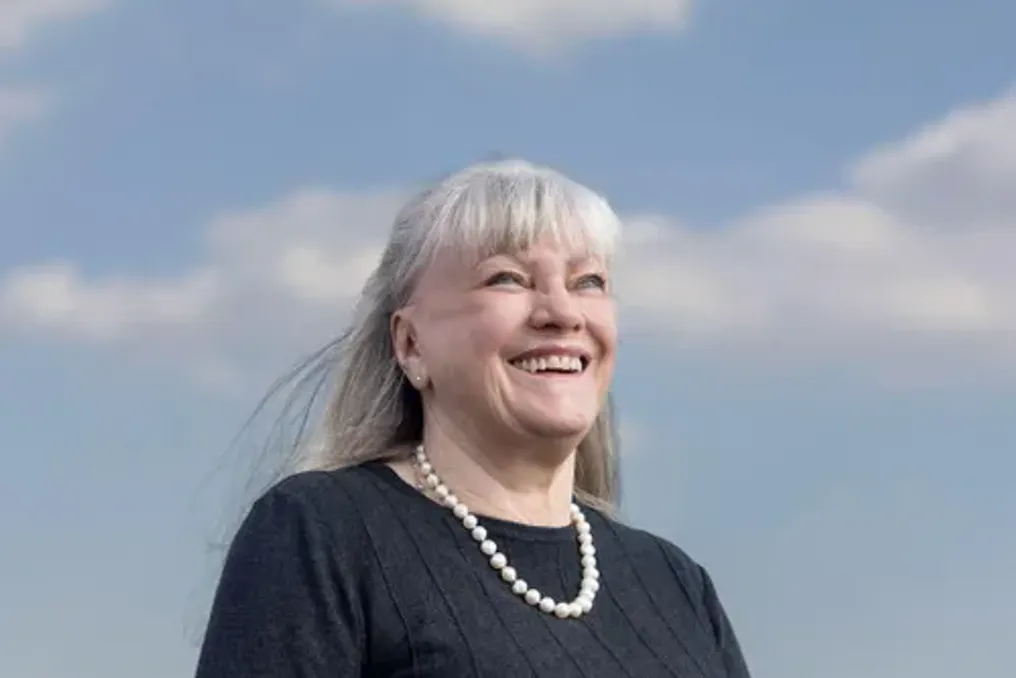
Mara Glennie, an anti-campaigner who received an award, strongly urged that services assisting victims of gender-based violence (GBV) permanently integrate both survivors of violence and people with lived experience into their decision-making processes.
Glennie, the founder and CEO of the TEARS Foundation, made this appeal after receiving two awards during Women's Month: she was recognized at the Influential Awards 2026 and acknowledged as a Community Influence Leader by Gauteng Gender Structure from Cosatu.
She addressed all organizations dealing with domestic violence, coercive control, and stalking, including the police, demanding that representation from people with lived experience be ensured in decision-making, as this is crucial for forming an adequate response to the GBV problem.
Glennie emphasized that while professional qualifications, uniforms, and technical training remain necessary, they cannot replace the practical understanding gained through experiencing violence. According to her, 'a survivor knows the daily fear of control, surveillance, isolation, and self-doubt. A textbook cannot recreate that reality.'
She added that if an institution, first responder, or service provider does not realize the damage caused by the situation, it cannot guarantee that anyone on the team understands it.
Glennie advocates for civil and social sectors to hire survivors of violence into frontline teams, policy discussions, training programs, referral systems, and service development. However, she stressed that these participants must receive support, fair compensation, and protection from re-traumatization simply to lend legitimacy to the institutions.
In her view, lived experience provides vital clarity on subtle aspects, such as why a victim might return to an aggressor, how digital surveillance changes the risk level, or why an inattentive initial police response might cause a victim to remain silent for years.
'Training brings technical knowledge. Lived experience brings knowledge gained at the cost of immense suffering. Survivors deserve both,' she stated.
The TEARS Foundation was founded by Glennie in 2012 after she herself survived a life-threatening attack. Refusing to let this attack define her future, she created a national support network that has since helped over 750,000 callers.
The foundation manages a nationwide hotline, as well as a free Help at your Fingertips® service that uses USSD technology, allowing victims in all nine provinces of South Africa to receive confidential help without needing mobile internet or paying for minutes.
Addressing broader structural issues, Glennie noted that classifying GBV and femicide as a national disaster was an important step in defining the crisis, but she argued that national declarations alone are insufficient to change conditions on the ground.
She insisted that services must be designed around the reality of the victim, who is 'frightened, exhausted, isolated, and making survival decisions under pressure,' rather than an idealized user with easy access to transport, privacy, and financial resources.
'GBV will not be defeated by declarations alone,' said Glennie. 'It will be defeated when a child understands that control is not love, when a friend refuses to defend the aggressor, when a neighbor knows where to find help, and when the first person a victim turns to responds with dignity, not doubt.'
To conclude Women's Month, Glennie called on public institutions, the police, medical services, employers, and educational institutions to take concrete actions: appointing people with lived experience to strategic positions, involving them in policy development, guaranteeing trauma-informed support and fair wages, and measuring success by how safe and trusting victims feel.