Companies in South Africa have long invested significant resources in various tools such as websites, applications, call centers, and chatbots. However, user behavior in the mobile environment, the need for digital convenience, and the demand for instant responses have exceeded the capabilities of these traditional solutions. Agent AI fills this gap by transforming customer interactions across retail, e-commerce, logistics, hospitality, and tourism sectors, with South African enterprises adopting this technology faster than expected.
How is Agent AI different from a chatbot?
Agent AI refers to systems capable of independently understanding intentions, making decisions, and executing tasks. Unlike a standard chatbot that follows a predefined script, Agent AI analyzes context, extracts necessary information, and takes actions that move the customer forward—it doesn't just answer a question, it solves the problem behind it.
This is particularly important in a mobile-centric market like South Africa, where consumers prefer communicating through apps and websites. They want to interact with businesses via WhatsApp Business as they would with a friend, expecting the dialogue to result in a booking, delivery update, recommendation, or issue resolution.
Why is adoption accelerating now?
Several converging factors are driving the acceleration of this technology's adoption. Firstly, customer expectations have changed: South Africans demand immediate responses, whether it's order tracking, accommodation booking, or product availability inquiries. Agent AI can handle thousands of requests simultaneously without compromising response quality.
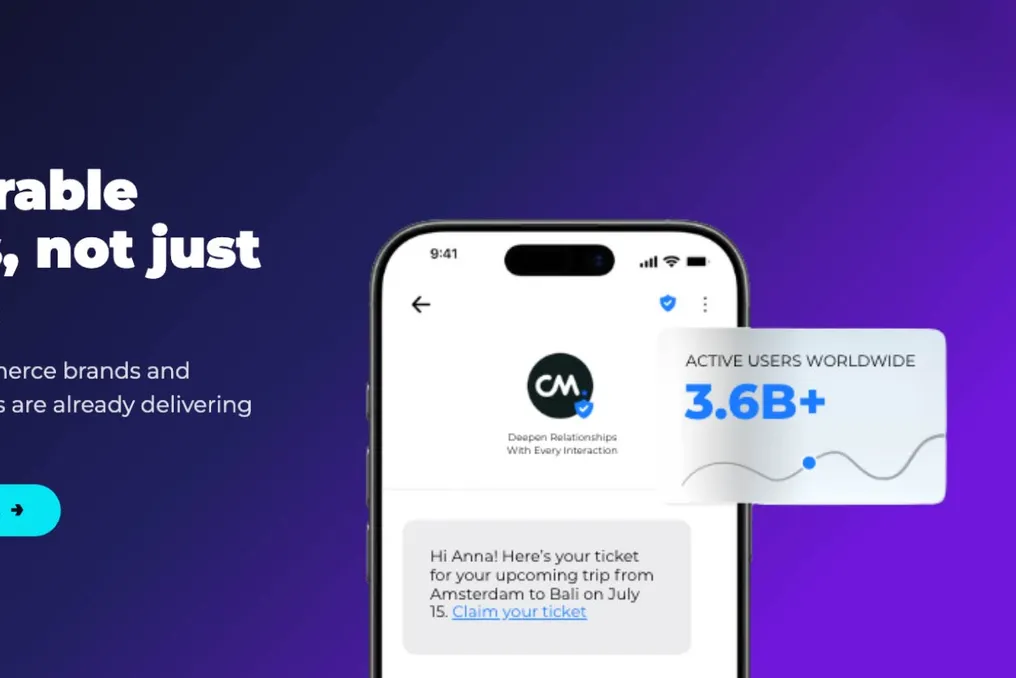
Secondly, WhatsApp is a primary channel in the country: according to CM.com data, over 90% of local smartphone users are active on WhatsApp. Combined with Agent AI, this channel supports booking management, delivery communication, support, marketing, product search, and abandoned cart recovery.
Thirdly, efficiency is being achieved without sacrificing personalization. Scaling call centers is expensive, and agents can only handle a limited number of queries. Agent AI automates high-volume tasks while maintaining a personalized interaction character, provided the base data is clean.
Furthermore, the technology has proven its commercial viability: Agent AI is no longer experimental. Recorded results include reduced problem resolution time, increased customer satisfaction, decreased operational load, and improved conversion rates.
Finally, a responsible approach to AI has become a procurement issue. Businesses are seeking partners who take security, ethics, and compliance seriously. CM.com notes that it is one of the first global technology companies certified under ISO 42001 for AI management systems.
What does this look like in practice?
Retailers use AI agents to assist shoppers in finding products. E-commerce brands automatically recover abandoned carts. Logistics companies send proactive delivery notifications. Hospitality businesses manage bookings and guest requests without human intervention. For example, YourSurprise, one of Europe's largest personalized gift companies, uses CM.com to maintain service levels during peak activity. Enterprises in South Africa with similar demand patterns are applying analogous approaches.
What does CM.com offer?
CM.com's Agent AI product is called Halo. In addition to this, the company provides a range of supplementary services: a unified platform integrating customer data, campaigns, and messages; orchestration between SMS, email, voice messages, and WhatsApp; a shared inbox allowing AI and humans to work from a single queue; AI practices certified under ISO 42001; and Meta partner status with direct access to WhatsApp product analytics. The goal is to allow companies to automate and personalize customer interactions without relying on multiple tools operating with disparate data.
Where is this heading?
Customer expectations are rapidly evolving. People seek fast and personalized answers within the channels they use daily. In South Africa, this channel is WhatsApp, and Agent AI makes it a more functional point of interaction. Companies that begin using this technology now are quickly seeing returns: problems are solved faster, satisfaction grows, operations become leaner, and employees are freed up for tasks requiring human involvement. Customer interaction becomes conversational and automated, and WhatsApp turns into a storefront where this occurs.