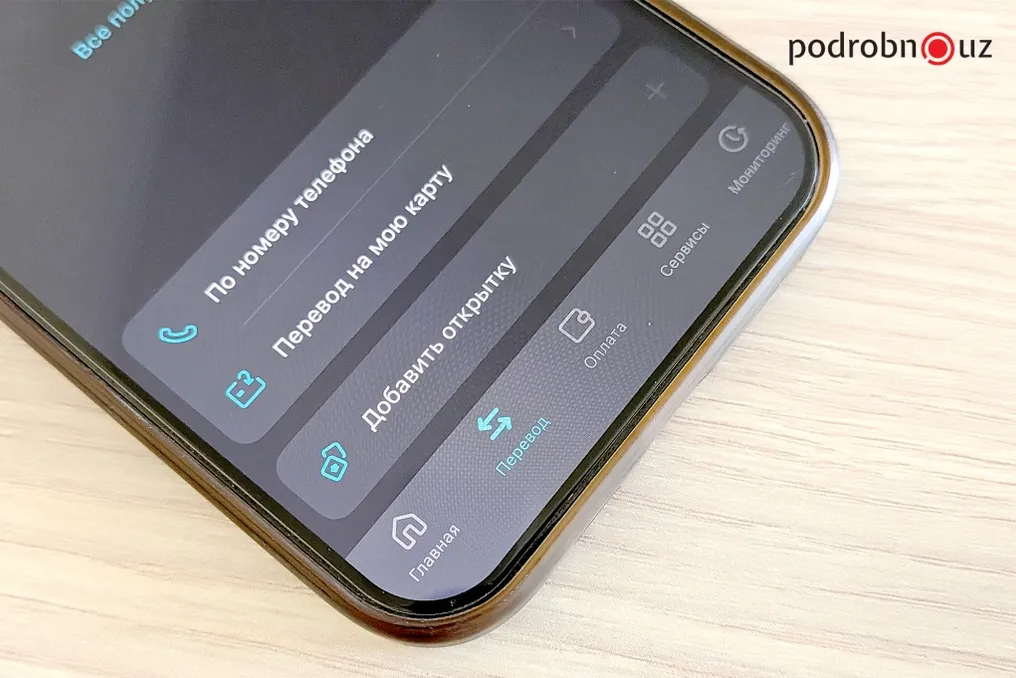
Possibility of transferring funds by mobile phone number is being introduced in Uzbekistan
Read more
Podrobno.uz [uz]
podrobno.uz

Possibility of transferring funds by mobile phone number is being introduced in Uzbekistan

New rules have been approved in Uzbekistan that allow for money transfers between private individuals using only a mobile phone number. This new mechanism eliminates the need to specify the recipient's full bank account number when sending funds from a bank account.

This decision was officially registered with the Ministry of Justice of the Central Bank on August 24. Operations will be conducted via the Real-Time Payment System.

To make a transfer, the user only needs to enter the recipient's phone number or a special linking code in the bank's mobile application. The system will automatically collect the necessary information and identify the associated bank account. Before confirming the transaction, the sender will be shown the recipient's information, including their first and last name, bank name, total amount, and commission fee, allowing them to verify the data.

After confirmation, the bank generates a payment document, which must then be confirmed by the recipient's bank for the funds to be credited to the corresponding account. All such transfers through the mobile application will be available continuously, 24/7.

To activate this service, the phone number must first be linked to a bank account. It is important to note that within one bank, one number can only be linked to one account; registering a new number in the application will automatically replace the old link.

If both the sender and the recipient use the services of the same bank, a transfer through the Real-Time Payment System will not be required. The rules also provide the option to revoke the number linkage at any time through the mobile application or in person at the bank. Furthermore, the bank has the right to independently disable this linkage, for example, when closing a user's account or if they are placed on a relevant list.

The new rules will come into effect on November 24, 2026, which is three months after the official publication of the Central Bank's decision.

It was previously mentioned that Uzbekistan plans to launch Apple Pay and Google Pay payment systems. This resulted from agreements reached during President Shavkat Mirziyoyev's visit to Washington, where he met with representatives of major American investment funds and corporations.
Similar stories

Uzbekistan plans to allow convicts to order goods online and cancel some restrictions
Read more
podrobno.uz

Uzbekistan plans to allow convicts to order goods online and cancel some restrictions

The possibility of allowing convicts in Uzbekistan to order permitted goods remotely is being considered. This can be done through info kiosks available inside institutions, as well as through specialized websites and mobile applications.

Furthermore, it is proposed to abolish existing monthly restrictions concerning the weight and total quantity of items acquired and stored for individuals serving sentences in settlement colonies.

These proposed changes are enshrined in a draft order from the Ministry of Internal Affairs, which has been sent for public discussion. According to this document, both the convict and their relatives will be able to purchase permitted food and items. Methods of receipt include traditional parcel delivery or handover during personal meetings, as well as online ordering.

If the volume of ordered or transferred goods exceeds the established limit, the surplus will not be confiscated but will be placed in the institution's warehouse with the completion of a corresponding act.

Expansion of the list of permitted goods

There is also an update to the list of food, items, and other goods that convicts are allowed to possess. This expanded list includes 24 categories of goods.

Among the newly permitted items are baked goods (rolls, flatbreads, crackers, pasta), salted and smoked fish (salmon, herring, mackerel, fish snacks), as well as dairy products such as butter, cheese, lard, and jiza (the latter only in factory packaging).

The list also includes dry confectionery (cookies, wafers, crackers, candies, chocolate, and national sweets), tea, coffee, and cocoa. Vegetables, fruits, nuts, and dried fruits, including apples, pears, citrus fruits, almonds, cashews, pistachios, as well as various canned goods (fish, meat, vegetable, and fruit), are allowed.

Additionally permitted are spices and sauces (mustard, ketchup, mayonnaise, adjika, and others), condensed milk and kurt, as well as fast foods such as dry soups and noodles.

The beverage category includes juices, drinking and mineral water, carbonated and vitamin drinks, and nectars. Cured meats, including salami and turkey meat sausage, are also permitted. The list also includes tobacco products (cigarettes and nasvay) and ordinary wooden matches.

Stationery items cover paper, notebooks, exercise books, envelopes, postage stamps, ballpoint pens, pencils, and erasers. Household goods include sponges, diapers, brooms, electrical tape, garbage bags, as well as sports equipment, such as a football and a table tennis racket.

Personal hygiene items include a wide range: toothpaste and toothbrushes, shaving accessories, shampoos, soap, shower gels, toilet paper, and feminine hygiene products. Household chemicals include washing gels and powders, as well as cleaning agents and dishwashing cloths.

In the category of clothing, bedding, and footwear, bath and face towels, underwear sets, socks, as well as casual trousers and shoes are permitted. Literature (fiction, journalism, science, religion), textbooks, board games (chess, checkers, dominoes, backgammon), and personal photo albums are also allowed.

Some goods, such as scarves, handkerchiefs, and belts, must meet specific fastening requirements. Furthermore, the administration of correctional facilities will monitor compliance with norms regarding the quantity, type, and packaging of certain goods. It should be noted that in accordance with current sanitary standards, seasonal restrictions may apply to some items on this list.

The draft was agreed upon by the Prosecutor General's Office, the Supreme Court, the Ministry of Health, and the Ministry of Poverty Reduction and Employment. The discussion process for amendments will continue until September 3rd.

Popular