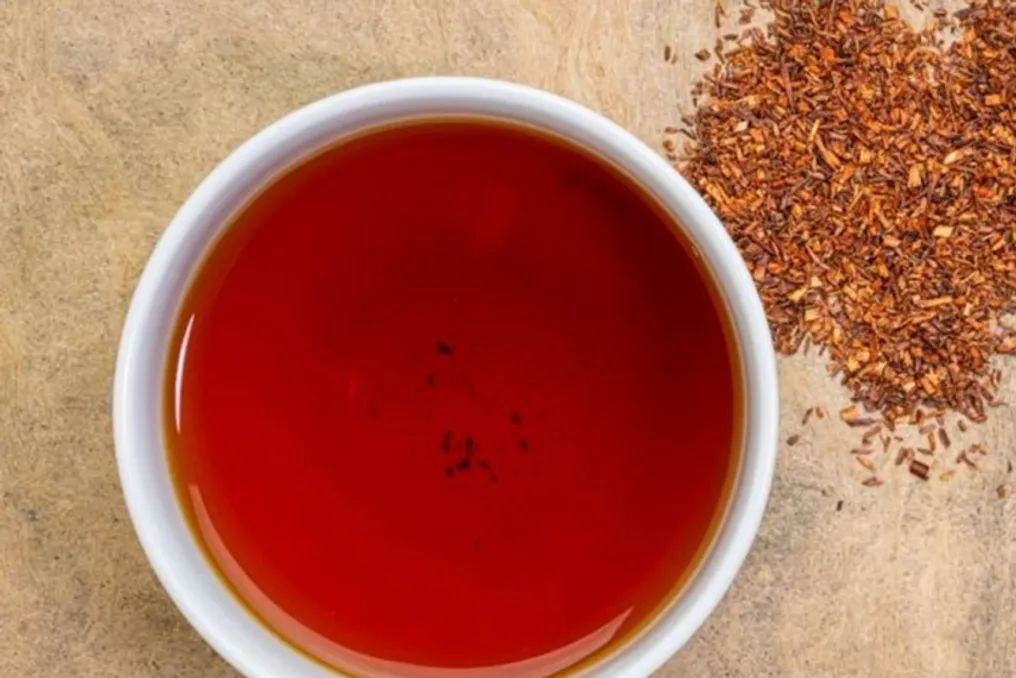
Rooibos, an endemic plant of the Cederberg region, has become a major export commodity for South Africa, present in over 50 international markets. Although a cup of rooibos is part of the daily ritual for millions of South Africans, a complex economic chain lies behind this familiar cup.
This chain extends from rooibos growing areas in the Western and Northern Cape to farms, processing plants, manufacturers, retailers, cafes, and businesses across the country.
According to the South African Rooibos Council (SARC), the annual production volume of rooibos is about 15,000 tons, although this figure fluctuates significantly depending on growing conditions, rainfall, and other climatic factors.
The Council noted that despite these fluctuations, demand remains stable: total rooibos sales in 2025 are equivalent to more than 10 billion cups, which is approximately one cup per person on Earth, with a surplus of about 2 billion cups. This industry provides income and employment for approximately 8,000 people, including primary production and upstream activities such as processing, packaging, and retail.
Adel du Toit, a representative of SARC, emphasized that the real opportunity lies in unlocking more value from rooibos within South Africa through innovation, processing, and creating new business opportunities throughout the value chain.
The plant possesses a unique geographical identity as it is endemic to South Africa, with the Cederberg region at the heart of its production. The limited growing area gives it an origin that few agricultural products can boast.
The industry includes about 300 commercial farmers and 210 small-scale farmers. The government has also highlighted the role of rooibos in supporting approximately 160 small-scale farmers belonging to the Wuppertal Cooperative in the Western Cape and the Heyfield Cooperative in the Northern Cape.
At the other end of the value chain, rooibos has become a established South African export product. In 2025, exports exceeded the 10,000-ton mark for the first time, reaching approximately 10,930 tons, nearly double the 5,900 tons exported in 2015. Currently, rooibos is exported to over 50 international markets, with Japan accounting for 33% of exports, Du Toit reported.
Rooibos is already being used in a growing spectrum of value-added products, including extracts, functional foods and beverages, cosmetics, and personal hygiene products. This opens up opportunities for manufacturers, entrepreneurs, and small businesses to develop new products and experiences based on this raw material.
Du Toit stated that the more ways there are to utilize rooibos, the more opportunities arise to create value around it. Every new application creates the potential for a new product, a new business, or even a new market, expanding rooibos' economic contribution far beyond the farm and the cup of tea.
She added that the more rooibos can be transformed into finished goods and experiences here in South Africa, the greater the chance of retaining that value within its own economy.
Under an agreement, processors pay a levy of 1.5% of the farm price, based on the rooibos price, in recognition of traditional knowledge associated with the plant. Between 2019 and 2024, Rands San and Hoi distributed 42.7 million through the benefit-sharing mechanism.