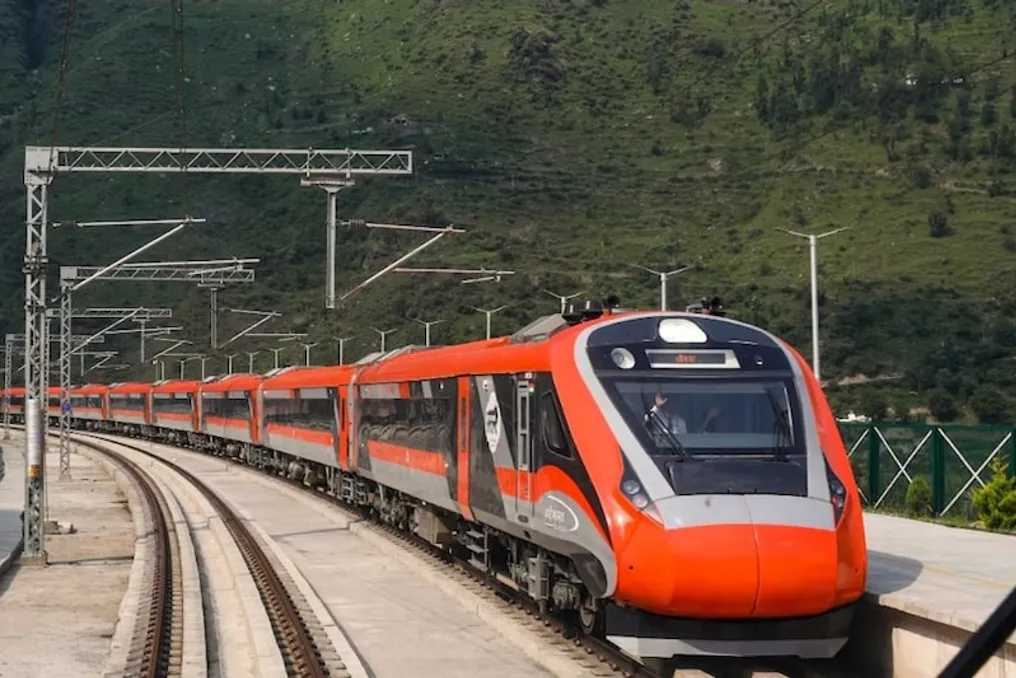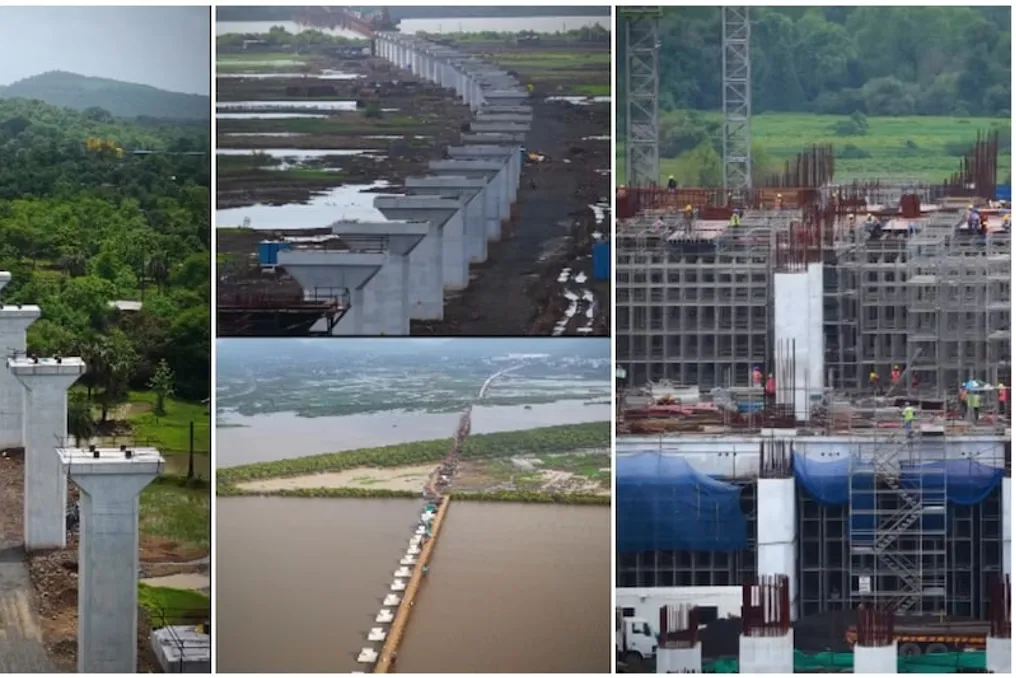
The Mumbai-Ahmedabad high-speed train project is actively developing. Construction work is progressing on a section spanning approximately 135.45 kilometers from Thane to the border of Maharashtra and Gujarat. This section includes 124.027 kilometers of viaducts and bridges and is a crucial part of the country's first high-speed rail corridor, stretching from Shilphata to Jaroli village.
Union Minister of Railways Ashwini Vaishnaw shared fresh information about the progress on this section via his Instagram social media account. He provided a report on the advancement of engineering and civil works in various parts of Thane and Palghar. Last week, a significant breakthrough was achieved in tunnel construction at the Shilphata station in Thane.
Three elevated high-speed train stations are planned for construction within this section in Thane, Virar, and Boisar. The station in Thane is being built at an altitude of about 12 meters above ground level, necessitated by the need to preserve mangrove forests in an ecologically sensitive zone.
Pylon erection work has advanced over an area exceeding 100 kilometers. Approximately 74 kilometers of pylons are ready for the installation of viaduct girders. In Maharashtra, there are currently 9 concrete pouring construction sites, 7 full-span tower cranes, and 8 SBS cranes being utilized to accelerate the construction of viaducts and bridges.
There are a total of seven mountain tunnels on this section. A breakthrough has been achieved in three of these tunnels. In areas where earthworks are complete, work is underway on drainage, waterproofing, and tunnel lining.
Bridges are being constructed across several major rivers on this stretch of the Mumbai-Ahmedabad high-speed train corridor. Plans include the construction of a 460-meter bridge over the Ulhas River, a 232-meter bridge over the Vaihtarna River, and a 510-meter bridge over the Jagani River. In total, there will be 36 bridges and crossings across the entire section, including 12 steel bridges built over main railway lines, the Ulhas River, the Mumbai-Nashik highway, and other vital structures.
The recent tunnel breakthrough at Shilphata in Thane is also a major achievement for the project. This work was executed using the New Austrian Tunneling Method (NATM). With this technology, the surrounding rock and soil are used as natural support during excavation, and the excavated portion is reinforced by spraying concrete. The Shilphata tunnel is part of Package C2 of this high-speed rail corridor, and its construction is being carried out by Afcons Infrastructure Ltd. This breakthrough is expected to further accelerate construction activities on the Thane-Palghar section of the Mumbai-Ahmedabad corridor.
On this section, from Thane to the border of Maharashtra and Gujarat, construction is no longer limited solely to pylons or viaducts. Work is simultaneously underway on stations, tunnels, bridges, girders, and launching systems, indicating that this segment of the country's first high-speed rail corridor is rapidly taking physical shape. Future phases are expected to see even greater acceleration in tunneling, girder launching, station construction, and bridge works.