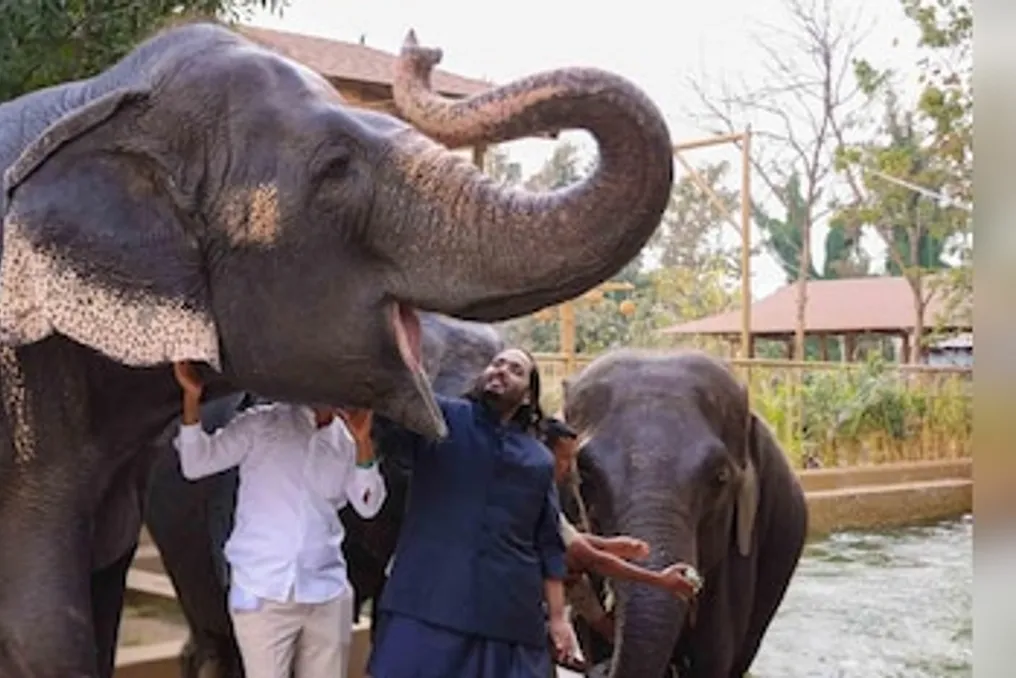
The Ambani family, the second richest in Asia, has publicly stated its intention to restrict the activities of its younger heir related to the controversial Vantara wildlife sanctuary. Thus, magnate Mukesh Ambani seeks to reduce risks for his empire and eliminate a serious obstacle in the succession plans.
This is a sharp turn from events two years ago. When Mukesh Ambani and his wife Nita Ambani invited Mark Zuckerberg, Ivanka Trump, Bill Gates, and other celebrities to Anata's engagement party, the invitations featured images of elephants, tigers, and lions. Guests were brought to Jamnagar, an oil refinery on India's west coast, which is the center of the elder Ambani's $86 billion fortune, and Rihanna performed a concert. They were also shown Anata's brainchild: a 3,500-acre animal rescue and rehabilitation center known as Vantara, or the 'forest star.'
However, since then, this sanctuary has transformed from a display of corporate altruism—last year its veterinary hospital was visited by Prime Minister Narendra Modi—into a PR headache. When Himal magazine covered the situation two years ago, the center was already housing endangered and exotic species such as Spix's langurs, African tortoises, and orangutans. In a German newspaper, Süddeutsche Zeitung, in March 2025, Vantara was called the world's largest zoo, and it was alleged that many 'rescued' animals could have been caught in the wild and brought to Jamnagar. The foundation managing the facility rejected these claims as unfounded.
This menagerie, which housed 2,000 species and 150,000 animals at the time of Modi's visit, also hinders a smooth leadership transition. The two elder children, twins Akash and Isha, have yet to convince investors that they can truly take over the group's telecommunications and retail divisions when Ambani and his trusted advisor Manoj Modi retire.
Nevertheless, as the presumed head of the group's profitable petrochemical sector and its capital-intensive new energy project, Anata Ambani will be the most vulnerable. His ventures face stiff competition from rival infrastructure empire Gautam Adani, who surpassed the elder Ambani as Asia's wealthiest tycoon. Although Vantara is separate from the business, Anata's appointment as CEO of Reliance Industries Ltd., the family's flagship company, in April 2025 made the reputational risks too significant to ignore.
In September 2025, the Supreme Court of India ruled that Vantara complied with all wildlife laws, customs regulations, and anti-money laundering laws regarding animal acquisition. However, scrutiny from environmental activists has not lessened, nor have legal challenges from NGOs concerning the acquisition of exotic species from around the world.
A recent petition in March demanded a halt to the import of animals listed as endangered under the Convention on International Trade in Endangered Species of Wild Fauna and Flora (CITES). Although the court declined to hear the request, judges noted the risk that even legal importation of animals from their natural habitat could be viewed as cruelty.
This was the last straw. Last week, Vantara sent a 38-page letter to the local CITES authority under India's Ministry of Environment, stating that it did not want to become, 'even unintentionally, a driver of illegal wildlife trade.' All future animal acquisitions will go through a three-stage vetting process, and no great apes, big cats, or endangered species will be imported from their natural habitats.
Instead, the 31-year-old billionaire heir will now focus on caring for animals in their native habitats. Thus, while in April Anata Ambani sought permission from Colombian authorities to import wild hippos descended from those bred by drug lord Pablo Escobar, the new proposal is to build a sanctuary in Colombia and save them from destruction.
This change in strategy will be good news for conservation activists. It will also bring relief to global investors collaborating with Reliance. Meta Platforms Inc. and Alphabet Inc. are major shareholders in Jio Platforms Ltd., the telecommunications division preparing for its initial public offering. Meanwhile, shareholders from KKR & Co. and Silver Lake Partners to Abu Dhabi Investment Authority await the IPO of Ambani's retail business, the largest in India. BP Plc is a partner of the Indian group in oil and gas exploration.
They are closely watching the ability of the 69-year-old tycoon to ensure a clean and successful succession. For Ambani, unity must be the highest priority. Unlike the bitter split with his younger brother, his children must be able to work together—he made it clear that the group cannot be divided.
But this will not be enough. Reliance's future leadership must also be taken seriously by global boards of directors. While the desire to stop negative public exposure surrounding Vantara is a tactical move in this direction, investors will also want to see something more strategic—a team of high-caliber professional managers running the conglomerate. Therefore, regardless of how deeply the next generation of owners is interested in the business, like their father, or spends time pursuing their hobbies, it will largely be irrelevant.