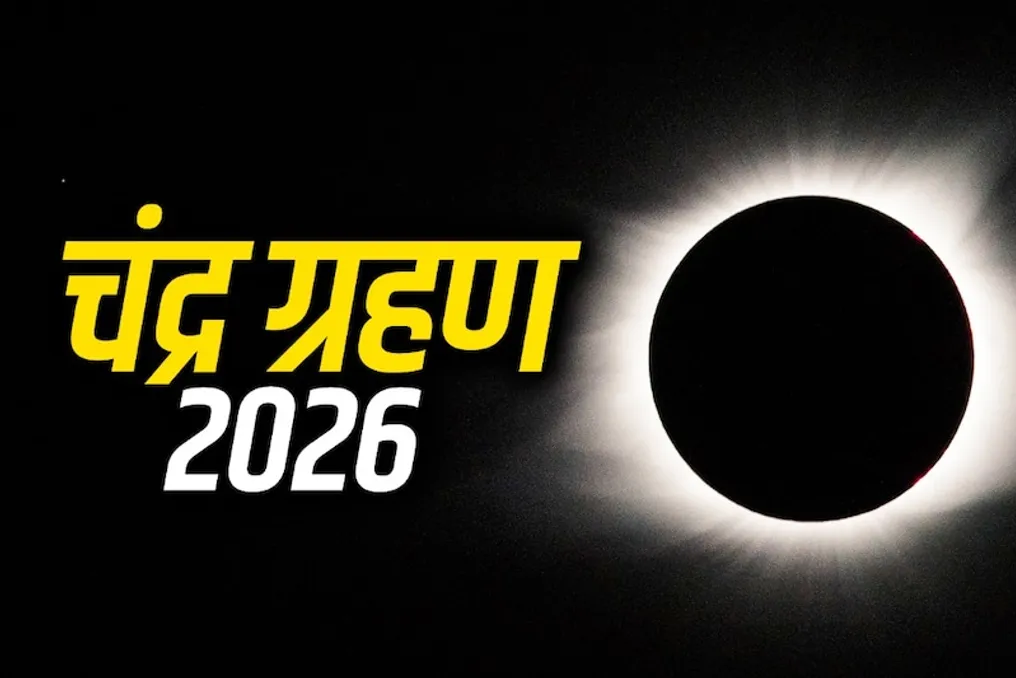
Although an eclipse is an astronomical event, it holds special significance in astrology because it is connected to a person's life, mind, and emotions. According to the teachings, the Moon is considered the planet that governs the mind. Sacred texts state that during the period of an eclipse, it is very effective to chant mantras, engage in spiritual practices, and apply specific methods.
Astrologers predict that the influence of the eclipse will be felt for a long time. The last lunar eclipse this year will occur on August 28. However, this eclipse will not be visible in India. It is worth noting that the festival of Raksha Bandhan is celebrated on the same day.
When will the lunar eclipse take place?
Pandit Swati Alualia reported that the last and second lunar eclipse of the year will take place on August 28. This eclipse will not be observed in India, but it will be visible in parts of America, Europe, Africa, and West Asia. The eclipse on August 28 will be partial.
Will there be a lunar eclipse in India?
According to Indian time, the partial phase of the eclipse will begin around 8:04 AM and end at approximately 11:21 AM. The peak time of the eclipse is at 9:43 AM. Nevertheless, the start of the lunar eclipse will be at 6:55 AM. Thus, the lunar eclipse, which will occur on Savan Purnima, will last for 5 hours and 39 minutes.
Where will the lunar eclipse be visible?
Pandit Swati Alualia clarified that the Earth's shadow on the Moon can be seen in some regions of America, Europe, Africa, and West Asia. This means that people in different parts of the world will observe the eclipse at the same time, while Raksha Bandhan will be celebrated in India during this period.
Will the Sutak period apply in India?
According to Indian traditions, the Sutak period is not considered valid for this lunar eclipse in India because the eclipse itself will not be visible in India. Consequently, on the day of Raksha Bandhan, religious rituals do not need to be stopped, temples do not need to be closed, or ordinary religious events halted solely because of the eclipse.
The calculation of the Sutak period in religious beliefs and Vedic astrology is determined based on local observation. It is generally believed that religious rules and Sutak mainly apply where the eclipse is visible. Since this eclipse will not be visible in India, Sutak will not occur in India. Rules such as closing temple doors, prohibiting food intake, or stopping auspicious deeds will also not apply.
What impact will the eclipse have on Raksha Bandhan?
Since the eclipse will not be visible in India, its shadow influence on Raksha Bandhan will not be considered significant. Sisters can tie rakhis to their brothers at an auspicious time. From an astrological point of view, the Moon is considered a factor of the mind and emotions, so the eclipse is considered a sensitive period on a mental and emotional level. At such a time, one should avoid unnecessary fear, stress, anger, or misunderstanding in relationships. However, this does not mean that the festival of Raksha Bandhan will become negative. Raksha Bandhan is a festival of love, protection, trust, and family bonds, so it is important to maintain love and positivity between the sister and brother on this day.
What is a partial lunar eclipse?
A lunar eclipse occurs when the Earth is positioned between the Sun and the Moon during the Moon's movement around the Sun. On the day of the full moon, when the Earth is between the Sun and the Moon, its shadow falls on the Moon. This causes the darkened part of the Moon to appear dark when viewed from Earth. A partial lunar eclipse occurs when only part of the Moon enters the Earth's shadow. It appears as if the Moon is being cut at the edge. The part of the Moon closer to the Earth looks darker in the Earth's shadow.
What to do and what not to do during a lunar eclipse?
During a lunar eclipse, one should avoid anger, as anger can become dangerous for you over the next 15 days. It is also forbidden to eat or perform worship during the eclipse. Furthermore, one should not visit desolate places or cemeteries, as negative forces become very strong during this time. During an eclipse, a person should not start any new ventures, as it is believed that much negative energy is present during this period. Couples are also advised against engaging in intimate relations during an eclipse, as this can disrupt peace and tranquility in the home.
What should be done during a lunar eclipse?
During a lunar eclipse, one should only repeat God's mantras, which is considered ten times more fruitful. After the eclipse, it is necessary to take a bath with clean water and donate funds to the poor. It is also advisable to clean the entire house after the eclipse to expel all negative energies. Giving grass to cows, grain to birds, and clothes to the needy during an eclipse brings manifold deserved blessings.