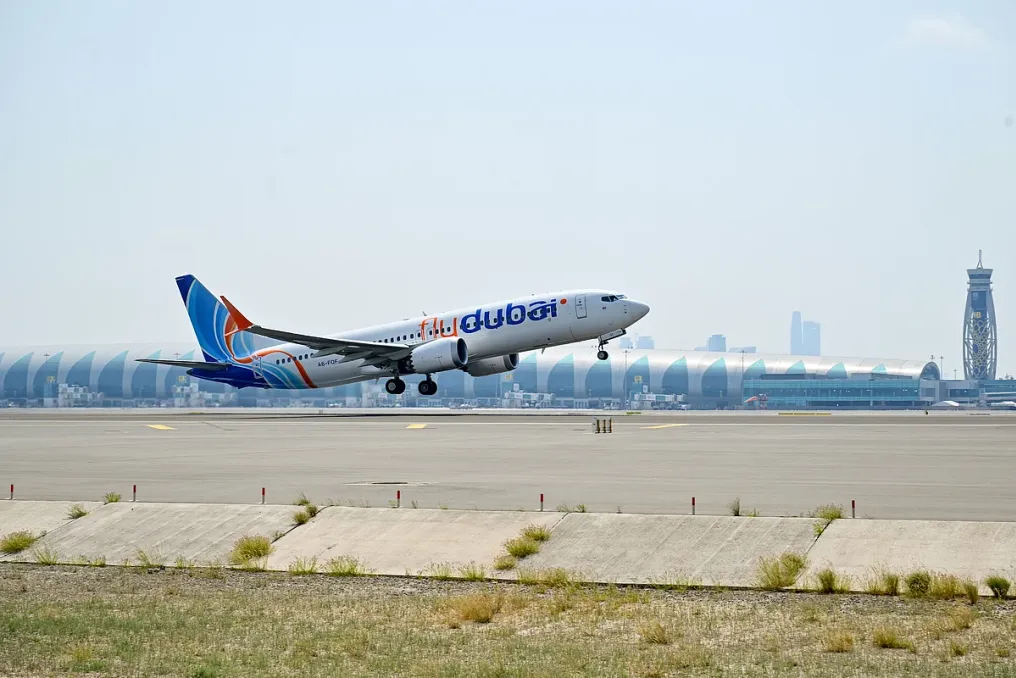
Passenger flow at Dubai International Airport (DXB) is showing signs of recovery, with monthly volumes steadily increasing in the second quarter. This follows a period where the airport operator described conditions as 'one of the most challenging operational periods in the airport's history.'
According to data published by Dubai Airports on Wednesday, DXB handled 13 million passengers during the second quarter, bringing the total traffic for the first half of the year to 31.5 million. This figure was 31.3 percent lower than in the same period of 2025.
The recovery was observed throughout the second quarter: April saw 3.5 million passengers, May saw 4.5 million, and June saw 5 million.
This upturn occurred after air travel in the region was severely disrupted due to airspace restrictions and mass flight suspensions earlier this year. Dubai Airports notes that the return of international carriers, improved connectivity, and rising load factors signal sustained demand ahead of DXB's traditionally busier second half.
Paul Griffiths, CEO of Dubai Airports, stated that the first half 'tested every part of the aviation system' but also 'demonstrated our resilience.'
At the beginning of the year, the aviation sector suffered due to US and Israeli attacks on Iran on February 28, targeting Iran's political and military leadership. In response, Tehran struck the UAE and other Gulf countries with drones and missiles, leading to temporary airport closures and the suspension of airline flights in the region for security reasons.
The consistent return of international carriers, improved connectivity, and strengthening load factors indicate sustained demand in key markets and growing confidence ahead of a busier second half at DXB.
Looking ahead, Dubai Airports forecasts an acceleration of pace in the second half. This will be supported by the continued recovery of airline networks and frequencies, growth in international transit traffic, easing of travel advisories from key sources, the winter schedule, and the full calendar of global business, entertainment, and sporting events in Dubai.
Paul Griffiths emphasized: 'As capacities gradually return everywhere, demand responds immediately. This is particularly important for DXB, where international transfers constitute a significant portion of traffic. Strong performance in the airport community in recent months has allowed us to prepare well for returning demand, collaborate closely with our aviation partners, and strengthen Dubai's position as a leading global hub.'
By the end of the first half, nearly 50 international airlines served DXB, connecting travelers to 217 destinations in 99 countries. Load factors continued to rise, approaching 2025 levels as international connectivity expanded.
Cargo volumes reached 751,340 tons in the first half, which was 28.7 percent less than the previous year, including 351,716 tons processed in the second quarter.
For the first half, DXB processed 30.3 million baggage tags, which was 28 percent less than the previous year, including 12.7 million in the second quarter. The mishandled baggage rate was 2.7 per 1,000 passengers, significantly lower than the latest global industry benchmark of nearly 4.9 per 1,000 passengers.
Throughout the first half, Dubai Airport provided a seamless experience for travelers: 98.98 percent of departing passengers cleared immigration in under 10 minutes, 98.95 percent of arriving passengers cleared immigration in under 15 minutes, and 99.34 percent passed through security screening in under five minutes.