The future of air travel at the airport may involve fewer queues, fewer stops, and significantly less time spent searching for passports or boarding passes. A new wave of modernizations is coming to Dubai International Airport (DXB), which could change how millions of passengers move, wait, and depart from one of the world's busiest aviation hubs.
Dubai Airports announced these improvements along with traffic results for the first half of the year on Wednesday. These changes come against the backdrop of airline schedule recovery after several months of disruptions caused by regional conflict, airspace restrictions, and flight suspensions.
Facial Recognition and Biometrics
DXB stated its intention to continue developing its biometric systems. This technology uses facial recognition to verify passenger identity and reduce the need to repeatedly present passports or boarding passes. Currently, the airport provides biometric processing at various stages of the journey, including check-in, immigration, lounge access, and boarding. Thanks to 'Smart Gates,' eligible passengers can pass passport control simply by looking into a camera.
Emirates has invested 85 million dirhams in over 200 biometric cameras in Terminal 3. Furthermore, DXB's new AI-powered immigration corridor can process up to 10 travelers simultaneously without requiring them to stop to present travel documents. Passengers can complete passport control in just six seconds. The latest announcement points to a further expansion of this increasingly contactless process with minimal documentation.
Expansion of Self-Service Capabilities
DXB also plans to increase the range of self-service options. This development is based on existing capabilities that allow passengers in certain airport zones to check in, obtain boarding passes, print baggage tags, and drop off luggage independently, without staff assistance. Dubai Airports has not specified what will be included in this expansion, but this step could allow more passengers to perform key airport procedures themselves, thereby reducing queues and time spent at traditional check-in counters.
Improving Processes for Remote Boarding
Among the planned improvements is what Dubai Airports calls a 'new consolidated remote boarding experience.' The goal of this experience is to optimize the journey for passengers whose flights depart from aircraft parked in remote locations rather than connected to the terminal via an airbridge. Currently, these passengers usually have to go through terminal boarding areas or waiting areas before being transported by bus across the apron to the aircraft. The mention of a 'consolidated' experience implies that DXB is preparing to integrate most of this process into a dedicated, optimized system, although Dubai Airports has not yet disclosed where this will be implemented, which terminals or airlines it will serve, or exactly how the passenger journey will change.
Easier Movement Throughout DXB
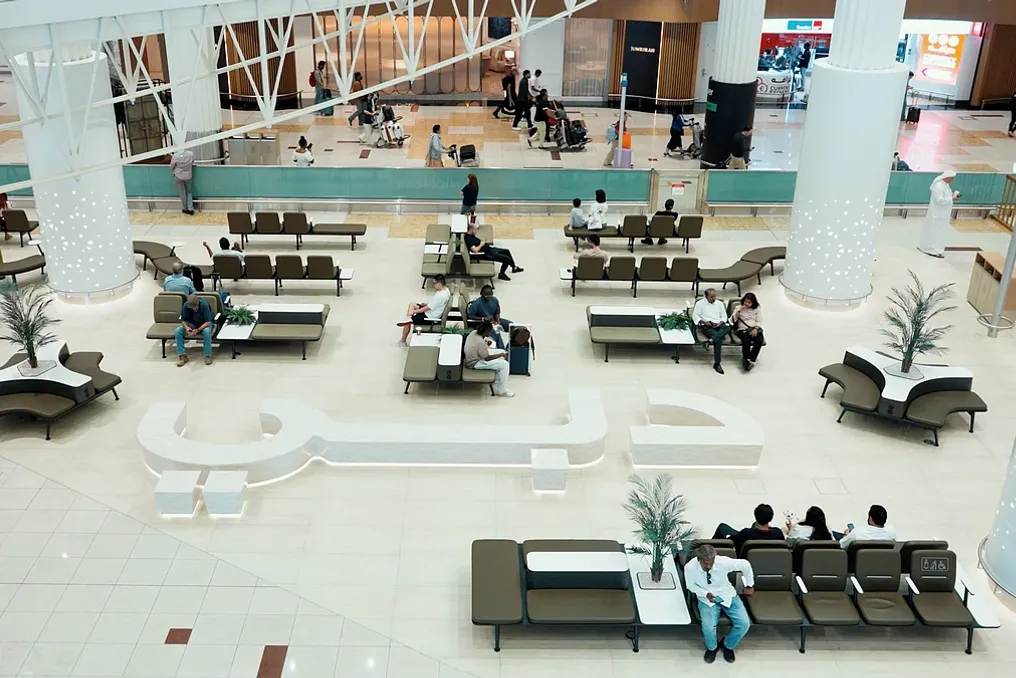
Dubai Airports also announced the implementation of smarter operational systems aimed at improving passenger flow and conducting targeted capacity upgrades throughout the airport. Technologies are being introduced in parallel with changes in the design and functionality of key passenger areas, with a special focus on making spaces more navigable, reducing bottlenecks, and increasing comfort in waiting areas. The comprehensive updates are intended to simplify travel and provide the airport with greater operational flexibility.
These modernizations occur amid growing passenger adoption of technologies that allow them to navigate airports with fewer physical documents and manual operations. According to the IATA Global Passenger Survey for 2025, 50 percent of travelers used facial recognition at some point in their journey, and 74 percent stated they were willing to share biometric data if it would eliminate passport or boarding pass checks. It was also noted that 78 percent wanted a single smartphone solution that combined digital passports, payments, and loyalty credentials to manage their trip.
DXB's investment program is being implemented during the recovery period following a challenging first half of the year. In the first six months, the airport served 31.5 million passengers, which is 31.3 percent less than the same period in 2025. However, monthly traffic increased in the second quarter, rising from 3.5 million passengers in April to 5 million in June. By the end of June, nearly 50 international airlines served DXB, connecting passengers to 217 destinations in 99 countries. Dubai Airports expects recovery to gain further momentum in the second half of the year as airline networks and frequencies return, international transit traffic grows, and the winter schedule begins, as well as due to the calendar of major business, entertainment, and sporting events in Dubai.