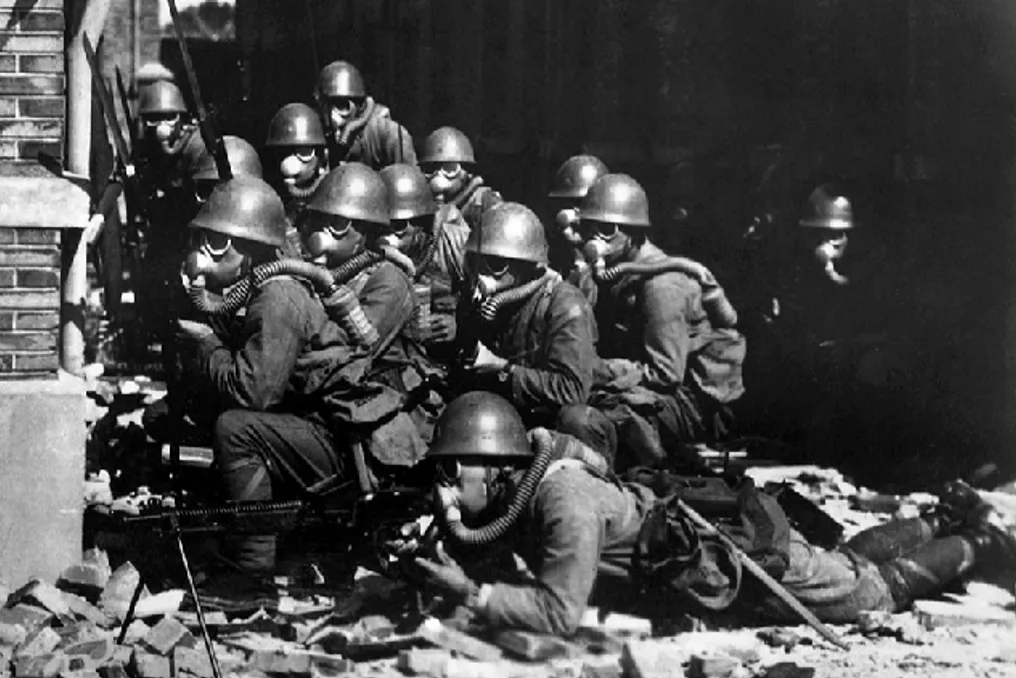
An exhibition dedicated to the production and use of poison gas by the Japanese army during World War II (WWII) is taking place in Yokohama, Kanagawa Prefecture, Japan. The exhibition will run from August 23 to August 28.
The event was initiated by a Japanese public group. The goal of the 'Exhibition on the Japanese Army's Poison Gas' is to expose the atrocities committed by the Japanese military machine, specifically the production of poison gas and the conduct of chemical warfare during the aggressive war against China, as well as to reveal the crimes against humanity committed by Japanese militarism.
According to materials presented at the exhibition, Japan produced poison gas on Okunoshima Island in Hiroshima Prefecture, released gas-filled shells in Kitakyushu City in Fukuoka Prefecture, and trained personnel in chemical warfare in Narashino City in Chiba Prefecture, among other locations during WWII. Furthermore, the Japanese army conducted chemical warfare operations in various parts of China.
After Japan's defeat, some chemical weapons were left behind in China, continuing to harm the local population. However, the Japanese government has issued neither official apologies nor compensation.
The exhibition uses photographs and written materials to document this history and has invited civilian researchers, photojournalists, and other participants involved in this topic to speak at the venue.
Japanese photojournalist Kenji Higuchi has been investigating issues related to the gas war on Okunoshima Island since 1970. He has documented victims of poison gas and the remains of sites where chemical weapons were produced through his camera.
Speaking at the event, Higuchi shared his experience covering this topic and called on the Japanese government to honestly look at history. He told Xinhua: 'Conducting chemical warfare was an atrocity committed by the Japanese army in its aggressive war against China, but the Japanese government is trying to erase this part of history. They committed such evil acts, and it is a disgrace to the country. That is why they want to erase it from history.'
Masao, a visitor from Yokosuka, noted that Higuchi's talk at the exhibition made him realize that this part of history had long remained little known. Another visitor from Japan told Xinhua: 'I never learned about this history in school. It is not taught in school. It was truly shocking to see these materials for the first time.'
Higuchi emphasized the importance of preserving and transmitting historical heritage. He concluded: 'This history must be clear. What was wrong was wrong, and what was right was right. We must become people capable of distinguishing good from evil.'