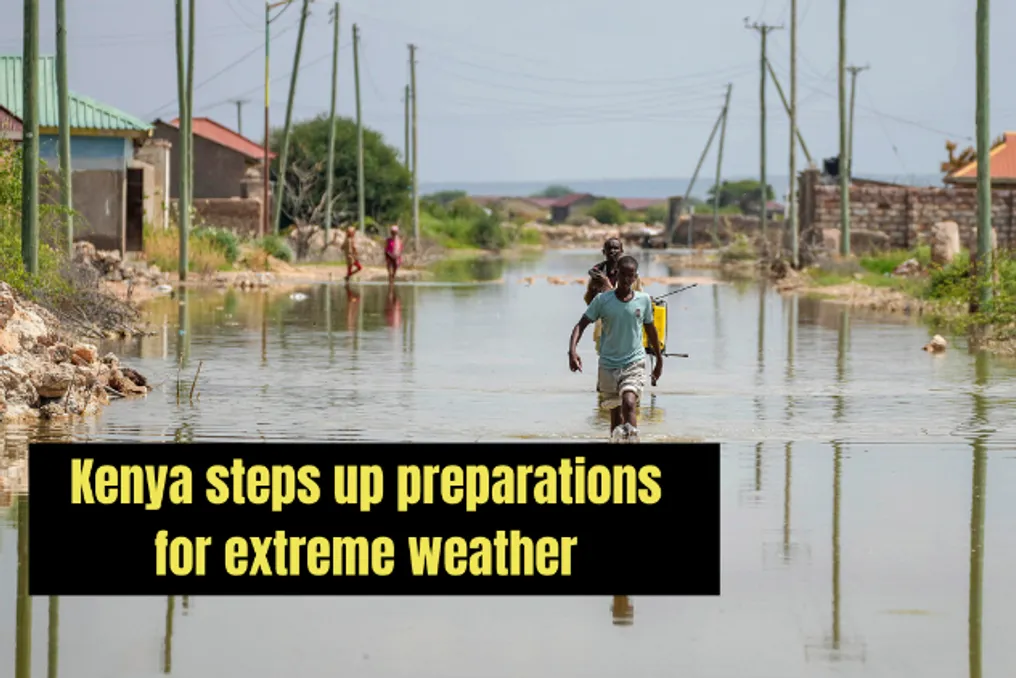
Governments in East and Southern Africa are sounding the alarm amid warnings from meteorological services about expected extreme weather events caused by a strong El Niño pattern.
In Kenya, officials are preparing for above-average rainfall, which could potentially trigger flash floods and landslides in vulnerable areas. El Niño is a natural climate cycle that recurs approximately every two to seven years and typically lasts about a year.
The main concern for East Africa is torrential rains, severe flash floods, and landslides. Kenya, as the region's largest economy, expects to bear a significant portion of the consequences, with over 1.5 million people potentially at risk.
In Nairobi, the government convened a national forum to prepare for the worst-case scenario ahead of the expected El Niño rains. This meeting aims to mobilize resources and raise awareness before the rainy season, which falls between October and December. Authorities seek to preempt the threat, which they say could strain emergency response systems across the country.
David Samoei, Director of the National Disaster Management Centre, stated: 'We are talking about 1.5 million people who could be affected, 500,000 could be displaced, and landslides could affect around 450,000 people.'
These warnings have prompted Kenyan authorities to intensify coordination between national and county disaster response groups. The goal is to pre-position essential supplies, identify flood-prone zones, and increase public awareness before the heavy rains arrive.
While Kenya and much of East Africa prepare for excess rainfall, countries such as Namibia, South Africa, Malawi, Zimbabwe, Zambia, Mozambique, and Botswana are bracing for extreme and harsh droughts, crop failures, and acute water shortages.
The UN Environment Programme has also emphasized the importance of taking action before extreme weather events occur. Margaret Odduk from the UN Environment Programme noted: 'Preparedness must be science-based, and actions must precede the emergency.'
Many governments across Africa have pledged readiness for the upcoming season. However, for millions of people living in high-risk areas—from flood-prone valleys in Kenya to arid farmlands in South Africa—assurances alone may not be enough.
Communities on the front lines demand tangible action: checking and ensuring the functionality of early warning systems, clearing evacuation routes, having aid stockpiles, and providing support to vulnerable households before a disaster strikes, not after it does.
As the October-December rains approach, attention is increasingly focused on whether Kenya can translate its warnings and contingency plans into timely action before the extreme weather sets in.