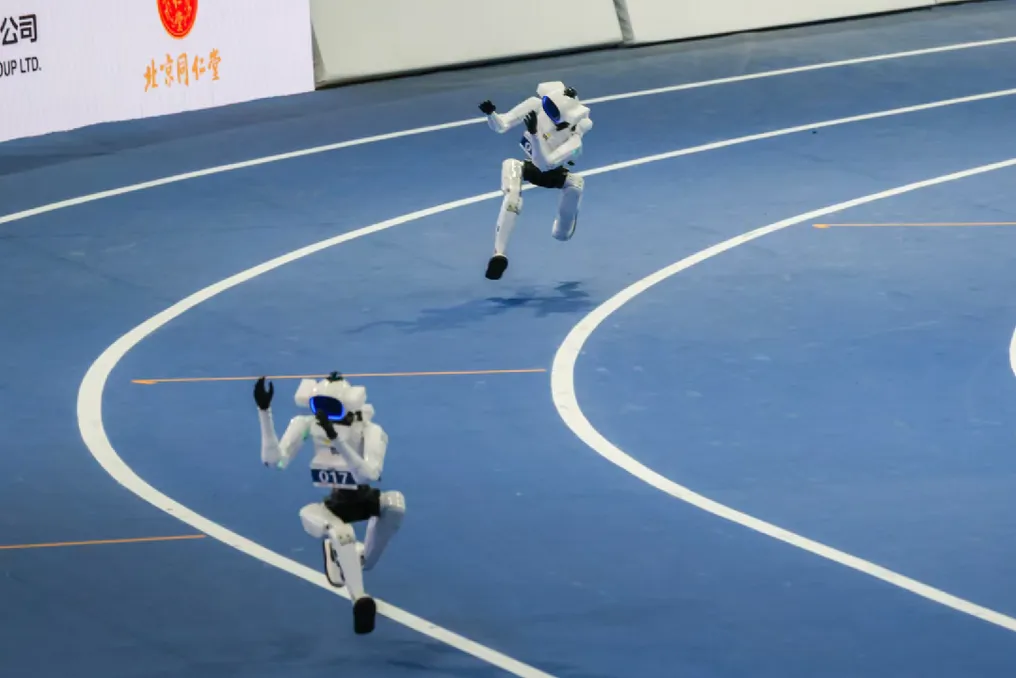
At the ongoing Second World Humanoid Robot Games, it was observed that several robots surpassed human performance in sprints and other track and field events, indicating the rapid development of humanoid robot technology.
Industry observers present at the event note that while competitions demonstrate the advanced technical potential of modern robots, their application in daily life is still in its early stages.
Robots are gradually transitioning from demonstration shows at exhibitions to practical use in real-life situations. One industry participant at these games emphasized that this edition brought significant new achievements. For the first time, robot competition results are being compared with human performance metrics, proving the robots' ability to outperform humans under certain controlled conditions.
Unlike previous competitions, which mainly focused on basic locomotion, the current event includes a wide range of autonomous operation tasks, marking an important step toward broader industrial implementation.
Nevertheless, competitive-level performance does not automatically translate into viable consumer products for the mass market. Issues and limitations identified during the matches may stimulate further technical refinement.
Meanwhile, alternative robotic solutions that are not humanoid, such as wheeled platforms equipped with robotic grippers, also possess significant practical application potential.
Kan Yu, General Manager of Shoucheng Holdings Capital Markets Department, shared her views on investment trends in the industry. Amid growing investor interest in robotics, many industry participants prioritize long-term research and development of fundamental technologies rather than chasing short-term market hype.
Investments cover multiple links in the robotics value chain: robot hardware, joint materials, embodied intelligence models, computing infrastructure, and data. The main focus is on improving product reliability and stability, with further improvements expected as production volumes increase.
The initial public offering of Unitree Robotics marks a significant turning point in the capital market for this sector. This underscores value-oriented technologies as the foundation for the industry's long-term growth prospects.
Experts tracking robot deployment in the real world report that over 200 types of intelligent equipment, covering applications in home, education, and healthcare, are now available in commercial districts, transport hubs, and office complexes in Beijing.
Industry forecasts predict a substantial reduction in robot costs over the next three years. As algorithms improve, robots could eventually become mass-market consumer goods. Deploying robots in real-world scenarios will become a central element of industry development.