Iran has announced its intention to respond to the expansion of economic sanctions by the United States, which the American side claims are aimed at cutting off vital economic channels for Iran. Tehran expresses confidence that major trading partners will remain resilient against pressure from Washington.
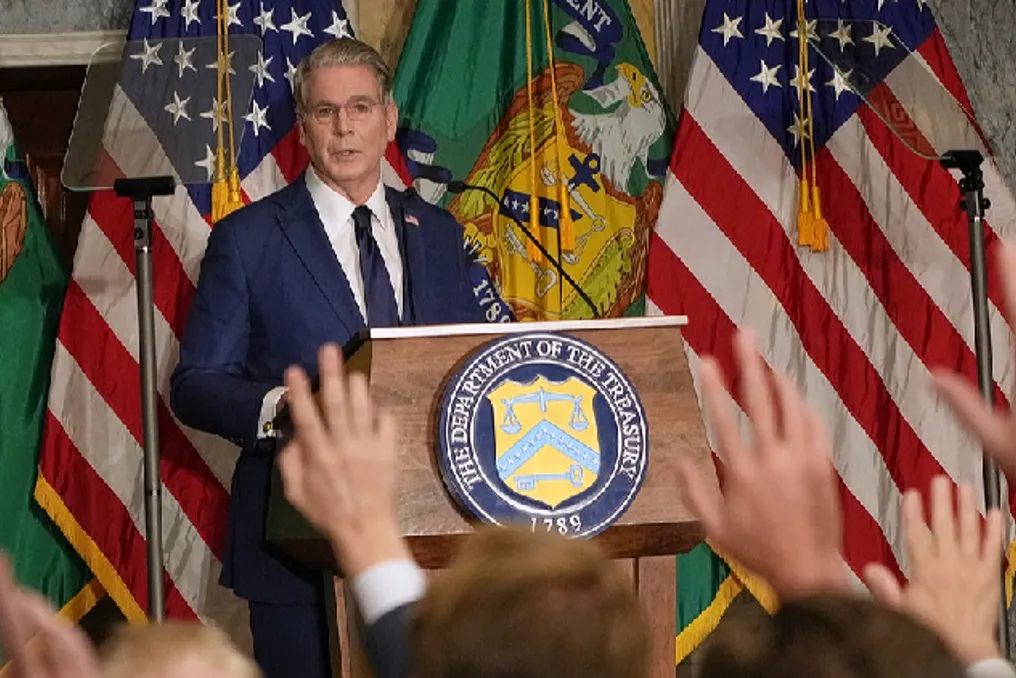
US Treasury Secretary Scott Bessent presented new measures on Monday designed to further isolate Iran, but he refrained from imposing the harshest sanctions, warning that countries continuing to trade with Iran might be forced out of the dollar financial system.
Expansion of US Sanctions
The US Department of the Treasury stated in a press release that the new sectoral sanctions affect five key areas: digital assets, technology, gold, aviation, and shipping, which, according to the US, form the basis of Iran's economy. These steps marked the beginning of a "sustainable and systematic campaign to close all financial resources" supporting Iran.
The department added that any entity facilitating money laundering or sanctions evasion on behalf of Iran risks being excluded from the US financial system. Furthermore, the department is expanding the categories of "Iran-related conduct" that may be subject to future sanctions and stated that "each country will be given a specific deadline to cease activities related to Iran," as defined by the US.
Around 60 organizations, private individuals, and vessels in various jurisdictions have also been sanctioned, reportedly contributing to Iranian activities, including the acquisition of illegal nuclear and missile technologies, as well as oil revenue networks. Several general licenses previously allowing certain payments to Iranians were also suspended, as was Iranian access to the US cultural and academic system. Additional clarifications were issued regarding the risks of sanctions related to fulfilling Iranian requirements concerning shipping in the Strait of Hormuz.
Bessent also mentioned that US President Donald Trump had appealed to world leaders with specific requests to cease interaction with Iran.
Iran Demonstrates a Defiant Stance
Iranian Economy Minister Ali Madanizadeh stated that Iran is fully prepared for US sanctions because they cannot cut off the country's vital financial arteries. He noted: "Naturally, enemies intend to carry out an economic terrorist attack against us, but we also have our own tools, and we know how to play this game. Our defense is no longer defensive; enemies should expect an attack" - Madanizadeh told state television.
In a post on X, Iranian Parliament Speaker Mohammad Bagher Ghalibaf wrote: "Iran's trading partners, both in the media and through messages sent to us, have made it clear that they do not take these statements into account." Brigadier General Hossein Mohebbi, a representative of the Islamic Revolutionary Guard Corps of Iran, swore to deal a serious blow to the vital interests and energy nodes of the US if Iranian infrastructure is threatened, according to Press TV.
Iranian President Masoud Pezeshkian stated on Monday that the US should adjust its tone and approach when interacting with Iran, as relying on coercion and intimidation will only complicate processes. This statement was made during his meeting with the Commander-in-Chief of the Pakistani Army, Field Marshal Syed Asim Munir, in Tehran. Earlier, Mohsen Rezaei, Secretary of the Supreme National Security Council of Iran, stated that Iran would consider the participation of any country or its support of America's economic war against the Iranian people as an act of war.
What Will the Sanctions Lead To
This latest escalation in the economic sphere occurs almost six months after the US and Iran began mutual strikes at the end of February, raising new questions about the development of this confrontation.
In an interview with CMG, a Middle East expert from the China Institute of International Studies, Li Jixing suggested that Iran might respond to growing US pressure by using control over the Strait of Hormuz, its geopolitical influence, and its long-standing experience in countering sanctions. Li noted that Iran has increased military deterrence in the strait while moving towards institutionalized control over this strategic waterway.
Li explained that "thousands of naval mines and anti-ship missiles cover the entire strait, giving Iran significant military leverage over this vital waterway." He added that the "recently established Gulf of Persian Control Authority adopted a 'one ship—one inspection' system, turning what were previously temporary measures into a routine and institutionalized control mechanism."