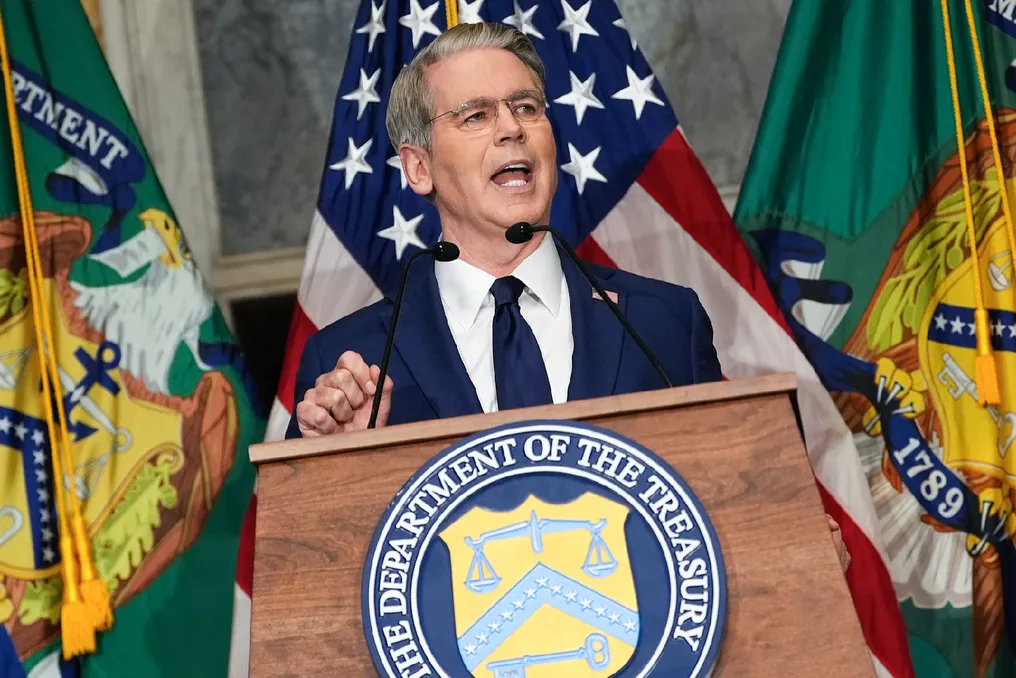
After six months of military threats and conflict, the United States has initiated a large-scale campaign of economic pressure against Iran. New US sanctions extend beyond the financial sector and oil, imposing secondary restrictions on five key areas: digital assets, gold, aviation, shipping, and technology, while also increasing pressure on third countries.
US Treasury Secretary Scott Bessent stated that the US is launching the largest campaign of economic isolation in history, demanding that countries choose sides in trade relations with Iran.
Reasons for the US Shift to Economic Warfare
The primary reason the US is exerting immense military pressure on Iran is the desire to simultaneously maintain constant pressure on Tehran while avoiding the colossal costs associated with continued military confrontation. On one hand, the United States must maintain strong strategic pressure on Iran and keep high readiness, hoping that Iran will initiate dialogue with Washington under pressure and make concessions, thereby avoiding domestic criticism in the US for ending the war in Iran too hastily.
On the other hand, six months of military clashes and intense direct confrontations have created strategic costs that are becoming increasingly difficult for the US to bear. US military resources, air defense missiles, and strategic missiles are beginning to prove insufficient to sustain high-intensity operations in the long term, and the US can no longer rely solely on military means to coerce Iran into concessions. Against this backdrop, the shift to economic pressure to force Iran into concessions has become an increasingly important strategic option for Washington.
How Will Economic Pressure Be Implemented?
The US transition to economic pressure will generally be implemented through three measures. First, the US will maintain a naval blockade of Iran by deploying naval forces around Iran and attempting to intercept Iranian vessels, which will disrupt Iran's economic ties with the outside world.
Second, sanctions will be imposed on Iran in five areas—digital assets, technology, gold, aviation, and shipping—while also targeting networks for purchasing nuclear and missile technologies, cyberattack operations, oil revenues, and the shadow fleet.
Third, the US will increase pressure on Iran's trading partners, especially neighboring countries, forcing them to make a choice and thereby limiting Iran's ability to maintain economic ties with other states through regional trade.
Can Sanctions Isolate Iran?
Nevertheless, achieving goals through US sanctions faces numerous difficulties. Firstly, the blockade of Iran has lasted almost six months. Although it has dealt a serious blow to Iran's oil and natural gas exports, it has failed to force Tehran to surrender. The Iranian economy is experiencing severe difficulties but is not on the verge of collapse, and these problems have not escalated into a major political crisis.
Secondly, the number of Iranian individuals and organizations subject to US sanctions is already extremely large, making Iran the second country by the number of sanctioned entities from the US. US economic sanctions and blockade measures against Iran have been ongoing for decades, but they have also failed to compel Tehran to capitulate in bilateral relations with Washington. Therefore, a key factor in the success of US economic pressure may be Washington's ability to force countries maintaining economic ties with Iran, especially its neighbors, to sever those ties with Tehran.
However, the US will find it difficult to completely sever Iran's economic ties with these countries simply by forcing them to choose sides. Iran may continue to maintain its economic and trade networks with the rest of the world through land borders with neighboring states. Countries in the Caucasus north of Iran may serve as important channels connecting Iran to Russia, while Azerbaijan and Armenia will continue to play a vital role as land routes.
Meanwhile, Turkey has long depended on natural gas and oil imports from Iran, and in the short term, it will be difficult for it to sever economic ties with Tehran. Iran and Iraq share a long land border, and their extensive economic ties will be difficult to completely break through unilateral US pressure.
In eastern Iran, land routes through Pakistan and Afghanistan, as well as land corridors through Central Asia to the northeast, could further expand Iran's economic networks to other parts of the world. Thus, it is unrealistic and difficult for the United States to unilaterally force Iran's trading partners to choose a side.
As modern state systems gradually matured in the 20th century, it became increasingly difficult to simply replicate traditional methods of the 19th-century colonial era, where military intimidation and economic pressure were used to achieve strategic goals. Historically, no country has ever been able to completely sever another country's economic ties with other states and the rest of the world. Economic sanctions can have an impact in certain areas, but it is extremely difficult to force another country to make serious concessions solely through economic sanctions and military pressure.
For Iran, even with prolonged sanctions, it is unlikely that it will easily accept US demands and continue to resist political pressure from Washington in the long run.
Who Will Bear the Costs?
US pressure has already generated numerous problems. The US itself will face inflationary pressure due to rising crude oil prices, but it is not necessarily the country that will suffer the greatest losses. As the dominant power in the global economic system, the US can leverage the advantages of international dollar hegemony to shift some of the strategic costs arising from the conflict onto other countries. Therefore, although sanctions will impose certain costs on the US, they are unlikely to inflict serious and substantial damage on the US economy.
Conversely, US sanctions will have serious consequences for Iran, Middle Eastern countries, and developing nations worldwide. Firstly, for Iran, economic sanctions and blockades will further worsen living conditions for the population. Since the start of the conflict between Iran and the US, Iran has managed to withstand US strategic pressure, but the Iranian currency has sharply depreciated, prices have risen significantly, and economic hardship among the population continues to accumulate. As US pressure on Iran persists, Iran's internal economic problems are likely to worsen.
Secondly, for Middle Eastern countries, the ongoing US pressure on Iran means that regional tensions will remain protracted. Energy exports, especially the production and export of energy by Gulf countries, will face significant risks and uncertainty, and national economic development will also be seriously threatened. Finally, rising crude oil prices will lead to increased prices for a range of petrochemical and industrial products, contributing to global price increases.
For developing countries, this means greater fiscal pressure, rapidly rising living costs, and an increased risk of poverty. Against this background, the international community, especially developing countries, will have to face and bear enormous costs caused by the conflict.
Ultimately, the costs of the US military and economic war against Iran will fall on other countries. US allies in the Middle East, as well as allies such as Japan and South Korea, will inevitably face the consequences of rising international energy prices. Middle Eastern countries will face greater difficulties, economic pressure, and conflict risks caused by economic sanctions and trade blockades, and regional states will also have to deal with emerging economic problems. Overall, the economic war initiated by the US may ultimately be paid for by the rest of the world.