Government plans to exempt foreign high-tech companies from BIS certification
Read more
Business Standard
business-standard.com

Government plans to exempt foreign high-tech companies from BIS certification

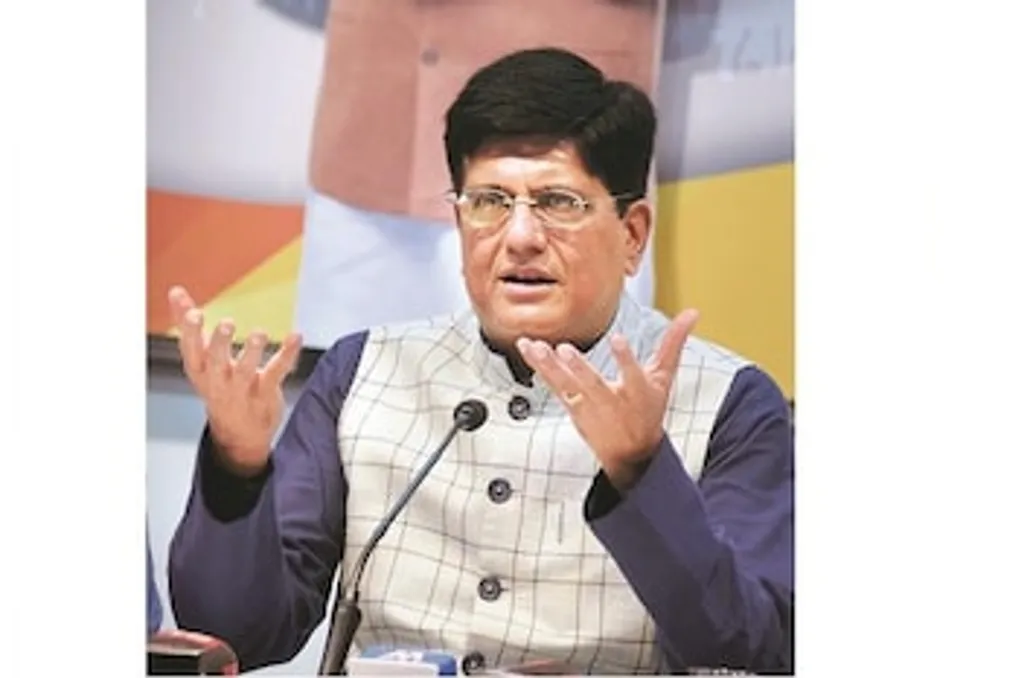
Commerce Minister Piyush Goyal stated in Tokyo on Tuesday that the government is developing a system that will allow foreign companies aiming to manufacture high-tech products in India to be exempted from the Bureau of Indian Standards (BIS) certification requirement.

Goyal reported that he has instructed BIS and all other departments of the Ministry of Commerce and Industry to create such a framework. This system should provide for exemptions from BIS requirements for all equipment and components that companies intend to import into India to advance their production.

This plan emerged after Takeshi Okubo, a corporate executive and executive vice president of the Japanese semiconductor manufacturer Tokyo Electron, raised questions about BIS certification with Goyal on Monday.

According to Goyal, the proposed structure will help not only Japanese firms but also all foreign companies interested in high-tech manufacturing in India. He noted that this is a logical step given that companies like Tokyo Electron bring high-quality semiconductor production products into the country.

Tokyo Electron is collaborating with Tata Electronics to accelerate the development of semiconductor equipment infrastructure in India. The company has built a commercial semiconductor fabrication plant (fab) in Dholera, Gujarat, as well as an outsourced semiconductor assembly and test (OSAT) facility in Jagirod, Assam.

Furthermore, the Japanese firm has joined forces with other leading Indian IT and engineering suppliers, such as HCL and Tata Consultancy Services (TCS), to build up capabilities in hardware and software. Goyal clarified that they will create a system that will provide either company-level or industry-level exemptions, and will work on a solution for mass, product, project, or corporate exemption upon return to India.

On Monday, the minister also met with leaders of several other Japanese companies. These leaders highlighted the need to improve social infrastructure around semiconductor production sites in Dholera and Jagirod, and requested Goyal to simplify regulatory processes in India.

Goyal assured them that reliable electricity, ultra-pure water, clean infrastructure, waste treatment facilities, and quality logistics, as well as social infrastructure, will be provided in places like Dholera, Jagirod, and other zones where they plan to locate operations, to make their activities in India faster and more attractive.

Japan is among the top five sources of Foreign Direct Investment (FDI) in India. According to the latest data from the Department for Promotion of Industry and Internal Trade (DPIIT), India has received cumulative FDI from Japan amounting to $48.14 billion as of March 2026.
Similar stories

Uzbekistan is creating a register of business benefits and incentives for enterprises
Read more
uzdaily.uz

Uzbekistan is creating a register of business benefits and incentives for enterprises

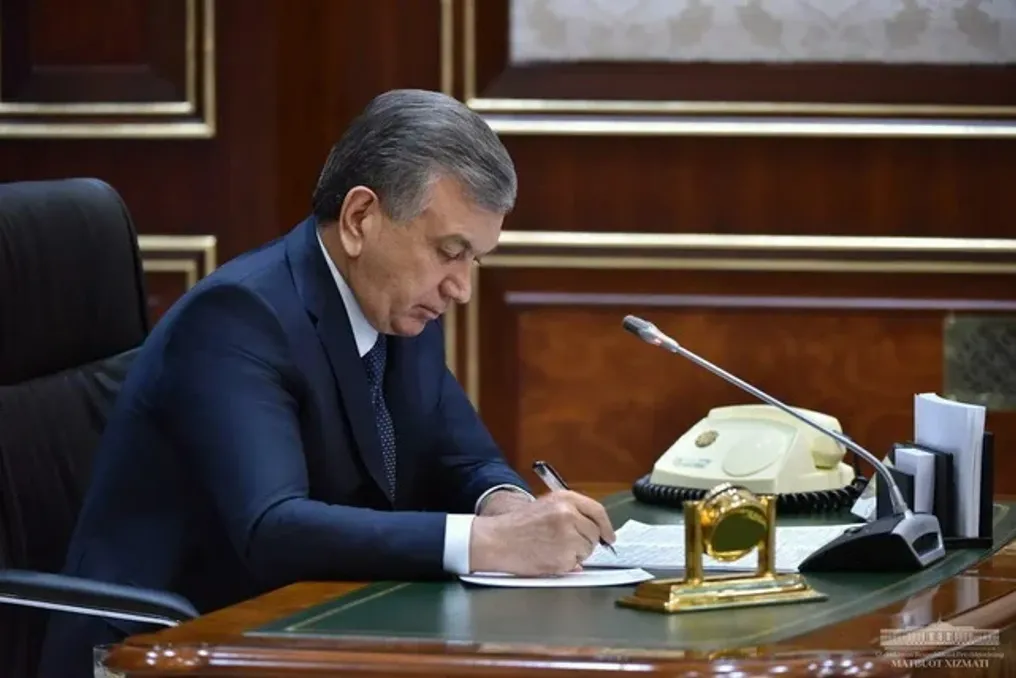
Uzbekistan plans to establish a special register of benefits and incentives available to businesses. This will result from amendments to the Law 'On Guarantees of Freedom of Entrepreneurial Activity,' which was approved by President Shavkat Mirziyoyev on August 17. This law also establishes new rules for providing state support to enterprises and allows for discounted payment of financial fines.

The register will contain information about the benefits and incentives provided to entrepreneurs, their validity periods, and the procedure for obtaining these measures. The process of creating and updating the register will be determined by the Cabinet of Ministers, while the Ministry of Economy and Finance will maintain it on a specialized platform.

According to the new provisions, support measures will be provided on equal terms and through transparent mechanisms, based on the economic sector, field of activity, and region. Unjustified refusal to provide benefits or creating obstacles to their use is prohibited.

The law provides for various forms of state assistance to businesses, including customs and tax benefits, credit subsidization, grants, financial subsidies, infrastructure development assistance, personnel training support, and non-financial incentives. However, support measures related to export goals or import substitution are prohibited in the trade turnover sector.

The document also specifies the purposes for which specific support measures can be provided. Subsidies can be used for implementing green technologies, developing tourism, education, and healthcare, connecting enterprises to engineering infrastructure, promoting social entrepreneurship, and reducing the shadow economy. State grants will be directed towards projects with economic and social significance, as well as innovative ideas and social entrepreneurship projects. The procedure and conditions for granting grants will be approved by the Cabinet of Ministers.

Tax benefits may be provided in accordance with the Tax Code or, in certain cases, by presidential decisions. Customs benefits will be provided according to the Customs Code.

Social Support

To support subsidized lending, the government will be able to compensate banks for part of the interest rate on issued loans, establish targeted credit lines, and attract funds from international financial institutions. The state can also participate in risk-sharing schemes for unsecured loans.

Social entrepreneurship projects can apply for measures such as state social orders, assistance in training and professional development, as well as consulting and methodological support. The law will enter into force three months after publication, specifically on November 18, 2026.

Popular