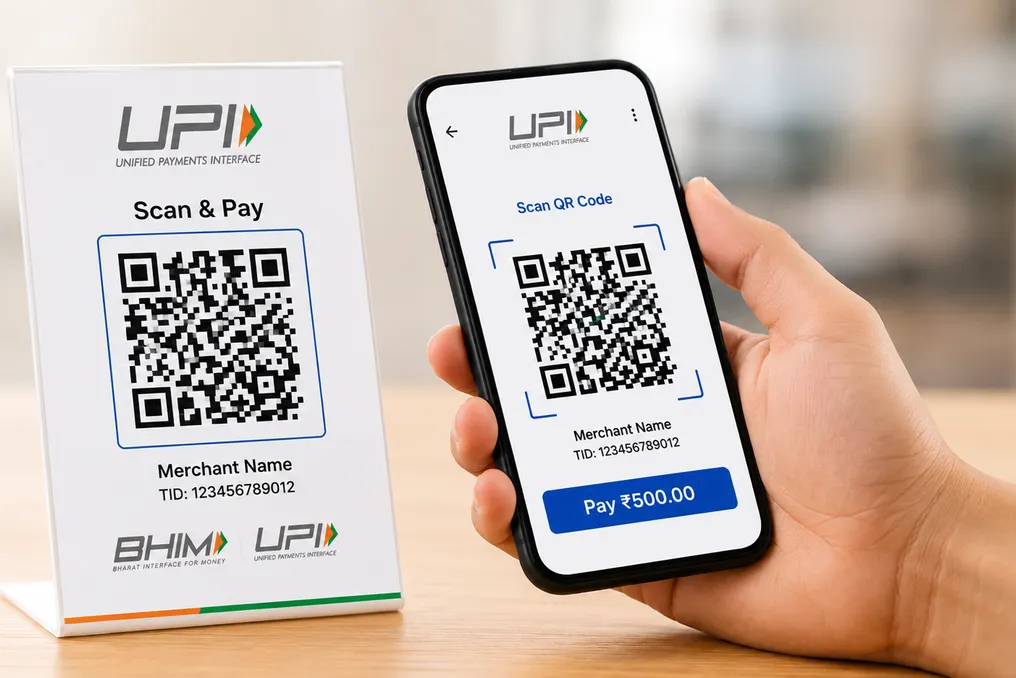
The decade of operation of the UPI system has demonstrated how infrastructure developed in India has subtly changed the lifestyle of the population. In 2018, the author returned to Google to work on GPay and could not imagine that the real-time instant payment system created by the National Payments Corporation of India (NPCI) under the aegis of the Reserve Bank of India (RBI) with the participation of many distinguished specialists would reach such a scale and bring about such profound transformations.
The author recalls trying to explain to foreign colleagues why a system built on a public service model could operate on such a global scale, something no other place in the world had attempted. However, after ten years, the undeniable proof of this success is obvious to everyone.
UPI went far beyond simply accelerating the payment process; it became the foundation upon which the lives of over a billion people were transformed almost instantly. The figures attest to this: the annual volume of UPI transactions grew from 17.8 billion in the financial year 2017 to over 24,162 billion in the financial year 2026, representing an increase of nearly 13,000 times. Meanwhile, the transaction value increased from 7 trillion to approximately 314 lakh crore during the same period, according to Ministry of Finance data. In July 2026 alone, UPI registered 2.366 trillion transactions, marking the highest monthly volume in its decade of existence.
Perhaps the most vivid way to understand the social and economic impact of UPI is to recall the pandemic. India's ability to navigate this period while supporting households, ensuring the functioning of small businesses, and maintaining daily trade would have been significantly more difficult without this system. When society, one of the largest and most densely connected in the world, imposed a lockdown, the task was not only to contain the public health crisis but also to ensure the continuity of cash flow when people could not move. At a time when people were sterilizing groceries, parcels, doorknobs, and banknotes, handling cash became another source of anxiety. This was particularly relevant for migrant workers returning to their hometowns without means of earning, yet many employers could support them thanks to the simplicity of payments via UPI. UPI ensured that people did not have to go anywhere: groceries, medicines, teleconsultations with doctors, rent, and even aid packages—all were settled instantly.
What seemed ordinary at the time held exceptional significance. The system ensured smooth money movement when people had to maintain distance and helped preserve a degree of economic and social stability in a year marked by uncertainty. This same payment system changed daily life even after the pandemic ended. Street vendors no longer need cash, and migrant workers can send money home instantly. There is no longer the need to stand in queues and worry about lost daily wages. Now, this transformation has become invisible: we pay bills, split expenses, pay for school tuition, and even tip couriers, simply by taking out our phones, without thinking about what is happening behind the scenes. What matters is not just ease of use, but also security, as well as the dignity of those small daily decisions that previously carried a high cost in many respects.
Currently, UPI processes over 20 billion transactions monthly among 504 million users and 65 million merchants, accounting for 84% of digital retail payments in India and nearly half of all real-time payment volumes globally, according to the BCG/NPCI Global Benchmark Report. No other country has managed to create something similar at such a speed. This scale has also led to deeper institutional penetration: the number of banks connected to UPI has grown from 44 in the financial year 2017 to 703 to date, according to the Ministry of Finance.
The changes have occurred not only in spending but also in how India invests. The growth of retail SIP transactions in India through UPI over the last year has been nearly 177%. The free and fast flow of money through UPI has contributed to the growth of both mutual funds and brokerage operations, as everyone gained easy access via mobile phones. This is financial inclusion realized in practice, not just in political declarations.
This colossal success is now transforming other countries. For many decades, India was perceived as the largest exporter of ready-made digital products, engineers, and IT services. UPI has taken this story to a new level: India is now exporting the underlying infrastructure itself. UPI is already operational in eight or more countries, including the UAE, Singapore, France, and the UK, according to the Ministry of Finance. Cooperation agreements on digital public infrastructure have been signed with 23 nations, and cross-border UPI volumes have grown 20-fold in one year, according to NPCI International/PIB data on UPI's global presence and growth in cross-border transactions for FY 2023–FY 2025.
When the CEO of PayPal, one of the pioneers of online transactions, stated, 'Wherever I go, India appears,' he was close to the truth. UPI is the first and perhaps the largest payment system integrated into PayPal World. Countries are not just admiring what India has built; they are going further by collaborating with it to build this system for themselves. It is about more than just payments. It is a real, working demonstration that India is capable of developing, building, and scaling deep technological infrastructure, not just servicing it for others, at a level that other countries are now studying and adopting.
The next decade will likely see UPI move beyond a simple payment channel. The most immediate shift will probably be international. Imagine a global UPI that makes cross-border money transfers and payments to merchants as instant and inexpensive as domestic ones. Nevertheless, the strongest foundation for the next stage may be built on the domestic front. Credit through UPI is a frontier waiting to be opened. Contextual lending can truly change purchasing power for first-time borrowers. When commerce becomes more flexible, the economy becomes more productive.
Furthermore, three quieter changes deserve attention. The first is expected to be AI-driven conversational payments, allowing people to conduct transactions in the language they already think in. The next change that comes to mind is extending this payment power to the offline world, to places where the internet has not yet penetrated. And then there is the biggest change—programmable money, which allows payments to execute upon the fulfillment of certain conditions. Rules similar to smart contracts can automate conditional payments, while machine-to-machine micro-payments using the Internet of Things already allow devices, vehicles, and software agents to securely pay each other in real-time. This will inevitably become more complex. Perhaps your refrigerator will order and pay for groceries. If this is built on the same principles of interoperability, trust, and inclusion, these innovations will not just add features to UPI but expand the capabilities of the financial infrastructure for India and, increasingly, for the entire world.
After ten years, the true achievement of UPI will not be in the volumes, however staggering they may be. It will be that an entire generation of Indians now expects their financial life to simply work—instantly, securely, and seamlessly. The author believes that the next decade will be dedicated to proving that India can instill this same expectation across all other aspects of its endeavors.