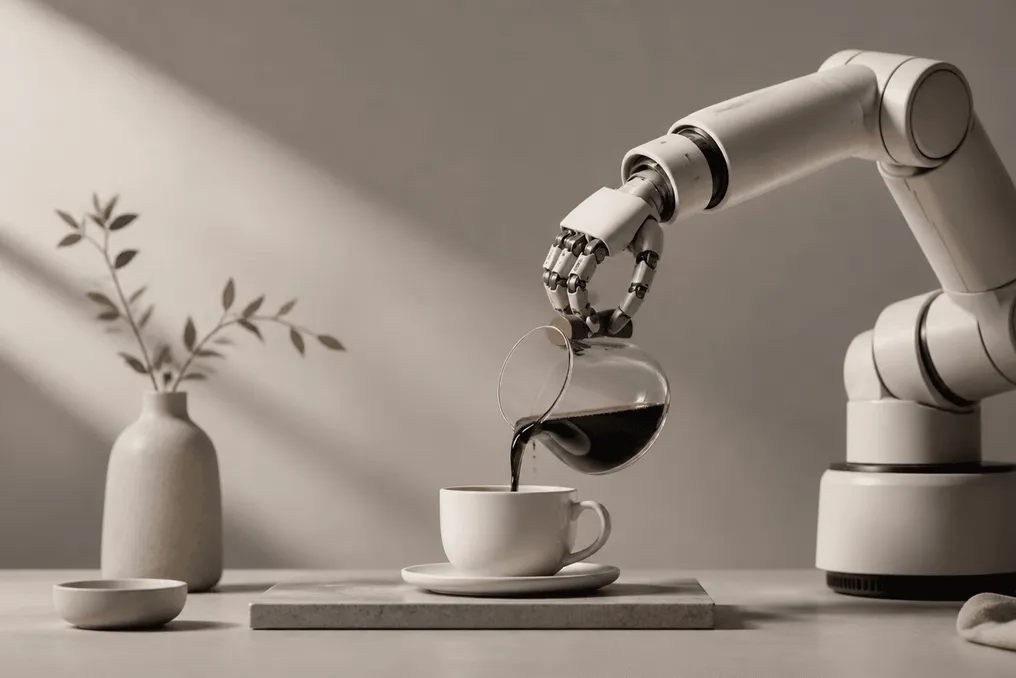
The company JD 7Fresh has launched its first 24-hour intelligent, staffless coffee shop, located under the Galaxy SOHO complex in Beijing. Here, a fully automated line and an android robot prepare espresso with astonishing speed.
On opening day, the system set a Guinness World Record for the number of drinks prepared by a robot per hour, reaching 202 servings. Customers place orders through a mini-program, and then the automatic equipment handles placing cups, adding ice, preparing the drink, labeling, and quality checking. After this, the android robot delivers each order to a special dispensing cabinet.
JD 7Fresh claims that one cup can be made in just 20 seconds, with a stable output of 30 seconds, and the line is capable of preparing seven or eight servings simultaneously. The menu matches the assortment of other 7Fresh locations and costs between 6.9 and 12.9 yuan. Additionally, there is an AI-powered personalization feature allowing customers to adjust the sweetness and strength of the coffee, although this feature is currently only applicable to four drinks.
The company explains its drive toward automation due to high staff turnover and inconsistent quality in manual labor within the fresh coffee and tea business. Automating production combined with an android robot allows for quality standardization and cost reduction. However, economic viability remains a subject of debate.
Initial equipment costs exceed 200,000 yuan, which is roughly comparable to or even higher than the annual labor costs of three employees, even though the machines still require human oversight and maintenance. Expert Wang Zhengdun from the investment company Feyue in Shanghai believes that robots are not yet capable of recognizing subtle issues, such as stale milk or damp beans, and cannot replace the interaction valued by regular visitors.
Therefore, industry observers believe that robotic cafes are best suited for filling gaps where human labor is scarce, such as at gas stations and tourist attractions, rather than replacing traditional stores. Given that the Chinese coffee sector is expected to reach 354.9 billion yuan in 2025, a 13.3% increase, consumers evaluate efficiency and experience holistically, forcing robotic stores to prove they can do more than just quickly make coffee.