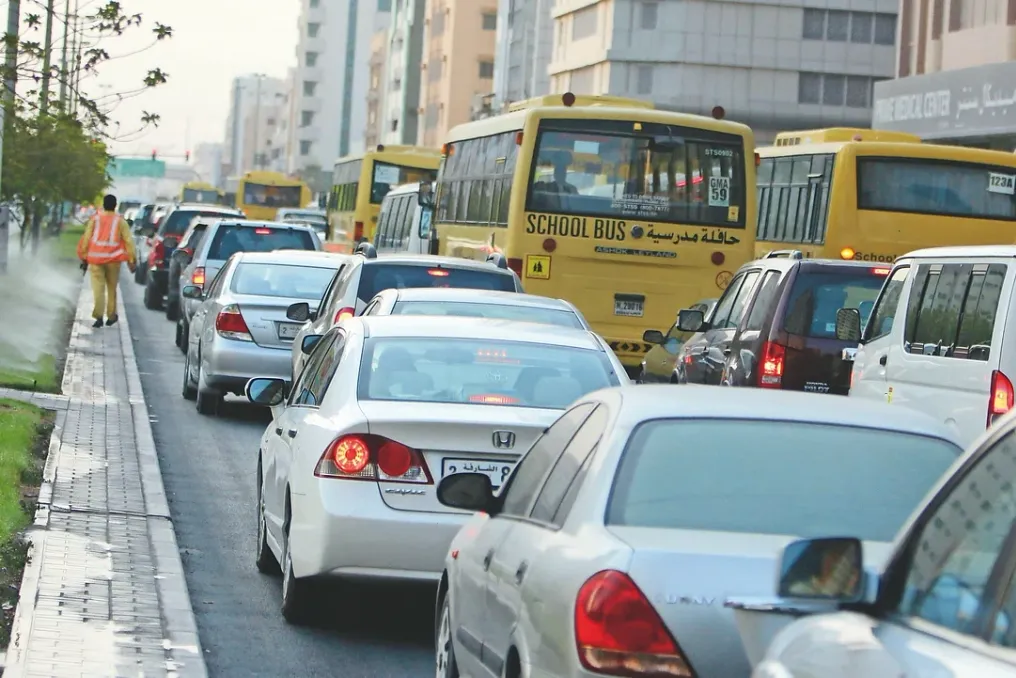
As classes resume in the UAE, drivers are advised to allow extra time for journeys, especially when passing through school zones during morning rush hour. Taxi drivers who spend many hours behind the wheel daily noted that traffic has begun to increase since residents returned from summer holidays. They predict that some school zones may see travel times increase by 15–30 minutes, and the first three days after the start of the academic year may be the most unpredictable.
Taxi drivers have identified areas such as Karama, Bur Dubai, Oud Metha, Garhoud, Al Twar, Al Nahda, Al Barsha, and Al Quoz where congestion can quickly intensify. The slowdown is most likely to occur on roads leading to schools and surrounding residential neighborhoods.
Shahidul Islam, a taxi driver, reported that changes are already noticeable: 'People who were on vacation have returned. We feel the movement of traffic now.' He also expects increased traffic in the Garhoud, Al Nahda, and Festival City areas, as roads in these locations lead to schools.
Drivers anticipate that the most intense morning rush hour will be between 6:00 AM and 8:00 AM. Specifically, Al Twar, Garhoud, and Oud Metha may become particularly congested between 6:30 AM and 9:00 AM, with a second wave of traffic potentially starting after 2:00 PM during school pick-up.
Mushtaq, another taxi driver, advised drivers not to rely on completely clear roads during these periods, stating: 'Most roads will be busy during the school day. Detouring one road may not offer a significant advantage.'
For trips within Dubai, drivers recommend leaving 10–15 minutes earlier than usual. Those traveling directly through a busy school zone may require an additional 15–30 minutes, depending on traffic conditions. Drivers also observed that the main change after the summer holidays is that congestion starts earlier, as residential areas begin to fill up due to the intersection of school and office traffic.
Residents of Sharjah are advised to leave significantly earlier. Mushtaq recommended adding at least an hour to the usual travel time after schools reopen. He specified: 'If you enter Dubai from Sharjah before 6:00 AM, everything is fine. After 7:00 AM, keep an hour buffer.'
Drivers noted that those leaving before 6:00 AM generally have more freedom in choosing a route before school traffic begins to form. However, they warned that smaller internal roads can sometimes slow down as they pass directly through residential and school districts. Therefore, instead of assuming a short route, drivers should check real-time traffic conditions before departing.
Islam advised using the new interchanges, bridges, and flyovers opened over the summer, as they were built in areas that previously experienced heavy traffic. Mushtaq added that the real impact will only be clear two or three days after the start of classes.
Abdul Rahim, another driver, recommended monitoring the condition of Sheikh Mohammed bin Zayed Road, Sheikh Zayed Road, and Al Ittihad Road during peak hours. He advised checking traffic conditions before leaving and, if possible, avoiding roads directly adjacent to schools.
Drivers emphasized that the first three days are often a period of adjustment for passengers, school buses, and parents. This year, the appearance of new roads and interchanges may change familiar traffic patterns. They expect routes to become more predictable after the first few days, once drivers understand where the main bottlenecks are forming.
Despite the advice, drivers continue to transport passengers in areas with many schools, even knowing about potential traffic jams. Areas like Al Twar, Garhoud, and Oud Metha may generate demand for passenger transport in the morning, especially between 7:30 AM and 9:00 AM. The final advice from the drivers concerned patience rather than route selection. They urged drivers not to use their phones, not to rush, and not to act aggressively when traffic slows down. Drivers warned that one small accident could add over an hour to the journey. Abdul Rahim reminded: 'Do not use your mobile phone while driving.' Ultimately, drivers believe that giving themselves extra time, maintaining concentration, and avoiding road rage can save more time than trying to push through a jam.