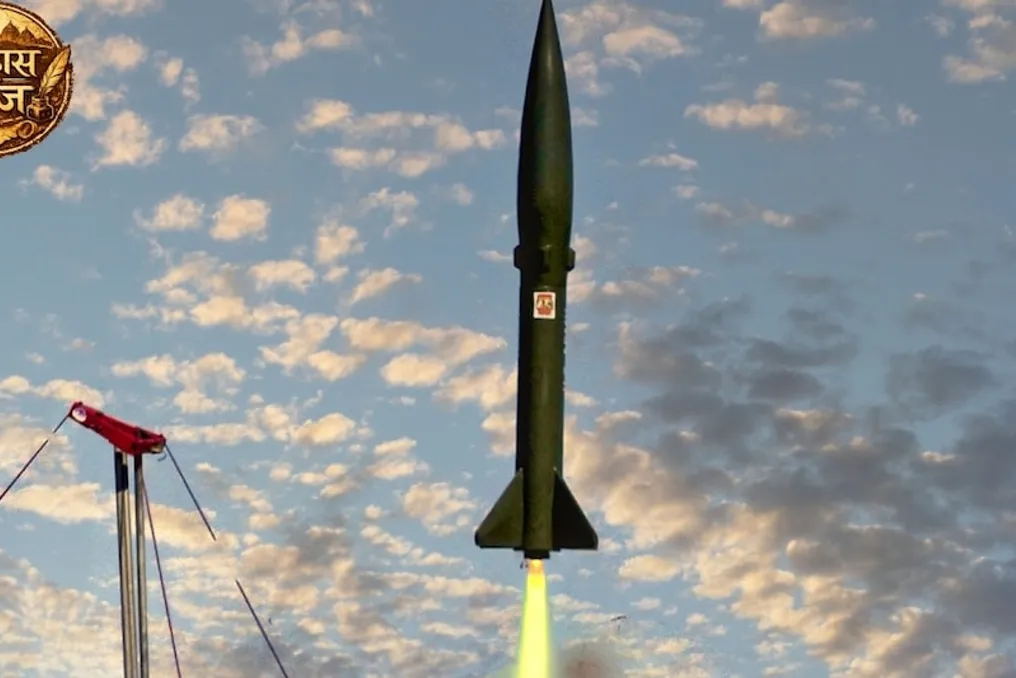
On August 26, 1957, the Soviet Union announced to the world the successful test of an intercontinental ballistic missile (ICBM) capable of delivering nuclear weapons anywhere in the world. This announcement came just four days after the test and caused serious concern in the United States, adding a new phase to the arms race between the two countries.
At that time, the world had not fully recovered from the devastation of World War II, while the confrontation of the Cold War was rapidly escalating between the US and the Soviet Union. Both powers were actively developing not only nuclear weapons but also long-range missiles capable of striking targets thousands of kilometers away.
The technologies used by Nazi Germany at the end of World War II to develop the V-1 and V-2 rockets, which were used against Great Britain, were studied and utilized by both the US and the Soviet Union after the conflict ended. The goal of scientists in both countries was to create a highly accurate, long-range missile capable of carrying a nuclear payload.
In July 1957, the US believed it was ahead in this race, having prepared an ICBM called Atlas. This missile was reported to be capable of reaching speeds of about 20,000 miles per hour and covering a distance of up to 5,000 miles. However, during tests, it did not achieve the expected results: the missile rose only about 5,000 feet, lost stability, began to tumble, and eventually fell to the ground, which was a major blow to America.
Just one month after the American test, the Soviet Union made a sensation by announcing the successful testing of its ICBM in August 1957. The Soviet government stated that the missile covered a great distance in a short time and reached its intended target. Although the Soviet Union did not disclose many details about this test, some in the US questioned the claimed success, believing the results might not have been as impressive as reported.
Nevertheless, this announcement caused alarm in the US. By that time, the Soviet Union had already successfully tested atomic and hydrogen bombs. Having a missile capable of delivering nuclear weapons over long distances meant that no part of America could consider itself completely safe from a potential strike. This is why the news of the successful test of the Soviet ICBM intensified debates in the US about missile capabilities.
The gap in missile capabilities between the US and the Soviet Union became evident. Less than two months after the announcement of the ICBM, the Soviet Union took another step that greatly worried America: it launched the first satellite into space. This deepened fears in the US, as people began to believe that the Soviet Union was not only leading in nuclear and missile technology but was also succeeding in the space race.
The reason for this was the similarity between the technologies of long-range missiles and space rockets. Therefore, the success of Sputnik was seen as confirmation of the Soviet Union's superiority in missile power. Thus, the 1957 ICBM test was not just a missile test; it accelerated the arms race between the US and the Soviet Union and added new momentum to the space race. It was a period when humanity realized for the first time that missiles equipped with nuclear weapons could inflict destruction on an enemy thousands of kilometers away, making this event extremely important in the history of the Cold War.