The author expresses disagreement with the E20 gasoline program, arguing that the government's energy security policy negatively impacts the food security system. He notes that rice, which is purchased at the Minimum Support Price (MSP) using taxpayer money for distribution among the poor through the Public Distribution System (PDS), is then used to produce alcohol. This rice is sold to alcohol producers and distilleries at a price approximately 40 percent below the procurement cost to manufacture ethanol.
The author believes that officials from the Ministry of Finance should examine this economic situation. He points out the contradiction between the Ministry of Petroleum and Natural Gas statement of July 31, which claims that the Ethanol Blending Program (EBP) does not jeopardize India's food security, and the fact that the share of FCI rice in ethanol production was 'insignificant' in the calculations for 2023-24. The Ministry proudly stated that the program helped the country save 1.97 lakh crore rupees in foreign exchange.
However, the author feels that the statement dodged the main question: why is rice, bought with taxpayer money under the food security program, provided to distillers at a subsidized rate? He argues that the balance between foreign exchange savings and providing subsidized discounts cannot be justified.
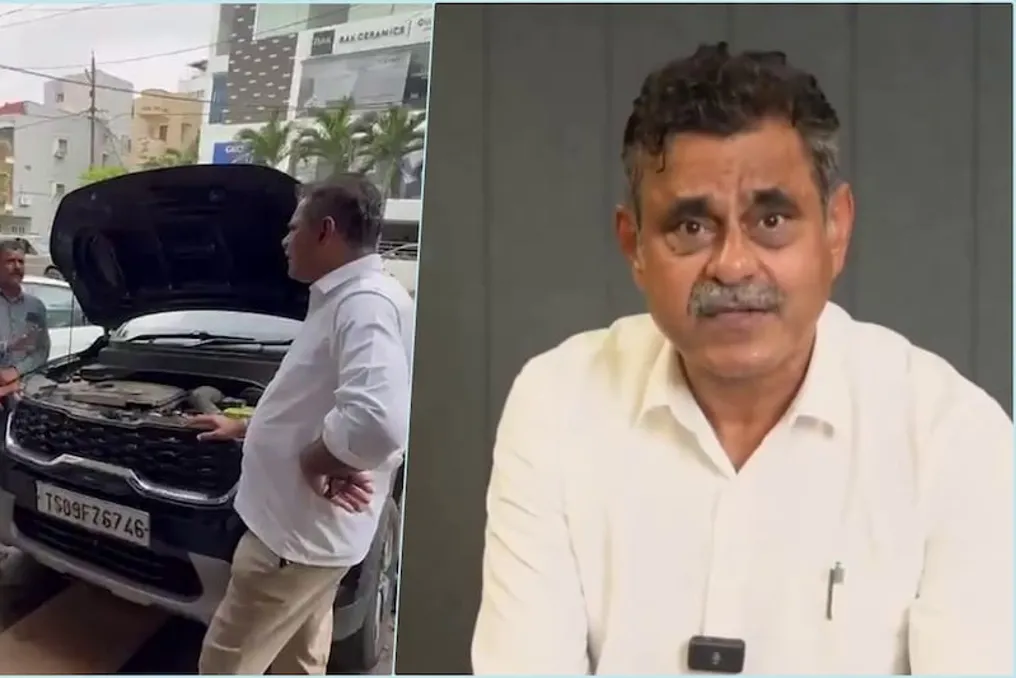
The author shares a personal experience, noting that despite doctors' recommendations to reduce rice consumption due to its glycemic index, he prefers rice because he grew up in Eastern India. He emphasizes that he cares for his car as much as his health and sought gasoline with minimal ethanol content. He found that the only pump selling unleaded gasoline was too far away, which, in the author's view, reflects the program itself.
Although his car meets E20 standards and will run on such fuel, the author notes that it is not the preferred fuel for any internal combustion engine. While some cars can handle E10 (10% ethanol) or E20 (20% ethanol), 'just surviving' should not be the standard. Nevertheless, the government has offered no alternatives; a mixture with 20 percent additives can be obtained at any gas station.
According to a recent local survey, the percentage of vehicle owners complaining about more than a 10 percent decrease in fuel efficiency has risen from 45 percent to 66 percent this year. This contrasts with the government's claim that engines designed for E20 after 2009 should not show a decrease in fuel efficiency. The author concludes that someone is measuring fuel consumption differently, and it is likely not the car owners.
He also opines that one cannot constantly fight the government within constitutional rights, as these rights are often vague and can be dismissed by a court established by legislators who hold a majority in parliament where the government has support. This is compared to how politicians have stakes in those ethanol plants supported by this program.
The author believes that the economy of this program itself does not work, so the government resorts to nationalism and foreign exchange preservation when mathematics fails to convince. He calls this blackmail disguised as patriotism, or, as he prefers, 'a bitter pill that is forced down if blackmail doesn't work.'