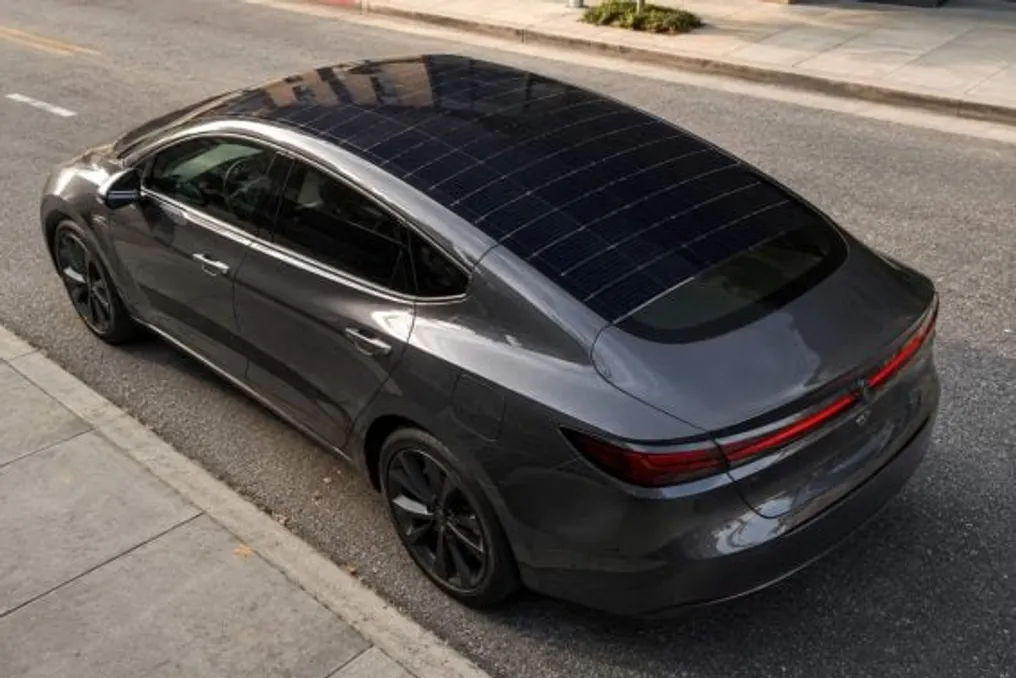
The pursuit of greater autonomy continues to drive technological innovation in the global electric vehicle sector. Fuyao Group, a supplier to giants such as Ford, General Motors, Tesla, and Volkswagen Group, has announced the completion of development and validation of a glass solar roof ready for mass production.
This technology involves laminating solar cells directly into the automotive glass body, covering the entire top panel and extending onto a significant portion of the rear window. International newspapers report that this technology could potentially be integrated into BYD models in China as an optional extra, with an estimated price of around $1190 USD, although none of the involved companies have officially confirmed this potential commercial partnership.
The supplier's production infrastructure is already expanding at its industrial sites, awaiting final acceptance by the automotive industry market. However, Fuyao is not the only interested player in this market.
Nissan engineers have also developed and tested a prototype based on the Ariya SUV electric vehicle, which is equipped with solar panels strategically placed on the roof, hood, and trunk lid. According to the Japanese manufacturer, under clear weather and favorable climatic conditions, the system is capable of accumulating enough energy to add about 23 kilometers of range daily. During driving, these gains are significantly reduced due to shading and movement factors.
Despite the modest amount of generated energy, analysts note that moderately using drivers can reduce the frequency of recharging. It is important to emphasize that this resource is intended to optimize daily efficiency, not to be a miracle solution.