Hike Medical has successfully raised $22.5 million in a seed and Series A round. The funding was led by Saga Ventures through Max Altman, with participation from Indicator Ventures, Fifth Down Capital, and RiverPark Ventures. Orthofeet joined the strategic investors alongside several well-known private investors.
The San Francisco-based company aims to modernize the provision of device-based medical services. Its platform supports suppliers of orthopedic products, prosthetics, and long-term medical equipment. Hike integrates back-office operations, clinical workflows, and device manufacturing.
The company's goal is to ensure faster and simpler access to vital medical devices. Hike's founder and CEO, Aadi Bhanti, has experience in this field, as his family has worked in the orthopedics and prosthetics industry for three generations. This experience revealed significant inefficiencies in device ordering and delivery processes.
Hike notes that such problems lead to substantial losses in the healthcare supply chain. According to the company, tens of millions of Americans use medical devices annually. These devices include diabetic inserts, orthotics, prosthetic limbs, and wheelchairs. However, access to necessary equipment is often delayed due to paperwork and payer requirements. Furthermore, returns, losses, and fraud increase costs for both patients and suppliers.
Initially, Hike focused on modernizing the production of custom insoles. Its technology combines mobile foot scanning with 3D printing, reducing production time from weeks to a few days. It also managed to lower the defect rate from one in fifteen to one in four hundred.
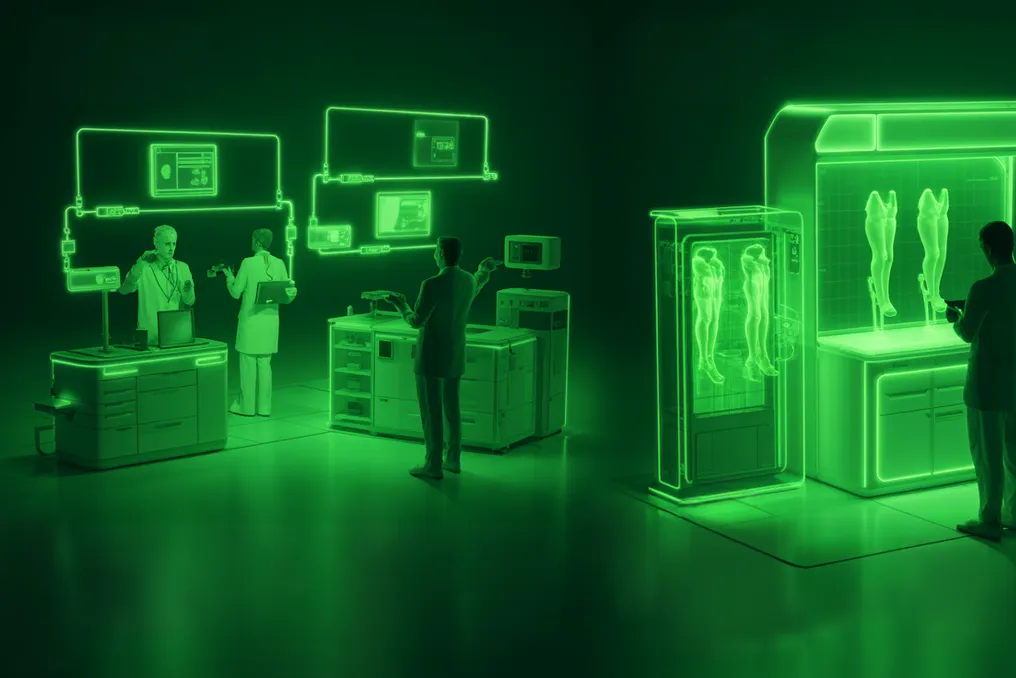
The company is now expanding beyond manufacturing to manage the entire supply chain. The Hike Intelligence platform uses AI agents to automate referrals. This system works to obtain approvals and payments even before the patient is seen, which can reduce the administrative burden on doctors and healthcare providers.
Hike Clinical integrates scanning, documentation, and ordering into a single workflow. Clinicians can use mobile devices to capture scans during patient visits. This technology eliminates the need for traditional plaster casts and separate scanners while supporting the production of highly accurate custom insoles.
Device manufacturing takes place at the Hike Lab facility in Peoria, Illinois. The company manages what it calls America's largest orthopedic 3D printing farm. Custom devices can be produced in approximately five business days. This vertically integrated model directly links production with clinic needs.
Hike plans to use the raised funds to expand its engineering and sales departments. Hiring will take place at offices in San Francisco and the manufacturing facility in Peoria. The company also intends to extend its platform to a broader DME (durable medical equipment) market.
This expansion could potentially increase the number of devices supported by Hike. Recently, the company's leadership was strengthened with the appointment of Jerry Tang as Chief Operating Officer. Previously, he served as Senior Executive Director of Operations at Flexport and later as COO at the digital dental lab Dandy. His experience includes scaling operations during periods of rapid company growth.
Saga Ventures believes that Hike's vertical integration can set it apart from other health tech companies. Max Altman stated that category-defining companies must directly address the challenges of the industry's complex infrastructure. The investment reflects confidence in Hike's approach to restoring the device-based healthcare delivery system. The company now has additional capital to execute this broader strategy.
The CEO emphasized that patients should not have to wait weeks due to disconnected healthcare systems. He aims to make device-based care faster and more patient-centric. The company's expansion could introduce AI-powered automation and digital manufacturing into a wider range of medical devices.