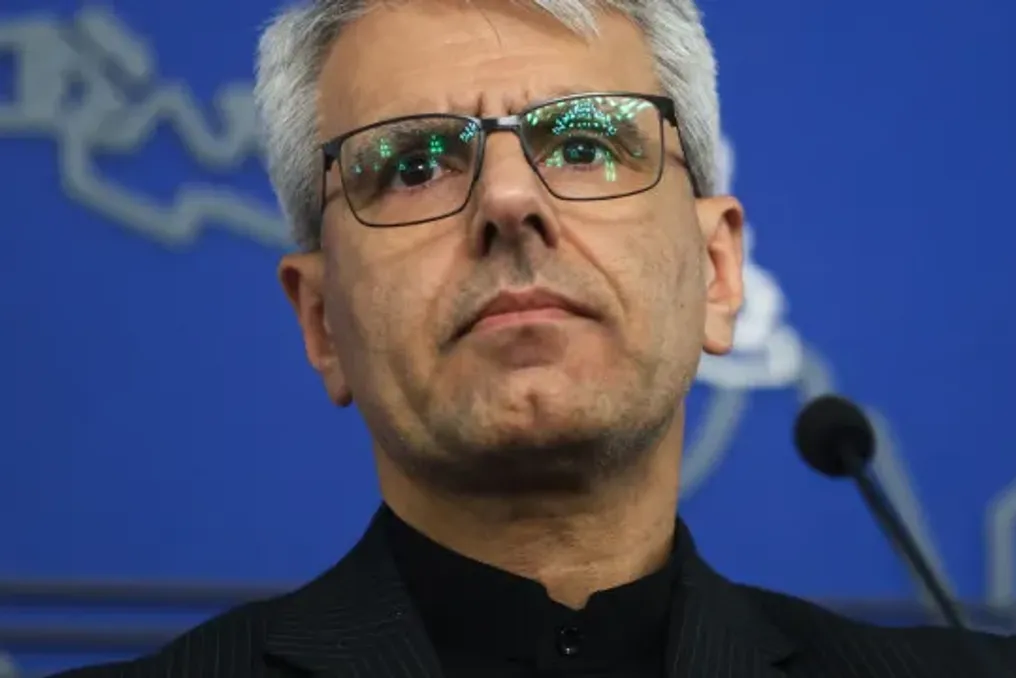
The spokesperson for the Iranian Ministry of Foreign Affairs, Esmail Baghaei, stated on the social network X that the imposition of sanctions by the US, which forces banks, companies, ports, and governments to choose between following Washington's wishes or suffering American retaliation, transcends Iran's borders.
Baghaei criticized the trade strangulation operation, announced on Monday by the US Treasury Secretary, Scott Bessent, alleging that it aims to destroy the basic principles of international law and the UN Charter, such as respect for sovereign equality and the self-determination of all states.
The spokesperson for Tehran's diplomacy warned that no state valuing its sovereignty and national interests would be willing to accept this 'normalization of large-scale anarchy and this systematic harassment.' He also mentioned that Canada is 'learning this lesson' in the context of the trade war with the United States.
Before the sanctions announcement, Iran had declared that it would consider an enemy any country that collaborated in the United States' 'economic war.'
Qatar, a strategic partner of the United States in the Persian Gulf, refused to adhere to the new sanctions package, arguing that the parties involved must resume dialogue to end the war and reopen the Strait of Hormuz. The spokesperson for the Qatari Ministry of Foreign Affairs, Majid al-Ansari, stated at a weekly press conference that the sanctions are unilateral and not UN decisions, emphasizing that Qatar's priority is the return to negotiations to resolve the crisis.
Al-Ansari informed that his country maintains contact with other mediators, such as Pakistan, to encourage dialogue, although he had no news to share. He stressed that Qatar desires the normalization of navigation in the Strait of Hormuz, ensuring energy security and supply chains, which requires a diplomatic solution beneficial to all, including the Iranian people.
Other US allies in the Persian Gulf, such as the United Arab Emirates, have implemented economic measures against Iran. On August 19, the Emirates indefinitely suspended all commercial relations, exchanges, and financial transactions with the Islamic Republic.
Emirati authorities declared that Iran needs to seek a political resolution with its neighbors, stressing that the strategy of attacking the region in retaliation for the offensive launched by the United States and Israel almost six months ago has 'missed the mark.'
Anwar Gargash, the UAE presidential advisor, viewed this tactic as a 'disastrous strategic decision' that 'worsened Tehran's situation' and increased its isolation. He argued that the way out of war is not to attack the Gulf Arab states, but rather to cooperate with them to facilitate de-escalation and seek a political solution.
Washington and Tehran had signed a memorandum of understanding on June 17, which provided for an immediate ceasefire and 60 days of negotiations for a definitive peace agreement, a deadline that has already expired. However, confrontations resumed shortly after the signing of the memorandum, leading Iran to reinstate restrictions on commercial navigation in the Strait of Hormuz—a route through which 20% of global oil goods passed before the start of the war—while the United States resumed the naval blockade on Iranian ports.
Simultaneously, Iran and Oman, neighboring countries on both sides of the strait, have been debating the future management of this passage for weeks, in an agreement parallel to the dialogue process between Washington and Tehran.
Badr al-Busaidi, Oman's Minister of Foreign Affairs, expressed hope that a temporary maritime corridor in the Strait of Hormuz would soon be announced, following a meeting with his Iranian counterpart in Tehran. In a statement, the head of Muscat's diplomacy said he hopes to announce a temporary corridor and practical measures to restore navigation safety, emphasizing that any 'permanent solution' must be based on the June memorandum of understanding.
Negotiations will continue to establish a permanent corridor, define the future management of the strait, and create a mechanism to 'provide necessary navigation and safety services,' as announced by Muscat's authorities. Iran and Oman also highlighted the importance of maintaining joint conversations with other Gulf coastal states.