There is a planet known as HD 189733b, which is a gas giant slightly larger than Jupiter and orbits another star outside the Solar System. This planet has an atmosphere containing silicate particles—a mineral found in sand and glass. These particles condense into molten droplets.
Strong winds, reaching thousands of kilometers per hour, push these droplets horizontally, creating a glass rain effect that does not fall straight down. The planet is located approximately 64 light-years from Earth, in the constellation Vulpecula. The light that reached us today left this region around 1962.
The planet was discovered in 2005 by a French team. It orbits very close to its star, completing an orbit in only 2.2 Earth days, and always has one side facing the local sun, similar to the Moon and Earth. Silicate is a group of minerals that form a significant part of the Earth's crust, from quartz to deep ocean rocks. In the atmosphere of HD 189733b, the temperature exceeds 1000 °C, which is enough to vaporize this material.
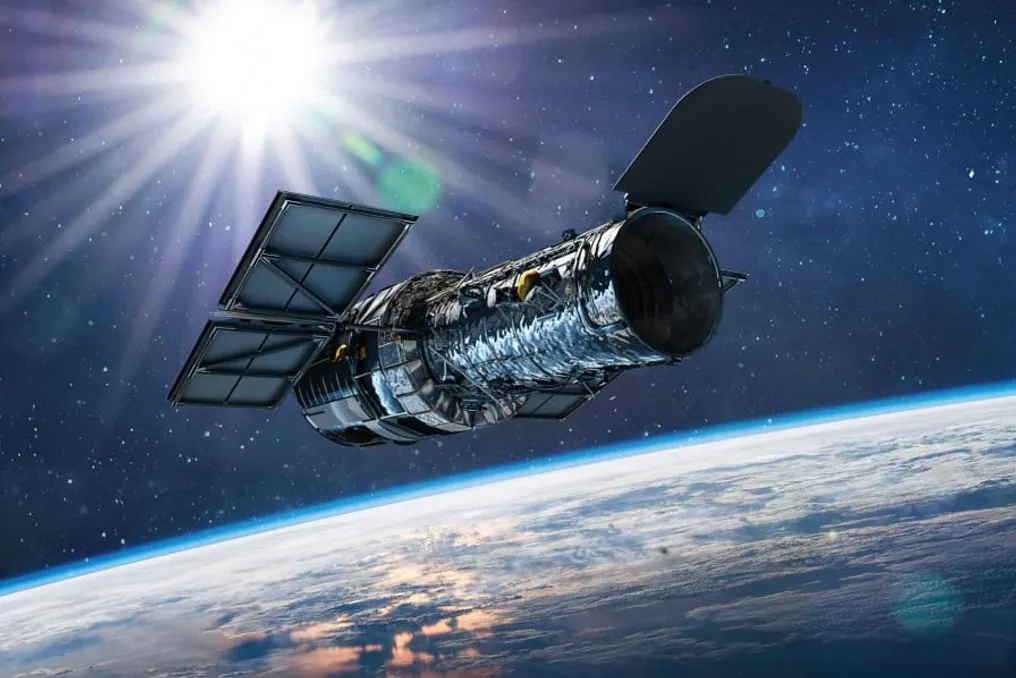
When the gas rises into the colder upper layers, it condenses into solid particles, fine shards of glass. It is this aerosol that gives the planet its blue-cobalt color, which was recorded by the Hubble telescope in 2013, marking the first instance of direct measurement of an exoplanet's color by astronomers.
A thermal map obtained by NASA's Spitzer Space Telescope showed that the temperature difference between the day and night sides of the planet reaches 260 °C. This gradient generates winds estimated up to 8700 km/h, which is about seven times the speed of sound on Earth, sufficient to carry the material horizontally.
It is important to distinguish between actual measurements and reconstructions. The composition of the atmosphere and wind speed are based on real data. However, the scenario of 'glass rain' falling downwards is merely a hypothesis based on this data, as no telescope has recorded droplets falling due to the lack of a direct way to photograph such a distant planet with modern technology.