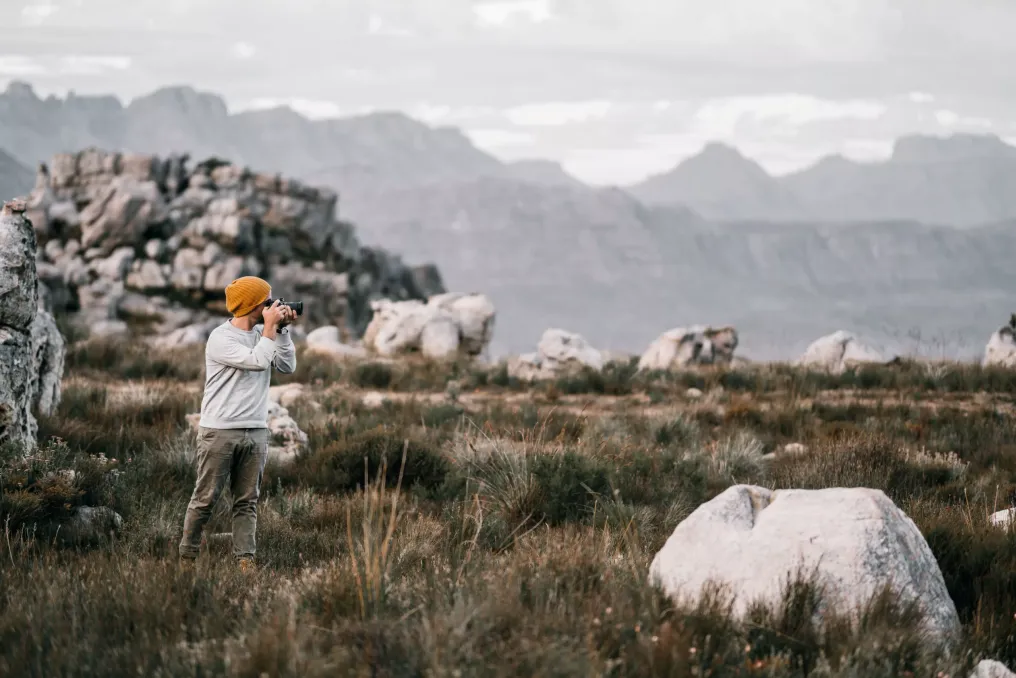
To create beautiful shots, you don't necessarily need the most modern mirrorless camera or an expensive telephoto lens; sometimes it is enough to be in the right place at the right time. South Africa offers an exceptional diversity of subjects for photographers at the beginning of their journey, thanks to sites such as the red dunes of the Kalahari, mountain ranges, wildlife, wildflowers, and picturesque coastlines. The key to success lies in choosing locations where the landscape itself helps create the composition.
Cape Town is one of the few places in South Africa that offers such a variety of photographic opportunities in a small area. The urban environment, including Table Mountain, the Atlantic coast, beaches, colorful neighborhoods, and historical landmarks, gives photography enthusiasts many options for experimentation, whether they are using a smartphone or a specialized camera. Cape Town Tourism notes the combination of mountain views, beaches, attractions, and cityscapes as some of the city's most photogenic features.
For a classic shot of Cape Town, it is recommended to go to Bloubergstrand, from where you can see Table Mountain over Table Bay. Sunrise and sunset can transform the familiar view, and the city's beaches offer opportunities to experiment with reflections, silhouettes, and movement. Besides photography, you can walk around, visit the V&A Waterfront, explore the Cape Peninsula, or hike in Table Mountain National Park.
For those interested in wildlife photography, Kruger National Park is an obvious choice. The park was established in 1926 by merging the Sabie and Singwedzi reserves, becoming one of South Africa's most important protected areas. Today, it remains a major spot for wildlife viewing, where you can see the Big Five, as well as many other mammals and birds. Visitors can travel independently, with a guided safari, or go on hikes.
Photography here is more about developing patience than finding the perfect landscape. It is worth stopping at waterholes, observing animal behavior, and paying attention to warning bird calls. You might arrive hoping to photograph a lion and leave with a much better picture of a dust-covered elephant or a kingfisher sitting motionless on a branch. The dry winter months and early spring, roughly from May to early October, are especially useful for beginners, as animals are easier to spot near water sources during this time.
The Drakensberg is a place where landscape photographers can truly shine. Mountains stretch along the border between KwaZulu-Natal and Lesotho, presenting dramatic cliffs, valleys, waterfalls, and vast skies. This region also holds unique evidence of San rock art, with tens of thousands of drawings discovered across the broader cultural landscape of the Drakensberg. You do not need to be an experienced tourist to enjoy shooting this area. Choose an accessible route, find a viewpoint, and let the landscape dictate the composition. Clouds drifting over the mountains, changing daylight, and reflections in stone puddles can create completely different photographs from the same spot. The Drakensberg is also worth visiting without a camera, as hiking, birdwatching, and exploring the cultural heritage will enrich the trip.
Caglagadi is intended for photographers who value patience and space. The park combines the Kalahari Gemsbok National Park of South Africa with the Gemsbok National Park of Botswana. Both countries agreed to manage this territory as a single ecological zone, and the Transfrontier Park of Kaglagadi was officially launched in 2000 as South Africa's first transfrontier park. The landscape differs greatly from greener safari destinations: red dunes, dry riverbeds, vast skies, and sparse vegetation create simple compositions, while wildlife gathers at waterholes. Here you can encounter springbok antelope, gemsbok, meerkats, raptors, lions, and other desert-adapted species. The dry winter months are particularly good for photography, as animals often concentrate near water sources, and the low angle of light creates long shadows on the dunes. It is also an excellent place to practice bird and small animal photography, quickly showing that an interesting shot does not require a dramatic subject.
Every August and September, parts of the West Coast turn into a playground for photographers as wildflowers color the landscape. The Postberg section of the West Coast National Park is particularly famous for its seasonal bloom, where flowers and wildlife create an unusually vibrant combination. Timing is crucial, as the blooming season is short and depends on winter rainfall. Therefore, it is not a place you can visit anytime expecting the same scenery. Outside the blooming season, the park still offers much to shoot, including lagoon views, coastal landscapes, birds, and wildlife. One should slow down and look for details instead of trying to fit everything into one frame; for example, a close-up of a flower can be as effective as a panoramic landscape.
Canyon photography possesses surprising simplicity. You need to find a viewpoint, wait for good light, and suddenly understand why the landscape has attracted photographers for generations. Blyde River Canyon, also known as God's Window Canyon, is part of the dramatic escarpment landscape of the Mpumalanga province. The canyon is about 26 kilometers long and is one of the defining natural attractions of the province, offering panoramic views through the landscape from viewpoints such as God's Window and Three Rondavels.
This is a particularly favorable place for photography lovers because of the immense scale and texture present. Layered mountains, rock formations, vegetation, and changing weather provide plenty of material for work. Although time should be set aside to visit the viewpoints, the entire trip should not be dedicated solely to photography. The Panorama Route also offers waterfalls, hiking opportunities, and other scenic stops, making it easy to turn a photo tour into a complete road trip.
Addo Elephant National Park serves as a reminder that nature conservation stories can be as powerful as the photographs themselves. The park was declared in 1931 after the elephant population in the region had dwindled to only 11 individuals. Hunting and conflicts with farmers had severely damaged the herds. Initially, the park covered just over 2,000 hectares, but since then Addo has significantly expanded and now protects a much wider range of biodiversity. For photography lovers, the main attraction is undoubtedly the elephants, but they are not the only subjects. Here you can find buffalo, black rhinos, antelopes, and characteristic park-dwelling flightless beetles. Addo is also a good introduction to wildlife photography, as it can be explored via self-drive routes. Finding your own subject, turning off the engine, and waiting for the moment to unfold brings special satisfaction.
If you want to photograph several types of landscapes in one trip, Isimangaliso is hard to beat. This UNESCO World Heritage site includes a striking combination of coastal, marine, and wetland ecosystems, including beaches, dunes, lakes, estuaries, mangrove swamps, forests, grasslands, and coral reefs. It was inscribed on the World Heritage List in 1999. The diversity makes it especially valuable for photographers. Depending on the area of exploration, you can photograph hippos in wetlands, birds by the lakes, coastal landscapes, marine life, or turtles laying eggs on the beaches. UNESCO highlights turtle nesting, marine megafauna, and large congregations of waterfowl as outstanding natural phenomena in this area. It is advisable to spend time near the water, explore the coast, or participate in an organized safari. Then, put the camera down and simply observe the landscape; this is one of those places where photos get better when you stop trying so hard to take them.
The beauty of South African photography is that you don't have to start with expensive equipment. A smartphone can teach you composition, light, perspective, and timing as effectively as a camera. More importantly, these destinations offer practical learning opportunities. Shoot the same mountain at different times of the day. Try to capture wildlife from a distance before reaching for a longer lens. Look for details that others pass by. Wait for the light. The best shot on a trip through South Africa may not be the one you planned before leaving home—it could be an elephant appearing near the road, a storm passing over the Drakensberg, or a single flower catching the morning sun. And this might be the best reason to travel with a camera: you start looking for pictures, and ultimately, you learn to truly see the places you visit.