H1N1 (Swine Flu) Threat Growing in Delhi: Tips on Using Household Devices for Prevention
Read more
Aaj Tak
www.aajtak.in

H1N1 (Swine Flu) Threat Growing in Delhi: Tips on Using Household Devices for Prevention

There is a rapid increase in cases of H1N1, or swine flu, in the city of Delhi. Currently, 1777 cases have been recorded this year, which significantly exceeds the 229 cases registered last year. Additionally, 2392 cases of influenza have been noted. These statistics are current as of August 20, 2026.

To protect against this rapidly spreading disease, there are special devices that can help create an additional level of safety at home. Below is an overview of these necessary gadgets.

Essential Devices for Protection Against Dangerous Flu

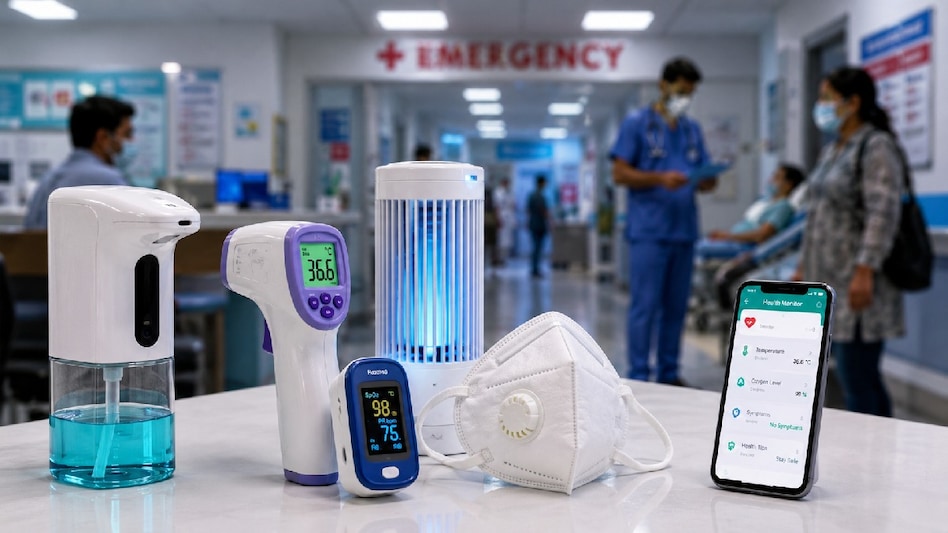
One of the most important appliances in the home is a digital thermometer. It allows for easy checking to see if any family member has a fever. If a fever appears, a doctor should be consulted immediately.

A pulse oximeter is also useful, as it is used to monitor blood oxygen levels. Although this device does not cure the flu, it helps track oxygen saturation levels. If the condition worsens, a doctor's consultation becomes extremely necessary.

To prevent breathing problems caused by poor air quality, an air quality monitor can be used. It shows how clean the air is in the room and what the pollution level is.

UV-C Disinfecting Devices

Various microbes can enter the home along with items brought in from outside, such as packages. UV-C disinfecting devices are used to clean such items. These devices are designed to destroy bacteria on certain surfaces using UV-C ultraviolet light. When using these devices, it is important to follow all safety instructions.

An automatic hand sanitizer dispenser can help maintain hand hygiene, as hands constantly come into contact with various objects, increasing the risk of infection. Furthermore, the dispenser dispenses the solution automatically when hands are brought near, eliminating the need to touch the device itself.

In our time, masks can also be very important, especially in crowded places. There are smart masks equipped with sensors and the ability to connect to applications. However, a mask cannot be considered a guarantee of protection against viruses; it is critically important to wear it correctly.

These technological gadgets can provide an additional level of home safety. However, it should be remembered that none of these devices is a cure for swine flu. To prevent the illness, it is necessary to maintain cleanliness, wear masks when needed, and consult a doctor if symptoms appear.

Similar stories

ICMR provides update on swine flu: who needs the vaccine and who is at risk
Read more
www.aajtak.in

ICMR provides update on swine flu: who needs the vaccine and who is at risk

Swine flu has spread in several states of the country, and the number of new cases is constantly rising. In this regard, the Ministry of Health has moved to a state of heightened alert and ordered all hospitals to prepare isolation beds.

Meanwhile, the Indian Council of Medical Research (ICMR) has provided clarifications regarding who needs the swine flu vaccine and which groups of people should be tested. Furthermore, ICMR has indicated who is most vulnerable to the risk.

ICMR Director, Dr. Rajiv Bahal, stated that the strain circulating in the country is not new. It is the same seasonal flu that affects people at different times every year. According to Dr. Bahal, both Influenza A and B viruses are present in the country, with H1N1 of Influenza A being the most common among them.

He noted that annual minor changes in the influenza virus lead to it continuing to infect people. In the current case, the same usual changes are observed, and there is no basis to suggest the emergence of any new disease due to this H1N1.

ICMR does not currently recommend influenza vaccination for all citizens. Dr. Bahal explained that ICMR conducted a study on the cost and benefits of the influenza vaccine in India. According to the results, people with special risks, especially those over 65 years old, as well as people with weakened immunity, should consider getting the vaccine after consulting a doctor.

In response to the question about vaccinating children, Dr. Bahal replied that the influenza vaccine is not currently part of the national immunization program, and ICMR does not see the need to include it in this program.

The ICMR Director also stated that testing every flu patient is not required. He cited approximately 940 million tests conducted in the country during the COVID pandemic and emphasized that checking every person is not mandatory under the current epidemiological situation.

Since influenza is a viral disease, antibiotics offer little benefit in ordinary cases. However, patients who are at risk of severe illness may be prescribed antiviral drugs, such as Oseltamivir (Tamiflu), upon a doctor's recommendation.

According to ICMR data, hospitalization is not required in more than 99% of cases. To prevent the spread of infection when ill, it is recommended to stay home and rest, cover the mouth and nose when coughing or sneezing, and maintain hand hygiene.

Risk of swine flu increases in Delhi; authorities heighten vigilance and take measures
Read more
www.aajtak.in

Risk of swine flu increases in Delhi; authorities heighten vigilance and take measures

An increase in cases of swine flu has been observed in the capital city of Delhi and several other states in the country. Due to the worsening situation, the government has raised the level of vigilance and is taking necessary steps to assist patients.

Furthermore, citizens are actively urged to observe precautionary measures.

Popular